The Kangal Shepherd Dog — Turkey’s national dog and the holder of the world’s highest recorded bite force of any domestic dog breed at 743 PSI — is one of the most capable, ancient, and impressive livestock guardian breeds on Earth. Developed over centuries in the Sivas province of central Turkey by Anatolian shepherds who needed a dog capable of protecting their flocks from wolves and bears without human supervision, the Kangal combines extraordinary physical capability with a remarkably calm, measured temperament.
In India, the Kangal Shepherd is a genuinely rare and premium-priced breed — a genuine specialist purchase for serious working dog enthusiasts, large farm owners, and those who understand the unique requirements of keeping one of the world’s most capable guardian breeds. If you are searching for the Kangal Shepherd dog price in India in 2026, this guide gives you the most accurate, current information available, along with the honest assessment of what Kangal ownership in India actually requires.
| Attribute | Details |
| Breed Name | Kangal Shepherd Dog (Kangal Coban Kopegi / Kangal Çoban Köpeği) |
| Origin | Sivas Province, Turkey — ancient livestock guardian |
| Size | Very Large: 40–66 kg, 72–83 cm |
| Lifespan | 12–15 years — exceptional for a very large breed |
| Temperament | Calm, confident, protective, independent, loyal, not randomly aggressive |
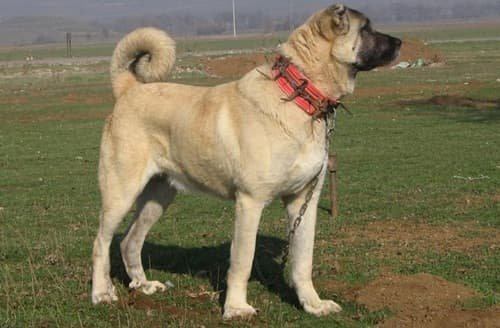
| Coat | Short, dense double coat — cream to fawn with distinctive black mask and black ears |
| Price Range (2026) | Rs. 60,000 – Rs. 2,50,000+ |
| Availability | Very rare in India — mostly imported; Turkey has export restrictions |
| Monthly Maintenance | Rs. 10,000 – Rs. 25,000 |
| Bite Force | 743 PSI — highest recorded of any domestic dog breed worldwide |
| Best For | Large rural properties, livestock protection, experienced working dog handlers |
| Climate Suitability | Moderate — adapts better than Arctic breeds; semi-arid origin |
About the Kangal Shepherd Dog
The Kangal Shepherd Dog has been Turkey’s national symbol of strength and guardianship for centuries, officially designated a Turkish national treasure. The breed has been used by Anatolian shepherds for at minimum 2,000 years as a protector of sheep and goat flocks against wolf, bear, and jackal predation in the rugged terrain of central Anatolia. Their distinctive cream-to-fawn coat with black mask and black-tipped ears serves as camouflage in the Anatolian steppe, and their double coat provides insulation against both the extreme cold of Anatolian winters and the heat of summer.
The Kangal has achieved international recognition through an extraordinary conservation program — the Cheetah Conservation Fund (CCF) in Namibia has been placing Kangal dogs with rural farmers since the 1990s to protect livestock from cheetah predation. Because Kangals are so effective at deterring predators without killing them (their imposing size and bark typically causes predators to flee rather than requiring the dog to fight), this program has protected both livestock and cheetah populations simultaneously. The Turkish government has gifted Kangal dogs to several nations as diplomatic presents, recognising the breed’s global significance.
Kangal Shepherd Price in India 2026 — City-Wise Breakdown
Kangal Shepherd Dogs are extremely rare in India. The price table below reflects the very limited Indian market as of early 2026. Import costs are substantial and must be added to the purchase price separately.
| City / Category | Min Price (INR) | Max Price (INR) |
| India-Bred (very rare, limited stock) | Rs. 60,000 | Rs. 1,20,000 |
| Imported — Turkey (restricted exports) | Rs. 1,00,000 | Rs. 2,00,000 |
| Imported — Europe (Germany, Netherlands) | Rs. 90,000 | Rs. 1,80,000 |
| Imported — USA (established programs) | Rs. 85,000 | Rs. 1,70,000 |
| FCI/KIF Pedigree Show Quality | Rs. 1,20,000 | Rs. 2,50,000+ |
| Delhi / NCR (primary availability hub) | Rs. 70,000 | Rs. 1,80,000 |
| Punjab / Haryana (farm/security demand) | Rs. 65,000 | Rs. 1,50,000 |
| Import Costs (additional to purchase) | Rs. 60,000 | Rs. 1,20,000 |
| Cheetah Conservation Fund (Africa) NGO-type use | Specialised channel | – |
Turkey legally restricts the export of certified pure-bred Kangal dogs to protect the national breed. Dogs exported from Turkey officially are typically not certified as pure-bred by Turkish authorities. Quality Kangals for Indian buyers are best sourced from established European or American breeding programs. Always request FCI pedigree documentation or Kangal Club international certification.
Temperament & Suitability
The Kangal’s temperament is the most important thing to understand before any purchase decision. Despite holding the world record for bite force, the Kangal is NOT an aggressive or excitable breed. Quite the opposite — experienced Kangal handlers consistently describe them as calm, patient, deliberate, and proportionate in their responses. They assess situations thoroughly before acting and reserve their power for genuine threats.
Kangals bond with their immediate family and flock but are naturally reserved with strangers. This wariness is not aggression — it is appropriate guardian caution. With thorough socialisation from puppyhood, Kangals are reliably controlled and predictable. Without it, their natural suspicion of strangers can become problematic given their size and capability.
The Kangal’s independence is one of its defining characteristics as a livestock guardian breed — it was bred to make guarding decisions without human direction. This means it does not respond to obedience commands with the immediacy of a herding dog or sporting breed. Owners must understand this independence as a feature, not a flaw — but it requires an experienced, patient handler who works with the breed’s natural grain rather than against it.
Factors That Affect the Price
- Country of Origin: European and USA breeding programs provide most reliable pedigree access for Indian buyers; Turkish export restrictions complicate direct purchase
- FCI / KIF Registration: Kangal International Federation (KIF) or FCI documentation provides the most reliable pedigree verification
- Physical Conformation: Correct cream-to-fawn coat with black mask and ears is the breed standard — deviation signals mixed breeding
- Import Costs: Rs. 60,000–Rs. 1,20,000 additional for shipping, AQCS permits, and quarantine processes
- Property Requirements: Minimum 1 acre securely fenced — a non-negotiable infrastructure requirement
- Gender: Males significantly larger and more imposing; both genders are effective guardians
Health & Lifespan
The Kangal Shepherd is one of the healthiest large breeds in the world — a direct product of centuries of natural selection without the intensive artificial breeding for aesthetics that compromises many modern breeds. Hip dysplasia occurs at lower rates than in popular European guardian breeds. The primary health management considerations for Indian owners are bloat prevention (feed 2-3 meals, avoid post-meal exercise), joint health during the growth phase (no over-exercise before 18 months; large-breed puppy food), and heat management for summer months.
The Kangal’s semi-arid Anatolian origin means it handles dry heat significantly better than European mountain guardian breeds (like the Bernese Mountain Dog) or Arctic breeds (like the Husky). In India’s dry interior regions (Rajasthan, UP plains, Punjab), they manage reasonably well with shade and water access. In India’s humid coastal regions (Mumbai, Chennai, Kochi), additional management including limited midday outdoor activity and access to cool spaces is recommended.
Monthly Maintenance Cost in India (2026 Estimate)
- Premium Large Breed Food: Rs. 4,500 – Rs. 9,000/month
- Fencing / Property Infrastructure: Significant one-time investment for secure 6ft+ perimeter
- Professional Grooming: Rs. 1,000 – Rs. 2,000/session; every 8 weeks (short coat)
- Veterinary Care: Rs. 10,000 – Rs. 22,000 annually
- Vaccinations & Preventives: Rs. 3,000 – Rs. 6,000 annually
- Total Estimated Monthly Cost: Rs. 10,000 – Rs. 25,000
Frequently Asked Questions (FAQs)
Q1. What is the Kangal Shepherd dog price in India in 2026?
Kangal Shepherd Dog prices in India in 2026 range from Rs. 60,000 for rare India-bred stock to Rs. 2,50,000+ for FCI or KIF-pedigreed imports from European or US breeding programs. Turkish direct imports are complicated by export restrictions. Import costs add a further Rs. 60,000–Rs. 1,20,000 to the purchase price.
Q2. Does the Kangal really have the strongest bite force of any dog?
Yes — the Kangal Shepherd Dog holds the highest scientifically measured bite force of any domestic dog breed, recorded at 743 PSI (pounds per square inch). This surpasses the Rottweiler (~328 PSI), Mastiff (~552 PSI), and all other commonly measured breeds. This exceptional bite force evolved specifically to deter wolf predation in Anatolian livestock guardian contexts.
Q3. Why does Turkey restrict Kangal exports?
The Turkish government classifies the Kangal Shepherd Dog as a national cultural heritage asset — similar to how some countries protect rare art or archaeological artifacts. The Ministry of Agriculture implements export restrictions to prevent genetic dilution of the breed outside Turkey’s controlled breeding population and to preserve the breed’s working character. Dogs exported without government certification are not officially recognised as purebred Kangals by Turkish authorities.
Q4. How does the Kangal differ from the Anatolian Shepherd?
The Kangal is specifically from Sivas province in Turkey with a defined breed standard (cream-to-fawn coat, black mask and ears). The “Anatolian Shepherd” is a broader term used internationally (particularly in the USA) to describe various Turkish livestock guardian dog types, including dogs of mixed regional heritage. The FCI and most major kennel clubs now treat them as related but distinct breeds. The Kangal is the most specifically defined and genetically documented of the Turkish livestock guardians.
Q5. Is a Kangal suitable as a family pet in India?
A Kangal can be a devoted, calm family dog for experienced handlers with appropriate property. It is completely unsuitable for apartments, small urban plots, or inexperienced owners. The breed’s independence, size, and guardian instincts require confident, experienced management and extensive space. Families with children can successfully keep Kangals — the breed is generally gentle with family children — but thorough socialisation from puppyhood and adult supervision of all interactions is essential.