Scroll through social media and you’ll see them constantly: striking, ice-eyed dogs that look like they walked straight out of a nature documentary. Some are Siberian Huskies. Others are wolf dogs — genuine hybrids with actual wild wolf ancestry. The two get confused constantly, and for good reason: they can look remarkably similar in photos. But underneath that shared “wolfish” appearance sits one of the biggest gaps in the entire dog world, one that affects everything from how the animal behaves in your living room to whether you’re even legally allowed to own one where you live.
Getting this distinction right matters for more than trivia’s sake. Prospective owners regularly underestimate what they’re taking on when they buy into the wolf dog mystique, and the consequences — for both the animal and the owner — can be serious. Here’s what actually separates these two, and why the difference runs a lot deeper than looks.
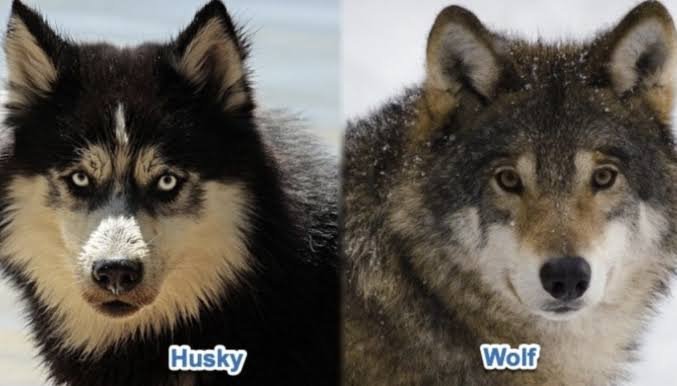
Quick Comparison: Wolf Dog vs Husky
| Category | Siberian Husky | Wolf Dog |
| Classification | Fully domesticated dog breed | Hybrid cross between a domestic dog and a wild wolf |
| Genetic makeup | 100% domestic dog | Varies by generation (F1, F2, F3), often mixed with German Shepherd or Malamute |
| Origin | Bred by the Chukchi people of Siberia for sled work | Deliberately crossbred, often for appearance or novelty |
| Temperament | Friendly, social, trainable, thrives around people | Cautious, instinct-driven, unpredictable, resistant to training |
| Legal status in the US | Legal everywhere as a standard dog breed | Restricted, regulated, or banned in many states |
| Housing needs | Secure yard, standard fencing usually sufficient | Extremely high, secure enclosures; standard fencing often inadequate |
| Suitability for average homes | Yes, with proper exercise and training | Generally not recommended, even by experienced breeders |
Where They Actually Come From
Siberian Huskies are an ancient, fully domesticated breed developed by the Chukchi people of northeastern Siberia over thousands of years, specifically bred as endurance sled dogs capable of hauling loads across brutal Arctic distances. That breeding process selected for stamina, a calm working temperament, and a genuine ability to function closely alongside humans and other dogs in a team. Every Husky alive today descends from that long, deliberate domestication process — there’s no wild wolf sitting a generation or two back in a purebred Husky’s pedigree.
Wolf dogs are something else entirely: a direct, intentional cross between a domestic dog — often a German Shepherd, Alaskan Malamute, or similar northern breed — and an actual wild wolf. The result isn’t a fixed breed at all, but a spectrum. An “F1” wolf dog has one wolf parent and one dog parent, putting it about as close to genuinely wild as a companion animal gets. Later generations (F2, F3, and beyond) carry progressively less wolf ancestry, though the percentage and the resulting temperament can vary enormously even within the same litter.
Temperament Is Where the Real Gap Shows Up
This is genuinely the heart of the entire comparison, and it’s where people get tripped up the most. Huskies, despite their independent streak and reputation for selective listening, are fundamentally built to want human companionship. They respond to positive training, integrate into family life, and while they can be escape artists and notorious diggers, their instincts are oriented toward cooperation rather than survival.
Wolf dogs carry a genuinely different wiring. Depending on the wolf content, they can retain strong survival instincts — wariness around strangers, a drive toward pack hierarchy rather than obedience, and behavior that’s considerably less predictable than a standard dog breed. Wolf researchers who study wild packs describe this same cautious, assessment-driven approach toward unfamiliar humans, and that instinct doesn’t simply disappear because an animal is raised in a home. Training a wolf dog isn’t just “harder” than training a Husky — it often requires an entirely different approach, along with realistic expectations about how much can genuinely be shaped through training at all.
The Legal Reality in the US
This is where the wolf dog conversation gets serious fast, and it’s genuinely worth understanding before you get attached to the idea. Unlike Huskies, which are legal to own anywhere in the country as an established dog breed, wolf dog ownership in the US is a genuine legal patchwork. Some states ban them outright. Others require special permits, specific containment standards, or liability insurance. Even where wolf dogs are technically legal, individual counties or cities often add their own restrictions on top of state law, and homeowner’s insurance policies frequently exclude coverage for wolf hybrids entirely, which can create real problems if the animal ever bites someone or causes property damage.
Before pursuing a wolf dog, checking your specific state and local ordinances isn’t optional due diligence — it’s a legitimate first step, since laws vary this dramatically and enforcement can include confiscation of the animal if requirements aren’t met.
Physical Differences You Can Actually Spot
Genetics aside, there are a few visual cues that help tell them apart, even though appearance alone isn’t a reliable identifier for a hybrid — genetic testing is really the only definitive method. Huskies typically have round eyes, a curled or sickle-shaped tail, and a compact, well-muscled build suited to pulling. Wolves and wolf dogs tend toward almond-shaped eyes and a straight, low-hanging tail that doesn’t curl over the back the way a Husky’s does. Coat texture and leg length can also differ, though these traits blur considerably in mixed-generation wolf dogs, making a confident visual ID genuinely unreliable without testing.
What This Means If You’re Choosing Between Them
If you’re drawn to that wild, lupine look but want a companion animal that fits into a normal household — reliable temperament, manageable training, standard containment — a Husky delivers that aesthetic without the legal complications or unpredictability that come with actual wolf ancestry. If you’re specifically considering a wolf dog, understand that you’re taking on a genuinely different category of commitment: specialized containment well beyond a standard fence, a real possibility of unpredictable behavior even with excellent care, and a legal landscape that could restrict or even prohibit ownership depending entirely on your zip code.
Frequently Asked Questions
Q1. Can I tell if a dog is a wolf hybrid just by looking at it?
Not reliably. While almond-shaped eyes and a straight, non-curling tail are common wolf traits, mixed-generation wolf dogs can display a wide range of appearances that overlap significantly with northern dog breeds. Genetic testing is genuinely the only definitive way to confirm wolf content.
Q2. Is it legal to own a wolf dog in my state?
It depends entirely on where you live — this isn’t a single national answer. Some states ban wolf dogs outright, others require permits or proof of secure containment, and even legal states often have county or city-level restrictions layered on top. Check your specific state’s Department of Agriculture or wildlife agency before pursuing ownership.
Q3. Are Huskies part wolf since they look so similar?
No. Despite the resemblance, Huskies are a fully domesticated breed with no recent wolf ancestry. Like all dogs, they share a distant common ancestor with wolves, but that connection goes back tens of thousands of years, not one or two generations the way it does in an actual wolf dog.
Q4. Would a wolf dog make a good family pet if I have young children?
Most reputable breeders and animal behavior experts genuinely advise against it. Wolf dogs carry unpredictable instinct-driven behavior that even experienced owners struggle to manage consistently, and the combination of that unpredictability with young children in the home is widely considered a serious risk factor rather than a manageable one.