“Siju dog” is a phonetic spelling variation that appears frequently in Indian internet searches — most commonly referring to the Shih Tzu, one of India’s most loved and most searched companion dog breeds. The Shih Tzu (pronounced “sheed-zoo” or “sheet-sue”) is a small, long-coated Chinese imperial breed with a face that has been charming humans for over a thousand years. Whether you search for it as “siju,” “shih tzu,” “shihtzu,” or “sheet zoo,” this guide covers everything about this magnificent breed in India in 2026.
The Shih Tzu’s combination of manageable size, adaptable temperament, distinctively beautiful coat, and genuine affection for human company has made it a perennial favourite in Indian apartments and households. In 2026, it consistently ranks in India’s top 10 most searched dog breeds on Google, and its popularity shows no sign of declining. If you are looking for the Shih Tzu price in India in 2026, this guide gives you the most accurate, current information available along with everything a responsible buyer needs to know.
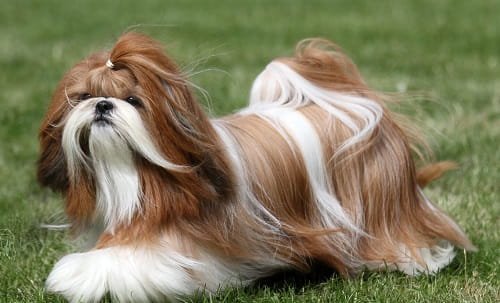
Article Overview — At a Glance
| Attribute | Details |
| Popular Indian Search Term | “Siju dog” — phonetic variant of Shih Tzu |
| Official Breed Name | Shih Tzu (Lion Dog) |
| Origin | China — bred in the Forbidden City for Chinese emperors |
| Size | Small: 4–8 kg, 20–28 cm |
| Lifespan | 10–16 years |
| Temperament | Affectionate, playful, gentle, adaptable, friendly with everyone |
| Coat | Long, flowing double coat — wide range of colours; requires intensive grooming |
| Price Range (2026) | Rs. 10,000 – Rs. 55,000 |
| KCI / Show Quality | Rs. 30,000 – Rs. 55,000+ |
| Monthly Maintenance | Rs. 4,500 – Rs. 10,000 (grooming is the major recurring cost) |
| Best For | Apartment owners, families, seniors, first-time owners |
| Climate Note | Brachycephalic — heat management critical in Indian summers |
| KCI Status | Consistently top 10 registered breeds in India (2024-2025 data) |
About the Shih Tzu
The Shih Tzu is one of the most ancient of all toy breeds, with a history rooted in the imperial courts of China spanning at least 1,000 years and possibly as many as 3,000. These small, lion-like dogs were bred exclusively within the walls of the Forbidden City as companion dogs for the Chinese emperors and their courts — never sold outside the palace, never seen by common people, kept in a closed breeding program managed by imperial eunuchs. Their Chinese name “Shih Tzu” literally means “Lion Dog” — a reference to their lion-like flowing mane rather than any aggressive characteristic.
When China opened to the Western world and the last imperial dynasty fell in the early 20th century, some Shih Tzus were gifted to foreign diplomats and gradually made their way to Britain and Europe. The British Kennel Club recognised the breed in 1940. The AKC followed in 1969. In India, the Shih Tzu has been popular since at least the 1980s and has been a consistent presence in Indian urban households, particularly in the west of the country. According to 2024–2025 KCI registration data, the Shih Tzu maintains a position in India’s top 10 most registered breeds, with particularly strong registration numbers in Maharashtra, Karnataka, and Delhi.
Shih Tzu Price in India 2026 — City-Wise Breakdown
Shih Tzus are among the most widely available small breeds in India. Prices below reflect reputable breeder rates as of early 2026.
| City / Category | Min Price (INR) | Max Price (INR) |
| Delhi / NCR | Rs. 15,000 | Rs. 50,000 |
| Mumbai | Rs. 18,000 | Rs. 52,000 |
| Bangalore | Rs. 12,000 | Rs. 46,000 |
| Hyderabad | Rs. 12,000 | Rs. 44,000 |
| Chennai | Rs. 10,000 | Rs. 40,000 |
| Kolkata | Rs. 10,000 | Rs. 38,000 |
| Chandigarh / Jaipur | Rs. 12,000 | Rs. 42,000 |
| Pune | Rs. 13,000 | Rs. 46,000 |
| Tier-2 / Tier-3 Cities | Rs. 7,000 | Rs. 25,000 |
| KCI Registered / Show Quality | Rs. 30,000 | Rs. 55,000+ |
| Imperial / Double Coat Type | Rs. 20,000 | Rs. 55,000 |
Note: Gold-and-white and black-and-white are the most common and popular colour combinations in India. Rare colours like liver, blue, and brindle are available and may command slight premiums. The “Imperial Shih Tzu” — a term sometimes used for smaller-than-standard individuals — is a marketing term, not a recognised variant, and the health warnings about extreme miniaturisation apply. Always choose a healthy standard-sized Shih Tzu over a premium-priced extremely small one.
Temperament & Suitability
The Shih Tzu’s temperament is one of its greatest strengths and the primary reason for its enduring popularity across very different household types. Unlike breeds with strong working instincts, prey drives, or territorial tendencies, the Shih Tzu was bred for one purpose over a thousand years: to be the perfect indoor companion. And it executes this purpose with remarkable consistency.
They are genuinely friendly with everyone — family, strangers, children, other dogs, and household pets. They have no significant territorial tendencies, no meaningful prey drive, and no aggressive inclinations. Their default emotional state is affectionate engagement with whoever is near them. They adapt comfortably to the rhythms of their household, whether that is a busy family with children or a quiet elderly couple. They are equally comfortable as lap dogs and as playful indoor companions who enjoy gentle games.
Their exercise requirements are modest — 20–30 minutes of daily walking plus indoor play is sufficient. This low exercise requirement, combined with their small size and quiet, adaptable nature, makes them genuinely outstanding apartment dogs for Indian urban households. One important temperament note: like many affectionate companion breeds, Shih Tzus can develop separation anxiety if left alone extensively. They thrive in households where human presence is regular and consistent.
Critical health-related temperament note for India: The Shih Tzu is brachycephalic — its flat, pushed-in face is the result of selective breeding for a specific skull shape that compresses the airway anatomy. This means they pant less effectively than longer-nosed breeds and are significantly more vulnerable to heat stroke in India’s summer conditions. During April–June, outdoor activity must be restricted to early morning and late evening only, and cool or air-conditioned indoor spaces are essential. This is not optional — brachycephalic dogs in unmanaged Indian summer heat are at genuine risk of fatal heat stroke.
Factors That Affect the Price
Coat Type and Quality: Full, flowing double coat in good condition is show quality. “Imperial” or extreme miniature types are not standard and not priced fairly at premiums.
Face Structure: Rounder, flatter face (more brachycephalic) is currently fashionable in India’s show community but is associated with more severe breathing compromise. A slightly more moderate face structure is generally healthier.
KCI Registration: Registered litters from champion bloodlines start at Rs. 30,000+.
Colour: Gold-and-white, black-and-white most accessible. Rare colours (liver, blue) command premiums.
Gender: Females typically Rs. 3,000–Rs. 8,000 higher.
Breeder Quality: Responsible breeders who avoid extreme brachycephalic exaggeration and health-test parents justify premium pricing.
Health & Lifespan
Shih Tzus are generally long-lived (10–16 years) but have several important health considerations. Brachycephalic Obstructive Airway Syndrome (BOAS) is the most significant — breathing difficulties ranging from mild snoring to severe respiratory distress can affect the breed. Surgical correction (soft palate resection and nares widening) is available for severely affected dogs and can significantly improve quality of life. Indian veterinary emergency clinics in Mumbai, Bangalore, and Delhi report Shih Tzus among the most common brachycephalic emergency presentations during summer months from 2024–2025 data.
Eye conditions are common — their large, prominent eyes are prone to corneal ulcers (from contact with surfaces or hair), progressive retinal atrophy, and dry eye. Daily eye-area cleaning and maintaining hair away from the eyes (with a topknot or trim) are important preventive measures. Renal dysplasia (hereditary kidney condition) is documented in some Shih Tzu bloodlines — ask breeders about family history.
The long coat in India’s humid climate is a significant management challenge. Daily brushing is essential to prevent matting, and the coat must be completely dried after bathing — a high-velocity pet dryer is strongly recommended. Professional grooming every 4–6 weeks is non-optional. Many Indian Shih Tzu owners maintain a “puppy cut” (shorter trim) year-round as a practical adaptation to Indian climate, reducing both heat retention and grooming time.
Monthly Maintenance Cost in India (2026 Estimate)
| Cost Category | Estimated Cost |
| Premium Small Breed Food | Rs. 1,500 – Rs. 3,200/month |
| Professional Grooming (non-negotiable) | Rs. 900 – Rs. 2,000/session; every 4–6 weeks |
| Home Grooming Supplies | Rs. 400 – Rs. 800/month |
| Veterinary Care (incl. eye + respiratory monitoring) | Rs. 7,000 – Rs. 15,000 annually |
| Vaccinations & Preventives | Rs. 1,500 – Rs. 3,500 annually |
| Total Estimated Monthly Cost | Rs. 4,500 – Rs. 10,000 |
Frequently Asked Questions (FAQs)
Q1. What is the Shih Tzu (Siju dog) price in India in 2026? Shih Tzu prices from reputable breeders in India in 2026 range from Rs. 10,000 to Rs. 52,000 for pet-quality puppies. KCI-registered show-quality Shih Tzus from champion bloodlines start at Rs. 30,000. Prices are broadly consistent nationwide with metro cities 25–35% higher than tier-2/3 cities.
Q2. What does “Siju dog” mean? “Siju dog” is a phonetic Indian spelling of “Shih Tzu” — reflecting the way many Indian buyers sound out the breed’s Chinese name when searching online. Both terms refer to the same breed: the ancient Chinese imperial companion dog officially named Shih Tzu (meaning “Lion Dog” in Chinese).
Q3. Is the Shih Tzu suitable for Indian summer heat? Yes, with essential management. The Shih Tzu’s brachycephalic (flat-faced) anatomy makes it significantly more heat-sensitive than longer-nosed breeds. During April–June, outdoor activity must be limited to before 8 AM and after 7 PM. Air-conditioned or cool indoor spaces are essential during peak afternoon hours. Trim the coat in a shorter “summer cut” to reduce heat retention. Always have fresh cool water available. These are welfare requirements, not preferences.
Q4. What is the difference between a Shih Tzu and a Lhasa Apso? Both are small, long-coated Asian breeds with ancient palace histories. The Shih Tzu was developed in China from Tibetan breeds (including the Lhasa Apso) and has a flatter, more brachycephalic face, rounder eyes, and a more extroverted, universally friendly temperament. The Lhasa Apso is Tibetan in origin with a slightly longer muzzle (less brachycephalic), harder coat texture, and a more independent, sentinel-like temperament. The Shih Tzu is generally better suited to first-time owners; the Lhasa suits those who appreciate more independent canine personalities.
Q5. How do I maintain a Shih Tzu’s coat in India’s humid climate? Daily brushing (10–15 minutes minimum) to prevent tangles; a pin brush and metal comb are essential tools. Professional grooming every 4–6 weeks for bathing, trimming, and coat maintenance. Thorough drying after every bath using a high-velocity pet dryer — never leave a Shih Tzu with a damp coat in India’s humidity as skin infections develop rapidly under the dense fur. Daily eye-area wiping to remove discharge and prevent staining. Most Indian Shih Tzu owners find a year-round “puppy cut” (shorter trim) to be the most practical approach — maintaining the breed’s characteristic look while reducing heat retention and grooming time significantly.
Conclusion
The Shih Tzu — searched by thousands of Indian buyers monthly as the “Siju dog” — earns its enduring popularity in India through a thousand years of refinement as the ideal human companion. In 2026, its accessible price point, wide availability, genuinely gentle temperament, and apartment-perfect lifestyle fit make it one of the most sensible small dog choices for Indian urban households. The primary commitments to understand before purchase are the brachycephalic heat management requirements of Indian summer, and the grooming routine that a long-coated breed demands year-round. For buyers who honestly commit to both, the Shih Tzu delivers a loyal, affectionate, and quietly regal companionship that has satisfied Chinese emperors and Indian families alike across a thousand years of continuous devotion.