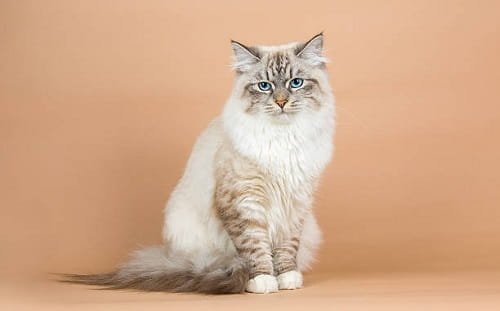
The Siberian cat is Russia’s national cat — a large, powerfully built, semi-longhaired breed that has survived and thrived in the extreme conditions of the Siberian wilderness for centuries, developing a remarkably thick triple coat, a sturdy constitution, and a surprisingly gentle, dog-like personality that has made it one of the most beloved cat breeds in Russia and an increasingly sought-after breed globally. In India’s growing premium cat market of 2026, the Siberian cat is attracting particular attention from one specific group of buyers: those with cat allergies.
The Siberian is widely claimed to be the most hypoallergenic cat breed available — producing significantly lower levels of the primary cat allergen Fel d 1 than most other breeds. While no cat is truly hypoallergenic, the Siberian’s reduced allergen production has made it genuinely accessible to many mild-to-moderate allergy sufferers who cannot live with other cat breeds. Combined with its exceptional temperament and striking wild-forest appearance, this quality has driven growing demand in India’s urban households. This guide covers accurate 2026 pricing, the honest hypoallergenic evidence, and everything needed to make a responsible Siberian purchase decision.
| Attribute | Details |
| Breed Name | Siberian Cat (Siberian Forest Cat / Neva Masquerade) |
| Origin | Siberia, Russia — centuries-old natural breed |
| Size | Large: 5–9 kg — slow maturing, reaching full size at 5 years |
| Lifespan | 12–15 years |
| Temperament | Gentle, playful, dog-like, sociable, intelligent, calm |
| Coat | Triple coat — dense undercoat, middle layer, water-resistant outer coat |
| Hypoallergenic Claim | Lower Fel d 1 protein — genuinely reduced allergen; not zero |
| Neva Masquerade | Colourpoint variety of Siberian — blue eyes, pointed pattern |
| Price Range (2026) | Rs. 35,000 – Rs. 1,30,000 |
| TICA / WCF Show Quality | Rs. 80,000 – Rs. 1,30,000+ |
| Monthly Maintenance | Rs. 4,500 – Rs. 10,000 |
| Best For | Allergy-sensitive households, families, active owners |
| Climate Challenge | Triple coat requires significant grooming management in Indian summers |
About the Siberian Cat
The Siberian cat has been documented in Russia for at least 1,000 years — appearing in Russian fairy tales, folk art, and historical texts as a large, powerful, forest-dwelling cat of great intelligence and spirit. Unlike many pedigreed breeds created through deliberate human selective breeding programs, the Siberian developed through thousands of years of natural selection in Siberia’s extreme environment — producing the triple coat, powerful build, and remarkable cold-weather adaptation that defines the breed. Russian families kept Siberians as valued companions and mousers in traditional homes, and the breed’s personality reflects centuries of close domestic co-evolution.
The Neva Masquerade — a colourpoint variety of the Siberian with a pale body and darker points on face, ears, legs, and tail, combined with the Siberian’s characteristic blue eyes — is named after the Neva River in St. Petersburg and is treated as a variety of the Siberian by most registries. It is particularly popular in India for its striking combination of the Siberian’s powerful build and the colourpoint’s dramatic visual contrast.
The Siberian was brought to the United States in 1990 and registered with TICA. In India, serious breeding programs began appearing from approximately 2019 onward, primarily in Delhi and Mumbai. Genuine TICA-registered Siberians remain rare in India, with most quality specimens requiring international import from Russia or European Siberian breeding programs.
Siberian Cat Price in India 2026 — City-Wise Breakdown
| City / Category | Min Price (INR) | Max Price (INR) |
| Delhi / NCR | Rs. 38,000 | Rs. 1,10,000 |
| Mumbai | Rs. 40,000 | Rs. 1,20,000 |
| Bangalore | Rs. 35,000 | Rs. 1,00,000 |
| Hyderabad | Rs. 32,000 | Rs. 95,000 |
| Chennai / Kolkata | Rs. 28,000 | Rs. 88,000 |
| Tier-2 / Tier-3 Cities | Rs. 20,000 | Rs. 65,000 |
| TICA / WCF Registered Show Quality | Rs. 80,000 | Rs. 1,30,000+ |
| Neva Masquerade (colourpoint variety) | Rs. 50,000 | Rs. 1,30,000+ |
| Imported — Russia / Finland / Europe | Rs. 1,00,000 | Rs. 1,80,000+ |
The Hypoallergenic Reality
The Siberian’s hypoallergenic reputation is based on documented scientific research. Studies from the Indoor Biotechnologies laboratory in the USA found that Siberians produce significantly lower levels of Fel d 1 — the primary glycoprotein responsible for approximately 95% of human cat allergies — than most other breeds. Average Fel d 1 production in Siberians was measured at approximately 1/6th the level of mixed breed cats in these studies.
This reduction is real and meaningful — many mild-to-moderate allergy sufferers who cannot tolerate other cat breeds have successfully lived with Siberians. However, Fel d 1 levels vary between individual cats, with intact males producing the highest levels and neutered males and females producing lower levels. The honest recommendation for allergy sufferers is to spend extended time with the specific individual cat before committing to purchase — there is enough individual variation that the breed’s general reduced production does not guarantee reaction-free ownership for all allergy sufferers.
Temperament and Suitability
The Siberian’s temperament is one of its most consistently praised qualities — genuinely dog-like in its social engagement while retaining the independence and dignity of a large cat. They follow their owners through the home, greet them at the door with chirping vocalisations, enjoy interactive play with genuine athletic enthusiasm, and form deep, lasting bonds with their primary family.
They are particularly noted for their calm adaptability — Siberians handle household changes, new people, and diverse social situations with a measured confidence that reflects their heritage as a working cat in busy Russian households. They are excellent with children and dog-friendly, making them outstanding multi-pet household companions. Their intelligence is significant — they learn puzzle toys, respond reliably to their names, and can be trained to walk on harnesses, making them suitable for supervised balcony time in Indian apartments.
Health and Lifespan
The Siberian is generally a robust, healthy breed reflecting its natural selection heritage. Hypertrophic Cardiomyopathy (HCM) is documented in Siberian bloodlines — annual echocardiographic screening of breeding cats is the responsible standard. Pyruvate Kinase Deficiency (PKDef) — a hereditary anaemia caused by red blood cell enzyme deficiency — has a DNA test available and responsible breeders should provide clear certificates.
The triple coat in India’s climate is the primary management challenge. Professional grooming every 6–8 weeks is essential to prevent the dense undercoat from felting in India’s humidity. Thorough drying after bathing using a high-velocity dryer is critical — a damp triple coat can remain wet against the skin for hours, creating skin infection risk. AC during Indian summer months is strongly recommended.
Monthly Maintenance Cost in India (2026 Estimate)
| Cost Category | Estimated Cost |
| Premium Cat Food | Rs. 2,000 – Rs. 4,500/month |
| Professional Grooming (triple coat) | Rs. 1,500 – Rs. 3,000/session; every 6–8 weeks |
| Litter and Litter Box | Rs. 500 – Rs. 1,500/month |
| Veterinary Care (annual) | Rs. 6,000 – Rs. 15,000 |
| Vaccinations & Preventives | Rs. 2,000 – Rs. 4,500 annually |
| Total Estimated Monthly Cost | Rs. 4,500 – Rs. 10,000 |
Frequently Asked Questions (FAQs)
Q1. What is the Siberian cat price in India in 2026?
A: Siberian cat prices from reputable breeders in India in 2026 range from Rs. 28,000 to Rs. 1,20,000. TICA or WCF-registered show-quality Siberians from HCM-screened parents start at Rs. 80,000. Neva Masquerade variety ranges Rs. 50,000–Rs. 1,30,000. Russian or European imports reach Rs. 1,00,000–Rs. 1,80,000+ including import costs.
Q2. Are Siberian cats truly hypoallergenic?
A: Siberians produce significantly lower levels of the primary cat allergen Fel d 1 than most breeds — studies show approximately 1/6th the average production. This makes them genuinely more accessible for mild-to-moderate allergy sufferers. However, individual Fel d 1 levels vary between cats, and no cat is completely allergen-free. Allergy sufferers should spend extended time with the specific cat before purchase to assess personal reaction.
Q3. What is the Neva Masquerade?
A: The Neva Masquerade is the colourpoint variety of the Siberian cat — named after St. Petersburg’s Neva River. It has the Siberian’s powerful build and triple coat with a pale body and darker points on face, ears, legs, and tail, combined with blue eyes. It is treated as a colour variety of the Siberian by most major registries and is particularly popular in India for its dramatic appearance.
Q4. How do I manage a Siberian cat’s coat in India’s humid climate?
A: The triple coat requires weekly home brushing with a wide-tooth steel comb plus professional grooming every 6–8 weeks. In India’s monsoon season (July–September), increase professional grooming frequency to prevent moisture-related felting. Always dry the coat completely after bathing using a high-velocity pet dryer — the dense triple coat holds moisture for hours if air-dried. Many Indian Siberian owners adopt a shortened summer trim for the body during April–August.
Q5. How large do Siberian cats get in India?
A: Siberians are large, slow-maturing cats that reach full size at approximately 5 years of age. Males typically reach 6–9 kg and females 4–6 kg in well-nourished Indian conditions. Their substantial bone structure and powerful musculature make them feel noticeably heavier than their weight suggests. High-quality protein-rich food throughout the extended growth period supports proper development.