Small apartments are the default reality for millions of urban Indians — and the gap between how a space functions and how it could function with thoughtful design is consistently larger than residents realise. Space-saving in a small Indian apartment isn’t about living with less. It’s about organising what you have with more intelligence — creating the experience of spaciousness without adding square footage.
1. Vertical Storage: Think Upward, Not Outward
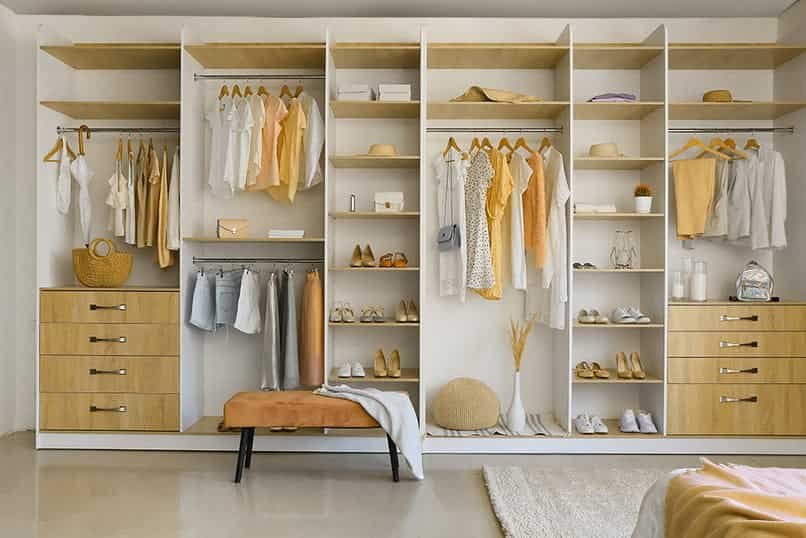
The single most underutilised dimension in small Indian apartments is vertical space. Most storage solutions stop at eye level, leaving the upper third of every wall empty while floor space is crowded.
Install tall shelving units that extend to the ceiling — in living rooms for books and decor, in kitchens for dry goods and appliances, in bedrooms for luggage and seasonal items. Use the top portions for less-frequently accessed items. Ladder shelves — units that lean against walls without requiring drilling — work in rental apartments where wall modifications aren’t permitted.
2. Multi-Function Furniture as Standard Practice
Every piece of furniture in a small Indian apartment should ideally serve at least two purposes. A storage ottoman that functions as a coffee table, extra seating, and a storage unit simultaneously. A sofa bed for the living room that converts to a guest bed without a dedicated guest room. A dining table that folds against the wall when not in use. A study desk that doubles as a dressing table.
These are not compromises — they are intelligent space allocation decisions that free up the square footage that single-purpose furniture consumes.
3. Under-Bed Storage Systems
The space under the bed is one of the most consistently wasted storage opportunities in Indian bedrooms. A standard double bed has approximately twelve to eighteen square feet of under-bed volume — sufficient to store seasonal clothing, extra bedding, rarely used appliances, and festival decorations.
Invest in low-profile storage boxes with wheels for easy access. Beds with built-in hydraulic lift storage are increasingly affordable and eliminate the visual clutter of external storage boxes while maximising the under-bed volume.
4. Kitchen Wall Rails and Magnetic Systems
Indian kitchens are dense with utensils, spices, and cooking implements that typically occupy valuable counter and cabinet space. Wall-mounted rail systems with S-hooks for hanging pans, ladles, and spatulas free significant counter space. Magnetic spice containers mounted on the side of the refrigerator or on a dedicated wall panel convert spice storage from a deep cabinet problem into an accessible, visible, space-efficient solution.
5. Bathroom Over-the-Door and Wall Storage
Small Indian bathrooms — often the tightest spaces in the entire apartment — benefit enormously from over-the-door storage racks for toiletries, hooks for towels and robes, and wall-mounted dispensers for shampoo and soap. Tension rod shelving in the shower area — no drilling required — adds usable storage without consuming floor or counter space.
6. Mirrored Surfaces for Visual Space Expansion
Mirrors create the perception of doubled space — one of the oldest interior design principles and one of the most effective for small Indian apartments. A full-height mirror on a bedroom wall, mirrored cabinet doors in the living room, or a mirrored wardrobe in place of a standard wood-finish unit consistently makes rooms feel significantly larger than their actual dimensions.
7. Floating Shelves Instead of Furniture Footprint
Floating shelves — wall-mounted without supporting legs — provide display and storage space without consuming floor area. Living room walls with floating shelves for decor, the television, and books replace furniture units that occupy floor space with the same function performed at the wall.
In rental apartments where large drilling may not be permitted, adhesive mounting strips rated for specific weight loads provide a non-permanent alternative for lighter items.
8. Foldable and Stackable Furniture
Foldable chairs that hang on a wall hook when not in use. Stackable stools that nest together in one corner. A collapsible dining table that seats two daily and extends to six when needed. These furniture choices build flexibility into the apartment’s layout — allowing spaces to genuinely serve multiple functions at different times rather than being permanently configured for a single use.
9. Light Colours and Natural Light Maximisation
Dark walls in small rooms visually compress the space — light colours — whites, off-whites, pale greys, and soft pastels — reflect more light and create the experience of a larger, more open room. Keeping windows unobstructed, using sheer curtains rather than heavy drapes, and positioning mirrors to reflect natural light sources maximise the perception of space without changing any physical dimension.
10. Digital Decluttering: Books, Documents, and Media
A physical library of books, binders of documents, and shelves of physical media occupy significant space in Indian apartments where cultural habits favour physical accumulation. Digitalising documents, transitioning to e-books for current reading while keeping only genuinely valued physical books, and moving music and film to streaming services frees shelf space that can serve functional storage purposes.
Frequently Asked Questions (FAQs)
Q1. Which of these ideas works best for a rented apartment where wall modifications aren’t allowed?
Freestanding vertical shelving, under-bed storage boxes, over-the-door organisers, multi-function furniture, and adhesive floating shelves for lightweight items all work without permanent wall modifications. The most impactful no-drill options are vertical freestanding shelves and multi-function furniture replacement — these provide the greatest space transformation with zero modification.
Q2. What is a realistic budget for implementing several of these ideas?
A comprehensive small apartment space transformation — replacing single-purpose furniture with multi-function alternatives, adding vertical storage, and installing wall rail systems — can be accomplished for ₹15,000 to ₹40,000 depending on the quality of furniture and storage products chosen. Budget Indian brands and IKEA-style flat-pack furniture have made most of these solutions affordable across middle-income urban households.
Q3. Are these ideas practical for joint family living in a small apartment?
Joint family living in small spaces requires prioritising shared storage systems — centralised pantry shelving, shared wardrobe organisation systems with clearly defined personal sections, and common area furniture that serves every family member’s needs. Multi-function furniture and vertical storage are particularly important in joint family small-apartment contexts where individual storage needs multiply without a corresponding increase in square footage.
Q4. How do I make a small Indian kitchen more functional without renovation?
Wall rail systems for utensils, magnetic spice storage on refrigerator sides, under-shelf hanging baskets to double cabinet space, a compact dish drying rack that folds flat when not in use, and a step stool for accessing high shelves collectively transform small kitchen functionality without any structural change. The Indian kitchen’s dense utensil and spice inventory makes vertical and wall-based storage the highest-impact intervention in this room.
Q5. Is investing in multi-function furniture worth the higher upfront cost compared to standard furniture?
For small apartments where every square foot has a measurable value, multi-function furniture’s space efficiency generates its own return — the floor area freed by replacing a standard bed with a storage bed, or a single-purpose dining table with a fold-away model, effectively adds liveable space to the apartment. Over a five to ten year occupancy period, the additional cost of multi-function furniture is small relative to the quality-of-life improvement from the reclaimed space.