Beautiful, warm, and personally expressive home decor doesn’t require a large budget or an interior designer. Indian homes — with their rich visual tradition, access to affordable craft, and inherent warmth of family-centred living — are naturally suited to decor that is meaningful, layered, and personal. The ideas below work across apartments and independent homes, across modern and traditional aesthetics, and across budgets that range from genuinely minimal to modestly comfortable.
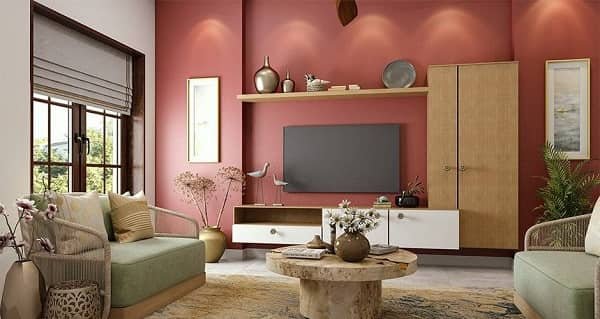
Start With What You Already Have
Before spending a single rupee on new decor, audit what you currently own. Most Indian homes have accumulated more decor-worthy items than residents recognise — old brass utensils, wooden boxes, terracotta pots, inherited textiles, and travel souvenirs that have been relegated to storage.
Bringing these back into active display with intentional placement — a brass lota on a floating shelf, a handloom dupatta as a wall hanging, vintage steel dabbas as an organised kitchen display — creates authentic, character-rich decor that no store purchase can replicate. This zero-cost step consistently produces the most personal and visually distinctive results.
Repurpose and Upcycle Indian Everyday Objects
India’s household objects are inherently beautiful — their forms, materials, and craftsmanship are the product of centuries of functional design. A terracotta pot repurposed as a planter. A wicker basket repurposed as a magazine holder. An old wooden ladder repurposed as a towel rack or plant display. A vintage mirror frame from a kabadiwala repainted and mounted.
Upcycling Indian everyday objects for home decor creates uniqueness — nobody else has the same repurposed brass pots your kitchen shelf holds — and exercises creativity rather than simply purchasing what trend dictates.
The Transformative Power of Indoor Plants
Indoor plants are the single most cost-effective home decor addition available to Indian homes. A well-placed plant in a corner changes the entire energy of a room — adding colour, texture, life, and the psychological benefits of biophilic design at a cost of ₹50 to ₹500 per plant.
Low-maintenance plants that thrive in Indian indoor conditions — money plants, snake plants, peace lilies, and pothos — require minimal care and survive the irregular watering that busy urban households provide. Group three plants of different heights together for a corner arrangement that creates more visual impact than any single decorative object of equivalent cost.
Affordable Textile Transformation
Indian textiles are among the world’s most beautiful and most affordable. Printed bedsheets from Jaipur, block-print cushion covers from Rajasthan, ikat throws from Andhra Pradesh, and kantha quilts from Bengal are available at remarkably accessible prices through local markets, craft exhibitions, and online ethnic lifestyle platforms.
Changing textile furnishings — cushion covers, throws, table runners, and curtains — is the fastest way to seasonally refresh the look of a room without furniture changes. A living room that feels different with a monsoon-season emerald and terracotta palette versus a winter-season deep indigo and ochre palette is a room that stays visually interesting without significant expenditure.
DIY Wall Decor That Looks Expensive
Framed botanical prints — downloadable from public domain sources and printed at a local print shop — create gallery wall arrangements that look curated at a fraction of commercial art print pricing. A set of six matching botanical prints in simple identical frames creates a sophisticated dining room feature wall for under ₹1,500.
Geometric macramé wall hangings — increasingly available from Indian craft sellers on online marketplaces — add texture and warmth to walls that feel bare without the commitment of paint or wallpaper. Macramé pieces in natural cotton look expensive and last years with minimal maintenance.
Strategic Lighting on a Minimal Budget
Lighting transforms spaces more dramatically than almost any other decor element — and it is consistently underinvested in Indian home decoration. String lights along a bedroom headboard wall. A warm-temperature LED bulb replacing a cool-white equivalent in the living room. A floor lamp in a dark reading corner. A small table lamp on the dining table for evening meals.
Each of these lighting additions costs ₹300 to ₹2,000 and changes the ambiance of the space fundamentally — creating warmth, intimacy, and visual depth that harsh overhead lighting destroys regardless of how much decor is below it.
Local Craft Markets as Decor Sources
India’s craft markets — Dilli Haat in Delhi, Crafts Street in Kolkata, Laad Bazaar in Hyderabad, Janpath in Delhi — are extraordinary sources of authentic, handmade decor at prices that retail stores cannot approach. Blue pottery from Jaipur, palm leaf baskets from Odisha, bell metal from Bastar, and phulkari textiles from Punjab are available at source-adjacent prices that make beautiful decor accessible to genuinely modest budgets.
Shopping from craft markets also supports the artisan communities whose skills produce these objects — a dimension of purchasing that adds meaning to the decor beyond its visual contribution.
Frequently Asked Questions (FAQs)
Q1. What is a realistic budget for transforming the look of a two-bedroom Indian apartment through these ideas?
A: A meaningful transformation using plants, textiles, DIY wall decor, lighting, and thoughtfully repurposed existing items can be achieved for ₹5,000 to ₹15,000. This range covers approximately twelve to twenty new plants, a set of fresh cushion covers and throws, string and table lighting additions, two to three framed wall art groupings, and a few craft market purchases. The impact significantly exceeds what the budget figure suggests when the ideas are applied with attention to colour cohesion and intentional placement.
Q2. How do I develop a consistent aesthetic without hiring an interior designer?
A: Choose two to three colours that appear consistently across textiles, plants, and decor objects — this colour cohesion is what creates the designed look without professional guidance. Browse Indian home decor accounts on Instagram and Pinterest to identify the aesthetic language that resonates with your personal taste — then source Indian equivalents of the decor elements you’re drawn to through local markets rather than expensive designer stores.
Q3. Which rooms benefit most from these budget decor ideas?
A: Living rooms and bedrooms see the most dramatic visual transformation from textile and lighting changes — these rooms have the most surface area and are where residents and guests spend the most time. Kitchens benefit most from plant additions and organised display of beautiful everyday objects. Bathrooms — often the most neglected room in Indian home decor — transform significantly from a small plant, a fresh set of towels in a complementary colour, and a simple wall hook arrangement.
Q4. How do I decorate a rental apartment without violating the lease’s no-modification clauses?
A: Removable wall hooks and adhesive strips rated for specific weights allow artwork, mirrors, and decor objects to be wall-mounted without drilling. Freestanding furniture and shelving requires no wall attachment. Plants, textiles, table lamps, and curated object displays require no modification whatsoever. The overwhelming majority of budget-friendly decor ideas in this article are entirely viable in rental apartments without any structural or surface modification.
Q5. How often should I refresh home decor to keep the space feeling current?
A: Seasonal textile changes — different cushion covers and throws across summer, monsoon, and winter — keep the space visually dynamic without any structural change. Plant rotation — moving plants between rooms and adding seasonal flowering plants — refreshes the organic elements. Beyond textiles and plants, a genuine decor refresh every two to three years — new wall art arrangement, a key furniture upgrade, or a lighting addition — maintains the home’s visual interest without the fatigue of constant change or the expense of frequent major purchases.
The Bottom Line
All three articles in this set address Indian home life from different angles — the technology that makes daily tasks more efficient, the spatial intelligence that makes small apartments genuinely liveable, and the creative resourcefulness that makes beautiful homes achievable on real Indian budgets. In every case, the most impactful improvements come not from spending the most but from thinking the most deliberately — choosing the gadget that addresses the actual friction point in daily life, the space solution that works with the apartment’s specific constraints, and the decor approach that draws on India’s own extraordinary material and craft tradition rather than importing aesthetic frameworks that don’t belong here.