The Kangal Shepherd Dog — or Kangal Çoban Köpeği in Turkish — is not a breed most Indian buyers are familiar with from a pet shop window. It is an ancient livestock guardian originating from the Sivas province of Turkey, revered for possessing the most powerful bite force of any domestic dog in the world and an instinctive, calm-natured protectiveness that makes it the guardian of choice for farmers protecting livestock from wolves and bears across Central Asia. In India, the Kangal is a rare, specialized breed increasingly sought by serious dog enthusiasts, large property owners, and those interested in working livestock guardian breeds.
If you are searching for Kangal dog prices in India in 2026, be prepared for a very different conversation than other popular breeds. The Kangal is not readily available across the country, importing one requires navigating significant regulatory and logistical challenges, and the costs — from purchase to maintenance — reflect a large, powerful working dog with specific needs. This guide gives you the complete picture.
| Category | Detail |
| Breed Name | Kangal Shepherd Dog (Kangal Coban Kopegi) |
| Origin | Sivas Province, Turkey |
| Size | Very Large (40 – 66 kg; 72 – 83 cm) |
| Lifespan | 12 – 15 years |
| Temperament | Calm, confident, protective, intelligent, independent, loyal |
| Coat Type | Short, double coat — cream to fawn with black mask |
| Suitable For | Large properties, farms, rural settings, experienced owners |
| Price Range India (2026) | Rs. 50,000 – Rs. 2,50,000+ |
| Availability in India | Rare — limited registered breeders; most are imported |
| Monthly Maintenance | Rs. 10,000 – Rs. 25,000 |
| Bite Force | 743 PSI — highest recorded of any domestic dog breed |
Kangal Shepherd Dog City-Wise Price in India
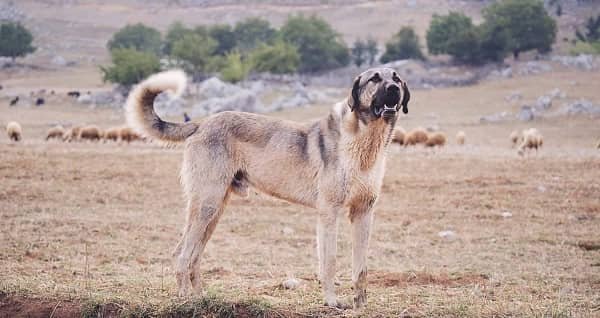
Kangal pricing in India is substantially higher than most breeds due to scarcity, import costs, and the specialized nature of the breed. The price ranges below reflect the limited but growing Kangal market in India as of early 2026. Prices vary sharply based on whether the dog is India-bred (from limited local stock), imported from Turkey or Europe, and the bloodline’s purity and working credentials.
| City / Category | Min Price (INR) | Max Price (INR) |
| Delhi / NCR (imported) | Rs. 80,000 | Rs. 2,00,000 |
| Mumbai (imported) | Rs. 90,000 | Rs. 2,20,000 |
| Bangalore | Rs. 70,000 | Rs. 1,80,000 |
| Hyderabad | Rs. 65,000 | Rs. 1,60,000 |
| Punjab / Haryana (farm demand) | Rs. 60,000 | Rs. 1,50,000 |
| Rajasthan / MP (rural demand) | Rs. 50,000 | Rs. 1,20,000 |
| India-bred from local stock | Rs. 50,000 | Rs. 1,20,000 |
| Direct Turkish import (pure bloodline) | Rs. 1,20,000 | Rs. 2,50,000+ |
| KCI Registered / Show Quality | Rs. 1,00,000 | Rs. 2,50,000+ |
Turkey has placed export restrictions on Kangal dogs of pure bloodline to protect national heritage. Dogs described as “Kangal” from non-Turkish sources should be verified for purity. Import from Europe (where breeding programs exist) is generally more straightforward than direct import from Turkey. Always verify health certifications, especially hip X-rays and full blood panels.
About the Kangal Shepherd Dog
The Kangal is one of the oldest dog breeds still performing its original function — guarding livestock against predators. In Turkey’s Sivas province, Kangals have been used for centuries alongside Anatolian shepherds, bonding with flocks of sheep and goats from puppyhood and instinctively protecting them from wolves, jackals, and even bears. Unlike herding breeds that move and control livestock, the Kangal is a guardian — it stays with the flock, reads threats with extraordinary calm, and responds with decisive force when necessary.
The breed is so culturally significant to Turkey that the Turkish government has classified the Kangal as a national breed, implemented export restrictions, and has periodically gifted Kangals to African nations as a tool for human-wildlife conflict mitigation — specifically to help Namibian and Cheetah Conservation Fund programs protect livestock from cheetah predation without killing cheetahs.
In India, interest in the Kangal has grown among large landowners in Punjab, Haryana, Rajasthan, and Maharashtra who need capable livestock guardians, as well as among urban enthusiasts who appreciate large, calm working breeds. The KCI has only recently begun registering Kangals with sufficient consistency to establish a formal studbook in India.
Kangal Temperament — Calm, Not Aggressive
The most important thing to understand about the Kangal’s temperament is that despite being the world’s most powerful biting dog, it is not an aggressive or excitable breed. Kangals are calm, composed, and remarkably patient — they assess situations slowly and respond proportionately. They do not bark constantly or display nervous energy. When protecting their territory or charges, they are firm and decisive, but this behavior is reserved for genuine threats, not triggered by general anxiety.
Kangals bond deeply with their primary family but are naturally reserved with strangers. Socialization from an early age is critical to prevent excessive territorial behavior in urban settings. They are loyal and gentle with children and smaller animals they are raised with, but their sheer size (40-66 kg) means interactions with young children should always be supervised.
Independence Factor: Unlike herding breeds or sporting dogs that look to their owners for direction constantly, Kangals are programmed to make independent guardian decisions. This means they do not need constant human direction — but it also means they are not as easily trained in conventional obedience competition contexts. They need an owner who understands this distinction.
Not Suitable For: Apartment living, small urban properties, or first-time large dog owners without previous experience with independent-minded breeds.
Importing a Kangal to India — What You Need to Know
Importing a dog to India requires compliance with the Animal Quarantine and Certification Services (AQCS) under the Ministry of Agriculture and Farmers’ Welfare. Key requirements include an import permit, a health certificate from an accredited veterinarian in the country of origin, rabies vaccination, microchipping, and potentially a quarantine period at an approved facility.
Turkey Export Note: Turkey has placed legal restrictions on export of pure Kangals. Dogs purchased from Turkey as “Kangal” may be denied export certificates unless they are not certified as a pure national breed. Many serious buyers source from breeding programs in Germany, the US, or Netherlands where Kangal populations exist.
Total Import Cost: Beyond the purchase price, import costs including shipping, health certificates, import permits, and potential quarantine fees can add Rs. 50,000 to Rs. 1,20,000 to the total outlay.
Recommendation: Contact AQCS at their Chennai, Mumbai, Delhi, or Kolkata offices before committing to an import. Requirements change periodically and professional pet relocation services can significantly simplify the process.
Kangal Health & Lifespan
The Kangal is one of the healthiest large breeds in the world — a product of centuries of natural selection without the intensive artificial selection for aesthetics that has compromised many modern breeds. They are generally free of the genetic diseases that plague many popular large breeds. Hip dysplasia, while not absent, is at lower frequency than in breeds like the German Shepherd or Rottweiler. The primary health concerns are those common to all very large breeds: joint health, bloat (GDV), and appropriate nutrition in the critical growth phase (0-18 months).
Bloat (GDV) Prevention: Feed large meals in two or three portions rather than one large meal. Avoid vigorous exercise immediately after eating. Consider a gastric-fixation surgery (gastropexy) to prevent life-threatening bloat — discuss with your veterinarian.
Joint Health: Do not over-exercise Kangal puppies before 18 months — their large frame needs time to develop fully. Supplement with glucosamine and chondroitin from 6 months onward for long-term joint protection.
Factors That Affect the Price
- Country of Origin: Turkish-bred Kangals with certified Turkish bloodline documentation command the highest prices. European-bred dogs from established programs are the most accessible high-quality option for Indian buyers.
- Purity of Bloodline: Mixed or uncertain lineage dogs sold as “Kangal” are common in some markets. A pure Kangal should have the characteristic cream-to-fawn coat with a black mask, and conform to established breed standards.
- Import Costs: All import costs (shipping, permits, quarantine, health certification) must be factored into the total outlay, adding Rs. 50,000 to Rs. 1,20,000 to purchase price.
- Breeder Reputation: In India, very few breeders specialize in Kangals. Verify KCI registration and request to see complete pedigree documentation going back at least 3 generations.
- Training Status: Adult Kangals that have been partially trained as working dogs or show dogs may be available and can represent value, particularly for buyers seeking working guardians.
Monthly Maintenance Cost in India (2026 Estimate)
- Premium Large Breed Dog Food: Rs. 4,000 – Rs. 8,000/month (Kangals are large dogs requiring high protein intake)
- Space & Infrastructure: Minimum 1,000 sq ft outdoor space; secure fencing 6ft+ height
- Veterinary Care: Rs. 10,000 – Rs. 25,000 annually; large breed health screening
- Grooming: Rs. 800 – Rs. 1,500 per session; coat is low-maintenance but sheds seasonally
- Vaccinations & Preventives: Rs. 3,000 – Rs. 5,000 annually
- Training (strongly recommended): Rs. 10,000 – Rs. 30,000 for professional handler training
- Total Estimated Monthly Cost: Rs. 10,000 – Rs. 25,000 per month
Frequently Asked Questions (FAQs)
Q1. What is the Kangal dog price in India in 2026?
Ans: Kangal dogs are rare in India, and prices in 2026 range from approximately Rs. 50,000 for India-bred puppies from limited local stock to Rs. 2,50,000 or more for direct Turkish or European imports with certified pure bloodlines. Import costs add a further Rs. 50,000 to Rs. 1,20,000 on top of the purchase price.
Q2. Is the Kangal really the strongest dog in the world?
Ans: The Kangal holds the highest recorded bite force measurement of any domestic dog breed at 743 PSI (pounds per square inch) — surpassing Rottweilers, Mastiffs, and other large breeds. However, “strongest” depends on the metric. In terms of bite force, yes — the Kangal is the undisputed record holder among domestic dogs.
Q3. Can a Kangal live in Indian climate?
Ans: Reasonably well. The Kangal’s short double coat is better adapted to varying temperatures than long-coated breeds. They are used to the semi-arid climate of central Turkey, which has hot summers and cold winters. In India, they handle most climates adequately with proper shade, water, and avoiding extreme heat exposure. They are not suited to highly humid coastal tropical conditions without shade and cooling.
Q4. Is a Kangal suitable as a family pet in India?
Ans: The Kangal can be a devoted family dog for experienced owners with large properties. It is not suitable for apartment living or small urban plots. Their independence, size, and guardian instincts require confident, knowledgeable handling. With proper socialization from puppyhood, they are calm, gentle, and deeply loyal. First-time large dog owners should ideally consider a more obedience-oriented breed first.
Q5. How is the Kangal different from an Anatolian Shepherd?
Ans: The Kangal and Anatolian Shepherd are often conflated but are now generally recognized as distinct breeds. The Kangal is specifically from Sivas province, Turkey, with a more defined breed standard (cream-fawn coat, black mask) and slightly heavier build. The Anatolian Shepherd is a broader term for various Turkish livestock guardian dog types. The KCI and FCI treat them as related but distinct breeds.
Conclusion
The Kangal is not an impulse purchase — it is a commitment to one of the world’s most ancient and capable working dogs. For the right owner with the right environment in India, a Kangal offers a level of calm, measured protection and loyal companionship that few breeds can match. The price in India in 2026 reflects both genuine rarity and the substantial logistics involved in acquiring a pure-bred specimen. Do your research thoroughly, work only with verifiable breeders or import agents, and understand that this breed’s needs — space, exercise, socialization, and an experienced guiding hand — are non-negotiable requirements for success.