The Doberman Pinscher is one of India’s most admired guard dogs — intelligent, loyal, athletic, and imposing. For families and individuals seeking a reliable protection dog that doubles as a devoted companion, few breeds compare to a well-bred and properly trained Doberman. As of 2026, the Doberman continues to hold strong popularity in India across both urban homes and rural properties, with demand particularly high in cities like Delhi, Mumbai, Hyderabad, and Bangalore.
Doberman prices in India in 2026 span a wide range depending on bloodline quality, breeder credentials, geographic location, and whether the puppy comes with KCI (Kennel Club of India) papers. This guide provides a detailed and honest look at what you can expect to pay, what that price buys you, and what the ongoing costs of responsible Doberman ownership in India look like.
Quick Overview
| Category | Detail |
| Breed Name | Doberman Pinscher (Dobermann in Europe) |
| Origin | Germany (developed by Karl Friedrich Louis Dobermann, 1890s) |
| Size | Large (27 – 45 kg; 61 – 72 cm) |
| Lifespan | 10 – 13 years |
| Temperament | Fearless, loyal, alert, intelligent, energetic, trainable |
| Coat Type | Short, smooth, low-maintenance coat |
| Suitable For | Active families, guard/protection use, experienced handlers |
| Price Range India (2026) | Rs. 15,000 – Rs. 1,00,000+ |
| KCI Registered (Show / Working Quality) | Rs. 40,000 – Rs. 1,00,000+ |
| Monthly Maintenance | Rs. 6,000 – Rs. 15,000 |
| Exercise Requirement | High — 1.5 to 2 hours daily minimum |
Doberman Pinscher City-Wise Price in India
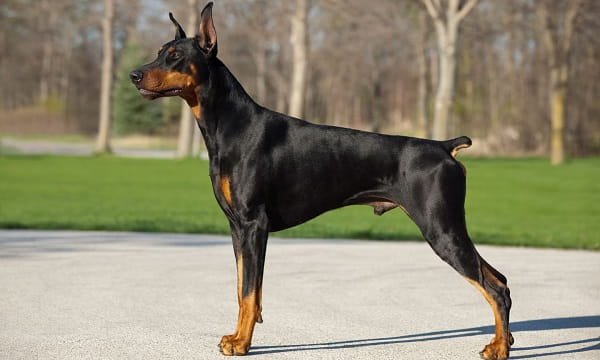
Doberman prices in India vary considerably across cities and quality tiers. The table below reflects typical price ranges from reputable breeders across major Indian cities as of early 2026. Puppies at the lower end of each range are generally pet-quality without full KCI documentation; those at the upper end typically come from champion or imported bloodlines with full health certifications.
| City / Category | Min Price (INR) | Max Price (INR) |
| Delhi / NCR | Rs. 20,000 | Rs. 80,000 |
| Mumbai | Rs. 22,000 | Rs. 90,000 |
| Bangalore | Rs. 18,000 | Rs. 75,000 |
| Hyderabad | Rs. 18,000 | Rs. 75,000 |
| Chennai | Rs. 15,000 | Rs. 70,000 |
| Kolkata | Rs. 15,000 | Rs. 65,000 |
| Pune | Rs. 18,000 | Rs. 75,000 |
| Ahmedabad / Gujarat | Rs. 15,000 | Rs. 60,000 |
| Chandigarh / Punjab | Rs. 18,000 | Rs. 70,000 |
| Tier-2 / Tier-3 Cities | Rs. 12,000 | Rs. 45,000 |
| KCI Registered / Show / Working Line | Rs. 40,000 | Rs. 1,00,000+ |
European working-line Dobermans (IPO/Schutzhund trained lineage) or imported puppies can exceed Rs. 1.5 lakh. Always insist on vaccination proof, deworming history, and request to meet at least the mother. Dobermans with docked tails and cropped ears (done abroad) command premium pricing in some circles, though ear cropping is banned in India under the Prevention of Cruelty to Animals Act.
About the Doberman Pinscher
The Doberman Pinscher was created in Germany in the 1890s by a tax collector named Karl Friedrich Louis Dobermann, who wanted a medium-to-large sized dog that was both a loyal companion and a formidable personal protection animal. He crossed several breeds — believed to include the German Pinscher, Rottweiler, Weimaraner, and Black and Tan Terrier — to produce a sleek, athletic, highly intelligent dog that could work in a variety of protection contexts.
Over the following century, the Doberman became the breed of choice for police work, military service, personal protection, and competitive obedience globally. Their combination of speed (they can reach up to 32 mph), intelligence (consistently ranked among the top 5 most intelligent dog breeds by Stanley Coren’s research), and trainability made them uniquely capable working animals.
In India, the Doberman has been a popular breed since the 1970s and 1980s, particularly in the north where bungalow-style living provides the space these dogs need. Contemporary breeding in India has improved significantly, with several dedicated breeders now producing KCI-registered litters that meet international conformation and temperament standards.
Doberman Temperament — The Truth Behind the Reputation
The Doberman’s reputation as an aggressive dog is largely a misrepresentation — usually the result of poorly bred or improperly socialized examples. A well-bred, well-socialized Doberman is one of the most affectionate, people-oriented breeds you can own. They are often described as “velcro dogs” — they want to be where their people are, always. They are deeply bonded to their family and generally excellent with children they have been raised alongside.
However, the Doberman is also a genuine protection dog — alert, territorial with strangers when necessary, and capable of decisive action when they perceive a threat to their family. This combination of affection and protectiveness, when properly channeled through training, is exactly what most buyers want. When left to develop without structure or socialization, this same combination can become problematic.
Training Requirement: Not optional — Dobermans require consistent, positive reinforcement-based obedience training from 8 weeks onward. They are highly capable but require leadership. Harsh training methods are counterproductive and can create fear-based aggression.
Not Suitable For: Inexperienced dog owners who cannot commit to daily training and exercise, or families living in small apartments without access to outdoor exercise space.
European vs. American Doberman — What’s Available in India?
Indian buyers increasingly encounter both European (working) and American (show) Doberman lines, and it is worth understanding the difference. European Dobermans — from German, Hungarian, Czech, or Russian lines — tend to be heavier, more muscular, with stronger drives and working instincts. They are bred for protection sport (IPO/IGP) and real-world working roles. American Dobermans are typically leaner, with a more refined appearance, bred primarily for conformation shows.
For Guard/Protection Use in India: European working lines are preferred. Breeders importing from Germany, Serbia, or the Czech Republic are producing the most capable working dogs currently available.
For Family Companion: American-line Dobermans are often calmer and more manageable for first-time large dog owners, while still providing an imposing presence as a deterrent.
Doberman Health in India
Dobermans are a breed with known hereditary health concerns that responsible Indian breeders now screen for. Dilated Cardiomyopathy (DCM) — a heart condition — is the single most serious health issue in the breed and can cause sudden death without prior symptoms. Holter monitoring (24-hour heart monitoring) is the gold standard test and should be performed annually on breeding dogs.
Key Health Issues: Dilated Cardiomyopathy (DCM), von Willebrand’s disease (bleeding disorder), hypothyroidism, Wobbler syndrome (cervical spondylomyelopathy), and hip dysplasia.
Lifespan Note: Indian-bred Dobermans, with improved breeding practices and better nutrition since 2022-2025, are increasingly living into the 11-13 year range. Early cardiac screening significantly improves outcome.
Climate Suitability: Unlike Huskies, Dobermans are reasonably well-suited to Indian climate due to their short coat. They should not be kept in intense outdoor heat without shade and water, but they do not require air conditioning to survive comfortably in most Indian cities.
Factors That Affect the Price
- Color: Black & rust (most common), blue & rust, red & rust, and fawn (Isabella) & rust. Fawn (Isabella) Dobermans are rarest and carry a premium in India, but are also more prone to color dilution alopecia.
- Bloodline: European working lines (German, Czech, Serbian) command the highest prices. Indian breeders with documented imported sire/dam lineage charge more but produce more capable and healthier dogs.
- Health Testing: Breeders who conduct cardiac (Holter), von Willebrand, and hip screening on parents charge appropriately more — this premium is absolutely worth paying.
- Ear & Tail Status: In India, tail docking and ear cropping of domestic puppies is illegal. Imported dogs with cropped ears command higher prices in certain buyer segments, though this practice is ethically controversial.
- Gender: Female Dobermans are typically Rs. 5,000-10,000 higher than males in equivalent quality.
- Age: 8-10 week puppies are priced highest. Adolescent (5-12 month) dogs may be available at reduced prices and can be an excellent choice for experienced handlers.
Monthly Maintenance Cost in India (2026 Estimate)
- Premium Dog Food (large breed): Rs. 2,500 – Rs. 5,000/month
- Grooming: Rs. 600 – Rs. 1,200 per session (short coat — monthly grooming adequate)
- Veterinary Care: Rs. 8,000 – Rs. 20,000 annually for routine care; cardiac screening Rs. 3,000-5,000 per Holter test
- Training (professional): Rs. 5,000 – Rs. 20,000 for basic obedience; more for advanced protection training
- Vaccinations & Preventives: Rs. 2,000 – Rs. 4,000 annually
- Accessories & Enrichment: Rs. 1,000 – Rs. 2,500/month
- Total Estimated Monthly Cost: Rs. 6,000 – Rs. 15,000 per month
Frequently Asked Questions (FAQs)
Q1. What is the Doberman price in India in 2026?
Ans: In 2026, Doberman puppies from reputable breeders in India are priced between Rs. 15,000 and Rs. 90,000 for pet-quality puppies, depending on city and bloodline. KCI-registered working or show-quality Dobermans range from Rs. 40,000 to Rs. 1,00,000+. European imported working-line puppies can exceed Rs. 1.5 lakh.
Q2. Is a Doberman a good family dog in India?
Ans: Yes, for experienced dog owners with the time and commitment for training. Well-bred, socialized Dobermans are affectionate, loyal family dogs that are good with children. They are not suitable for families who cannot commit to daily vigorous exercise, consistent training, and ongoing socialization. They should not be left alone for extended periods.
Q3. Are Dobermans aggressive?
Ans: Properly bred and trained Dobermans are controlled and measured, not randomly aggressive. Their protective instinct is toward their family, not indiscriminate. Aggression issues in Dobermans are almost universally the result of poor breeding (irresponsible puppy mills producing nervous, unstable temperaments) or inadequate socialization and training. Always choose from a reputable breeder who health-tests and temperament-tests parent dogs.
Q4. What is DCM and why should I ask breeders about it?
Ans: Dilated Cardiomyopathy (DCM) is a hereditary heart disease that is unfortunately prevalent in the Doberman breed. It causes the heart muscle to weaken and enlarge, potentially leading to sudden death. Responsible breeders screen all breeding dogs annually with Holter monitors (24-hour ECG) and echocardiograms. Asking a breeder whether the parents have current cardiac clearances is a non-negotiable question before purchasing any Doberman puppy.
Q5. Is ear cropping legal for Dobermans in India?
Ans: No. Ear cropping and tail docking for cosmetic purposes is illegal in India under the Prevention of Cruelty to Animals Act, 1960. Dobermans sold with cropped ears in India are either imported dogs (cropped abroad before arrival) or the result of illegal procedures. Never support a breeder who offers to crop ears domestically — it is both illegal and unnecessary.
Conclusion
The Doberman remains one of India’s finest all-purpose dogs — a seamless combination of intelligence, athleticism, loyalty, and protective capability. In 2026, prices range widely from budget pet-quality puppies to premium working-line imports, but the most important investment remains the same: choosing a reputable breeder, starting training early, and committing to the ongoing physical and mental needs of one of the dog world’s most capable breeds. A well-raised Doberman is not just a guard dog — it is a lifetime companion that will match your pace, protect your home, and repay your care with unwavering devotion.