The Tibetan Mastiff is one of the most ancient, most impressive, and most mythologized dog breeds on Earth. Known in Tibet as “Do Khyi” (meaning “home guard” or “door guard”), this giant, lion-maned breed has protected Himalayan monasteries, nomadic camps, and village perimeters from wolves, snow leopards, and bears for millennia at altitudes that would challenge most humans. In the 2000s and early 2010s, Tibetan Mastiffs achieved extraordinary prices in China — with some specimens reportedly selling for millions of dollars — before the speculative bubble burst. In India in 2026, the Tibetan Mastiff occupies a premium but more realistic price bracket.
For Indian buyers, the Tibetan Mastiff holds additional significance as a breed with deep roots in the Himalayan subcontinent — culturally and geographically connected to India’s own mountain heritage. This guide gives you accurate 2026 pricing, the honest realities of owning this magnificent but demanding breed in India, and the essential health information every prospective Tibetan Mastiff owner needs.
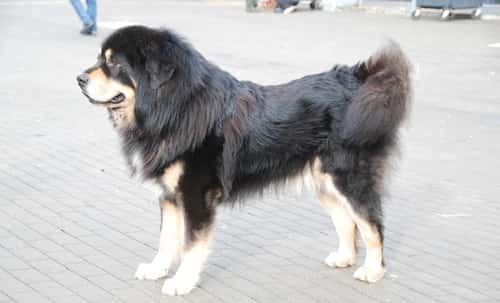
| Attribute | Details |
| Breed Name | Tibetan Mastiff (Do Khyi) |
| Origin | Tibet / Himalayan region — one of the world’s oldest dog breeds |
| Size | Large-Giant: 45–90 kg, 61–76+ cm; significant size variation exists in the breed |
| Lifespan | 10–14 years |
| Temperament | Loyal, protective, independent, intelligent, aloof with strangers, nocturnal tendencies |
| Coat | Long, thick double coat — lion-like mane around neck; gold, brown, blue-grey, black-and-tan |
| Price Range (2026) | Rs. 60,000 – Rs. 3,00,000+ |
| KCI Registration | Available; limited established breeding in India |
| Monthly Maintenance | Rs. 10,000 – Rs. 25,000 |
| Best For | Himalayan foothills, large cool-climate properties, experienced working dog owners |
| Historical Price Record | Reportedly sold for millions of dollars in China at peak (2011-2013) — prices now normalised |
| Climate Suitability | Poor in Indian plains summer — thick double coat requires Himalayan climate or heavy AC |
About the Tibetan Mastiff (Do Khyi)
The Tibetan Mastiff’s history may be longer than any other dog breed on Earth. DNA analysis has identified the Tibetan Mastiff as one of the most genetically primitive domestic dog breeds — among the first to diverge from the ancestral wolf population, possibly as long ago as 58,000 years by some estimates. They appear in ancient Chinese texts dating to 1100 BC and were described by Marco Polo in his 13th-century travels to the court of Kublai Khan as “tall as a donkey with a voice as powerful as that of a lion.”
The breed’s role in Tibetan culture is unique. Do Khyi are traditionally kept chained by day (when the nomadic family is away with their livestock) and released at night to patrol the camp. This nocturnal guardian role is reflected in the breed’s preference for night activity — Tibetan Mastiff owners consistently report that their dogs are more active and alert during nighttime hours, a characteristic that can be challenging in residential urban environments.
The extraordinary Chinese price bubble of 2011-2014, when individual Tibetan Mastiffs were reportedly sold for the equivalent of millions of dollars as status symbols among Chinese nouveau riche buyers, bore no relationship to the breed’s actual qualities or value. When the speculative bubble burst, thousands of Chinese-owned Tibetan Mastiffs were abandoned. This episode serves as a cautionary tale about fashion-driven dog purchasing that every serious breed buyer should understand.
Tibetan Mastiff (Do Khyi) Price in India 2026 — City-Wise Breakdown
Tibetan Mastiff prices in India have normalised significantly from the extraordinary speculation of the 2011-2014 China bubble era. Current 2026 prices reflect genuine breed quality and availability from reputable sources.
| City / Category | Min Price (INR) | Max Price (INR) |
| India-Bred (limited local breeding programs) | Rs. 60,000 | Rs. 1,50,000 |
| Imported — Tibet / China | Rs. 1,00,000 | Rs. 2,50,000 |
| Imported — Europe / USA | Rs. 90,000 | Rs. 2,00,000 |
| Himalayan Region (HP, Uttarakhand) Locally Sourced | Rs. 25,000 | Rs. 80,000 |
| Delhi / NCR | Rs. 70,000 | Rs. 1,80,000 |
| Mumbai / Bangalore | Rs. 80,000 | Rs. 2,00,000 |
| KCI Registered / Show Quality | Rs. 1,00,000 | Rs. 2,50,000+ |
| Lion Head Type (premium variant) | Rs. 1,20,000 | Rs. 3,00,000+ |
| Import Costs (additional) | Rs. 60,000 | Rs. 1,20,000 |
“Lion Head” Tibetan Mastiffs — those with particularly large, mane-like heads and heavily wrinkled faces — command significant premiums. However, extremely exaggerated features are associated with health issues (skin fold infections, breathing difficulties) that the standard Tibetan Mastiff does not face. Choose breeders who prioritise working type health over exaggerated show-ring features.
Temperament & Suitability
The Tibetan Mastiff is an independent, ancient breed with strong territorial instincts and a naturally nocturnal activity pattern. They are deeply loyal to their family and the territory they consider theirs, while maintaining a fundamental aloofness with strangers that does not diminish with age or socialisation. Unlike many European guardian breeds, they do not warm up to strangers given time — they simply become less likely to act on their wariness if the stranger is persistent and poses no threat.
Their intelligence is significant but expressed differently from working breeds like the German Shepherd. Tibetan Mastiffs think independently, learn from observation, and retain information for long periods — but they apply this intelligence to their own agenda rather than to pleasing their handler. Training requires patience, consistency, and respect for the breed’s independent decision-making nature. Harsh training methods are not only ineffective but damaging with this breed.
A practical challenge of Tibetan Mastiff ownership in Indian urban environments is their nocturnal vocalisation — they bark extensively at night, which is their natural guardian behaviour. This can be a severe issue in residential neighbourhoods and is genuinely incompatible with apartment living or densely populated urban areas.
Factors That Affect the Price
- Type: Standard working type vs exaggerated “Lion Head” show type — standard type generally healthier
- Origin / Import Source: Tibetan / Chinese bloodlines, European FCI-registered lines, or Indian Himalayan sourcing
- Coat Colour: Gold and gold-red command highest prices; black-and-tan classic and widely available; blue-grey rare
- KCI Registration: Registered pedigree from documented bloodlines start at Rs. 1,00,000+
- Climate Infrastructure: Himalayan location or full-time AC in plains cities — non-negotiable welfare requirement
- Nocturnal Barking Management: Urban buyers must have property and neighbourhood tolerance for night-time guardian vocalisation
Health & Lifespan
The Tibetan Mastiff is a generally healthy breed given its primitive genetic heritage. Known health concerns include hip and elbow dysplasia (OFA testing of parents important for this large breed), hypothyroidism (documented in the breed — annual thyroid screening recommended from age 4), and autoimmune conditions. Eye conditions including ectropion and entropion occur in some bloodlines.
In India’s climate, the thick double coat is the primary management challenge. During shedding season (typically once yearly for Tibetan Mastiffs — less frequent than many double-coated breeds), they shed their entire undercoat in a process that can last several weeks and requires daily brushing. At other times, their coat is relatively low-shedding. AC management during Indian summers is essential — this is not optional for welfare.
Monthly Maintenance Cost in India (2026 Estimate)
- Premium Large Breed Food: Rs. 4,000 – Rs. 8,000/month
- AC Electricity (essential in plains summers): Rs. 2,000 – Rs. 5,500/month additional
- Professional Grooming (seasonal blowout): Rs. 1,500 – Rs. 3,500/session; every 8 weeks and intensive during shedding
- Veterinary Care (hip + thyroid monitoring): Rs. 10,000 – Rs. 22,000 annually
- Vaccinations & Preventives: Rs. 2,500 – Rs. 5,000 annually
- Total Estimated Monthly Cost: Rs. 10,000 – Rs. 25,000
Frequently Asked Questions (FAQs)
Q1. What is the Tibetan Mastiff price in India in 2026?
Tibetan Mastiff prices in India in 2026 range from Rs. 25,000 for Himalayan-region locally sourced animals to Rs. 3,00,000+ for “Lion Head” show-quality imports with documented pedigree. KCI-registered specimens from established bloodlines typically start at Rs. 1,00,000. Himalayan community-sourced dogs at Rs. 25,000–Rs. 80,000 may be working type without formal documentation.
Q2. Are Tibetan Mastiffs really the world’s most expensive dogs?
Historically yes — at the peak of the Chinese luxury dog bubble (2011-2014), individual Tibetan Mastiffs were reportedly sold in China for millions of US dollars. However, these prices reflected speculative fashion investment, not breed quality. The bubble burst completely by 2015, and current prices worldwide reflect normal large guardian breed market rates. The extraordinary prices were not an indicator of the breed’s genuine qualities.
Q3. Why do Tibetan Mastiffs bark so much at night?
Nocturnal barking is fundamental to the Tibetan Mastiff’s guardian heritage. In Tibet, they are traditionally chained during the day and released at night to patrol camp perimeters — their night-time activity and vocalisation is their natural working behaviour, not misbehaviour. For urban Indian owners, this is one of the most challenging aspects of keeping the breed and genuinely requires either a property with distance from neighbours or management strategies that may work against the dog’s natural instincts.
Q4. Can a Tibetan Mastiff survive in India’s plains climate?
Only with significant AC management. Their thick double coat is designed for Himalayan winters and high-altitude climate. In India’s plains cities, full-time air-conditioned living spaces are required during warm months. The most naturally appropriate Indian locations are genuine Himalayan areas (Himachal Pradesh, Uttarakhand) at altitude. Plains city owners must make a serious, non-negotiable infrastructure commitment to climate management.
Q5. What is the difference between the “Lion Head” and “Tibetan Mastiff”?
“Lion Head” is not a separate breed — it is a term used to describe Tibetan Mastiffs selectively bred for extremely large, heavily wrinkled heads with pronounced manes. These features are exaggerated beyond the working breed standard and are associated with skin fold infections and sometimes breathing issues. Standard working-type Tibetan Mastiffs are healthier than exaggerated Lion Head specimens. Choose breeders who prioritise working health and functionality over extreme physical features.
Conclusion
The Tibetan Mastiff is one of the most ancient and extraordinary dog breeds on Earth — a living connection to thousands of years of Himalayan guardian heritage that occupies a unique cultural position as India’s own mountain neighbour’s most celebrated working dog. In 2026, the Tibetan Mastiff price in India is premium but dramatically more realistic than the speculative bubble era of a decade ago. For buyers in Himalayan India’s foothill regions or those with the genuine infrastructure for climate management in plains cities, the Tibetan Mastiff offers an ownership experience that is both historically profound and deeply rewarding — provided the owner understands and respects what this ancient, independent, and magnificent breed actually is.