Remote work in India has transitioned from a pandemic-era emergency arrangement to a permanent professional reality for millions. The professionals who thrive in this environment share one common thread — they’ve invested thought and modest resources into creating a workspace that supports focused work, professional presentation, and the psychological separation between work and home life that productivity requires.
The following ideas are specific to the Indian context — addressing the reality of compact apartments, frequent power interruptions, variable internet connectivity, and the challenge of maintaining professional presence in homes designed around family life rather than individual productivity.
Dedicated Zone Over Dedicated Room
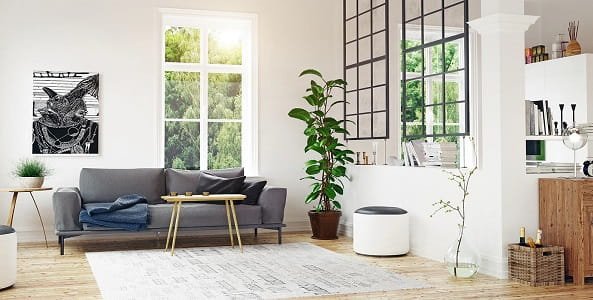
Most Indian urban apartments don’t offer a spare room for a home office — and waiting until that luxury is available means indefinitely working from the kitchen table. The productive approach is creating a dedicated zone within an existing room.
A corner of the bedroom with a wall-facing desk and a dedicated chair establishes the visual and psychological boundary of the workspace. When you sit in the chair, facing the desk, you’re working. When you step away, the workday has ended. This spatial association — even in a compact apartment — is one of the most effective productivity tools available.
The desk should face a wall rather than facing into the room — a wall-facing setup reduces visual distractions, provides a clean background for video calls, and creates a sense of containment that helps sustain focus.
The Right Chair Is the Highest-Priority Investment
Indian remote workers consistently underinvest in seating. A kitchen chair or a dining chair used for eight to ten hours daily creates neck, back, and shoulder problems that eventually affect productivity more than any equipment upgrade could improve it.
An ergonomic chair with lumbar support, adjustable seat height, and armrest support is the single highest-return home office investment available. This doesn’t require a ₹50,000 import — Indian and mid-range international brands offer ergonomic chairs in the ₹8,000 to ₹20,000 range that provide the support architecture that extended work hours require.
Lighting That Supports Video Calls and Focus
Indian home lighting — dominated by overhead cool-white LED fixtures — is functional but unflattering on video calls and cognitively fatiguing for sustained focus work. Two lighting upgrades transform both.
A ring light or LED panel placed facing you at desk level provides even, flattering illumination for video calls that overhead lighting cannot replicate. A warm-temperature desk lamp positioned to illuminate your work surface reduces eye strain during extended screen time. Together, these two additions cost ₹1,500 to ₹5,000 and improve both your professional appearance on calls and your daily comfort significantly.
Power Backup for Uninterrupted Work
Power interruptions during client calls, deadline submissions, or collaborative work sessions are among the most professionally disruptive experiences of Indian remote work. A power backup solution appropriate to your specific need is essential infrastructure, not optional.
A UPS unit for your laptop and monitor provides fifteen to forty-five minutes of backup — sufficient for most brief power interruptions to resolve. A portable power station provides several hours of backup for all work essentials including Wi-Fi router, laptop, phone, and lighting. For areas with frequent extended outages, an inverter battery system for the office zone addresses the problem definitively.
Cable Management and Desktop Organisation
A cluttered desk is a productivity tax. Every time your eye falls on a tangled cable, an irrelevant document, or an object that doesn’t belong in the workspace, attention is fractionally interrupted. Across a workday, these interruptions accumulate into significant focus loss.
Cable management clips that route cables along desk edges, a cable box that conceals power strips and charger cables, and a minimal desktop approach — only what you’re currently working on sits on the desk surface — collectively create the clean, intentional workspace environment that sustained concentration requires.
Acoustic Management in Family Homes
Indian family homes are acoustically lively — conversations, television, cooking sounds, and general household activity create a constant backdrop that research consistently links to reduced cognitive performance on complex tasks.
Acoustic panels — increasingly available in Indian market from home decor sellers — mounted on the walls adjacent to your workspace reduce echo and ambient sound penetration. Over-ear noise-cancelling headphones are the most immediate solution for focus work during noisy household periods. Communicating work hours clearly to family members — creating shared understanding of when the workspace is in active use — is a social management solution that no acoustic product can replace.
Frequently Asked Questions (FAQs)
Q1. What is a realistic budget for setting up a functional home office in an Indian apartment?
A: A fully functional home office — ergonomic chair, desk, ring light, desk lamp, UPS, cable management, and basic acoustic management — can be established for ₹20,000 to ₹45,000. The chair and UPS typically represent the largest cost components. Spreading the investment across three to four months allows budget management without compromising the setup’s effectiveness.
Q2. How do I maintain professional video call backgrounds in a small apartment?
A: A wall-facing desk position with a neutral or lightly decorated wall behind you is the most reliable background solution. Remove any personal items or visual clutter from the wall area visible in the camera frame. A small bookshelf with neatly arranged books creates a professional backdrop at no additional cost. Virtual backgrounds are a functional alternative but lighting quality determines whether they render convincingly.
Q3. Is a standing desk worth the investment for Indian remote workers?
A: Standing desks — particularly height-adjustable models — improve posture and energy levels during extended work sessions. Entry-level adjustable standing desks are available from ₹12,000 to ₹20,000 in the Indian market. A sit-stand converter — a desk-top unit that raises the keyboard and monitor — provides the same functional benefit at ₹4,000 to ₹8,000 without replacing the existing desk.
Q4. How do I create a home office setup that works for video calls with international clients?
A: International clients judge video call quality through three factors — audio clarity, visual clarity, and background professionalism. An external USB microphone or quality webcam headset eliminates the audio quality gap that laptop microphones create. The ring light and clean wall background address visual and background professionalism. A stable internet connection — verified through a wired ethernet connection where possible — ensures call reliability that wireless alone doesn’t guarantee.
Q5. Can I set up a functional home office without a dedicated desk?
A: A laptop stand that raises the screen to eye level, a wireless keyboard and mouse, and a stable flat surface — including a quality lap desk for couch-based work — create an ergonomically acceptable setup without a traditional desk. This solution works for occasional or part-time home work. For full-time remote work of five or more days per week, a dedicated desk and ergonomic chair are worth the investment in both productivity and physical health terms.