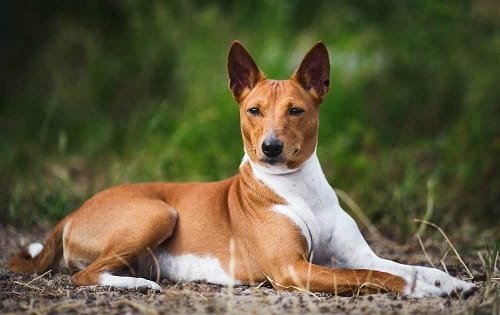
The Basenji is one of the most ancient and genuinely unique dog breeds in the world — a small, elegant hunting dog from Central Africa that is famously known as “the dog that doesn’t bark.” Instead of barking, the Basenji produces a unique yodel-like sound called a “baroo” — and its near-silence indoors has made it particularly interesting to Indian apartment dwellers who struggle with breed vocality. The Basenji also grooms itself like a cat, has no “doggy odour,” and is considered one of the most hypoallergenic options available.
In India, the Basenji is extremely rare — a specialist breed for serious enthusiasts who specifically seek its unique combination of characteristics. If you are searching for the Basenji dog price in India in 2026, this guide gives you accurate current pricing, the complete profile of this extraordinary breed, and the honest information you need about what Basenji ownership in India involves.
| Attribute | Details |
| Breed Name | Basenji (Congo Dog / African Barkless Dog) |
| Origin | Central Africa — ancient hunting breed, depicted in Egyptian pharaoh tomb art |
| Size | Small: 9–11 kg, 40–43 cm — compact, athletic build |
| Lifespan | 12–16 years — one of the longer-lived breeds |
| Unique Feature | Does not bark — produces a unique “baroo” yodel instead; grooms itself like a cat |
| Temperament | Independent, intelligent, curious, affectionate with family, reserved with strangers, high prey drive |
| Coat | Short, fine, low-shedding; red-and-white, black-and-white, tricolour, brindle |
| Price Range (2026) | Rs. 40,000 – Rs. 1,00,000+ |
| Availability | Very rare in India — essentially import-only |
| Monthly Maintenance | Rs. 4,000 – Rs. 9,000 (low-shedding coat minimises grooming costs) |
| Climate Suitability | Good — short fine coat suited to Indian conditions; African origin means heat tolerance |
| Reproductive Cycle | Females come into heat only once per year (unlike most breeds — twice yearly) |
About the Basenji
The Basenji’s origin in Central Africa’s Congo Basin makes it one of the most ancient domestic dog breeds — DNA analysis places the Basenji among the most genetically primitive of all domestic dog breeds, closest in genetic distance to the wolf-to-dog transition. Images of Basenji-like dogs appear on ancient Egyptian temple carvings and in tomb artwork, suggesting they were traded into Egypt from Central Africa thousands of years ago.
The breed was “rediscovered” by Western explorers in the Congo in the late 19th and early 20th centuries, leading to the first importation to England in the 1930s. The AKC recognised the breed in 1943. The Basenji’s inability to bark is caused by an unusually shaped larynx — the vocal cords are positioned differently from other dogs, preventing the repetitive sound waves of barking while allowing the characteristic yodel/baroo.
Another remarkable characteristic: Basenji females come into reproductive heat only once per year (compared to twice yearly for most domestic breeds) — a characteristic shared with wild canids and reflecting the breed’s primitive genetic status. In India, the Basenji generates interest primarily from dog enthusiasts fascinated by its unique characteristics and from allergy-sensitive buyers seeking a low-allergen companion.
Basenji Price in India 2026 — City-Wise Breakdown
Basenjis are essentially unavailable through domestic Indian breeding as of 2026. All genuine Basenjis in India are imported, making pricing reflective of both the dog’s purchase price and substantial import costs.
| City / Category | Min Price (INR) | Max Price (INR) |
| Imported — USA (BCOA registered) | Rs. 60,000 | Rs. 1,00,000 (purchase price) |
| Imported — UK / Europe | Rs. 55,000 | Rs. 95,000 (purchase price) |
| International Shipping to India | Rs. 40,000 | Rs. 70,000 |
| AQCS Import Permit + Health Certification | Rs. 15,000 | Rs. 30,000 |
| Total Cost (purchase + import, metro cities) | Rs. 1,10,000 | Rs. 2,00,000+ |
| Any India-Bred Basenji (if available) | Very rare | – |
| Delhi / NCR (if domestically available) | Rs. 45,000 | Rs. 85,000 |
| Mumbai / Bangalore (rare domestic) | Rs. 50,000 | Rs. 90,000 |
The Basenji’s global population is relatively small — a few thousand registered individuals worldwide. Breeders in the USA (Basenji Club of America — BCOA), UK, Netherlands, and Australia maintain the most established programs. Waiting lists of 1-2 years at top breeders are common. DNA testing for Fanconi Syndrome (a serious hereditary kidney condition specific to the Basenji) is the most important health test to request.
Temperament & Suitability
The Basenji’s temperament is simultaneously one of its greatest charms and its most challenging aspects. They are intelligent, curious, and alert — constantly scanning their environment with an intensity that reflects their primitive hunting heritage. They are independent thinkers who make their own decisions rather than deferring to their owner’s direction, which makes training significantly more challenging than for eager-to-please breeds.
They form deep bonds with their immediate family but are reserved and sometimes suspicious of strangers — warmer than a Chow Chow but not the exuberant greeter that a Labrador or Golden Retriever would be. Their cat-like self-grooming habit (they groom their own coat and paws like a cat), absence of doggy odour, and near-silent indoor behaviour make them genuinely unusual companion dogs.
Their prey drive is very high — they will chase any small moving animal with complete focus, making reliable off-leash recall essentially impossible. A Basenji must always be on a leash or in a securely enclosed area outdoors. They are also excellent escape artists — creative and persistent in finding ways out of enclosures.
Factors That Affect the Price
- Global Rarity: Very limited worldwide population — waiting lists at top breeders are 1-2 years
- Import Source: BCOA (Basenji Club of America) or UK/European breed club registered dogs are most reliable
- Fanconi Syndrome DNA Test: The most important breed-specific health test — ask for results from both parent dogs
- Import Costs: Add Rs. 55,000-Rs. 1,00,000 for shipping, AQCS permits, and quarantine to purchase price
- Coat Colour: Red-and-white most common; tricolour (black, white, tan) and brindle also available
- Reproductive Rarity: Annual heat cycle means fewer litters available per year — adds to scarcity and waiting list times
Health & Lifespan
Fanconi Syndrome is the most serious hereditary health concern specific to the Basenji — a kidney disorder that affects the reabsorption of nutrients, causing progressive kidney failure. A DNA test exists and all responsible breeders should test breeding dogs before pairing. Ask specifically for Fanconi DNA test results (clear, carrier, or affected) for both parents. Progressive Retinal Atrophy (PRA — hereditary blindness) also occurs — DNA test available. Hypothyroidism is documented in the breed.
In India’s climate, the Basenji’s short, fine coat is well-suited — the breed’s African origin means it handles heat significantly better than European dog breeds. The Basenji is not prone to the heat sensitivity that affects Newfoundlands, Samoyeds, or Chow Chows in India. Their minimal shedding and absence of doggy odour make them particularly practical for Indian apartments from a cleanliness perspective.
Monthly Maintenance Cost in India (2026 Estimate)
- Premium Small Breed Food: Rs. 1,500 – Rs. 3,500/month
- Grooming (very low — cat-like self-cleaning): Rs. 300 – Rs. 600/session; monthly bath only
- Veterinary Care (Fanconi monitoring from age 3): Rs. 7,000 – Rs. 16,000 annually
- Vaccinations & Preventives: Rs. 1,500 – Rs. 3,500 annually
- Secure outdoor enclosure (essential — escape artist): One-time infrastructure investment
- Total Estimated Monthly Cost: Rs. 4,000 – Rs. 9,000
Frequently Asked Questions (FAQs)
Q1. What is the Basenji dog price in India in 2026?
Basenjis are essentially unavailable through domestic Indian breeding. The total cost of importing a Basenji from USA or Europe ranges from Rs. 1,10,000 to Rs. 2,00,000+ including the dog’s purchase price (Rs. 60,000-Rs. 1,00,000 equivalent) and international import costs. The very rare domestically available Basenji may be found at Rs. 45,000-Rs. 90,000 in metro cities.
Q2. Why doesn’t the Basenji bark?
The Basenji’s larynx (voice box) is shaped differently from other domestic dog breeds — the vocal cords are positioned in a way that prevents the repetitive sound waves that constitute a bark. The Basenji can still vocalise — it produces a distinctive yodel, howl, or “baroo” sound that is quite musical and not unpleasant. In residential apartment settings, the absence of barking is one of the Basenji’s most practical characteristics.
Q3. Is the Basenji truly hypoallergenic?
The Basenji is low-shedding (short, fine coat), produces minimal dander, and has no typical “doggy odour” — characteristics that collectively make it one of the more suitable breeds for mild dog allergy sufferers. As with all dogs, the Basenji is not truly hypoallergenic (allergies are triggered by proteins in saliva and dander, not just hair), but its characteristics make it considerably less allergenic than most breeds.
Q4. Are Basenjis good for Indian apartments?
Unusually, yes — for a dog with significant exercise needs. The Basenji’s near-silent indoor behaviour (no barking), minimal shedding, no doggy odour, and cat-like cleanliness make it one of the most apartment-compatible active dogs. However, their exercise needs (30-45 minutes of brisk, engaging activity daily) must be met consistently. Outdoor areas must be securely enclosed — their prey drive and escape artistry make unsecured outdoor access genuinely dangerous.
Q5. What is Fanconi Syndrome and why is it critical for Basenjis?
Fanconi Syndrome is a hereditary kidney disorder specific to Basenjis where the renal tubules fail to reabsorb important nutrients — including glucose, amino acids, and electrolytes — leading to progressive kidney damage. It typically manifests between ages 4-8 and can be fatal without management. A DNA test exists that identifies dogs as Clear, Carrier, or Affected. Responsible breeders only breed Clear-to-Clear or Clear-to-Carrier pairings, ensuring no Affected puppies are produced. Always request Fanconi DNA test results before purchasing any Basenji.
Conclusion
The Basenji is a genuinely extraordinary dog — ancient in heritage, unique in vocal anatomy, cat-like in cleanliness, and independent in spirit. In India in 2026, acquiring a genuine Basenji requires patience, significant financial investment, and direct engagement with international breeding programs. For allergy-sensitive apartment dwellers who have been told they cannot have a dog, the Basenji is among the most genuinely accessible options available. For serious rare-breed enthusiasts who want a dog unlike anything else, the Basenji’s combination of African antiquity, remarkable silence, and independent intelligence delivers an ownership experience that is, quite literally, in a class of its own.