The term “Alaskan dog” in India typically refers to one of two magnificent Arctic working breeds — the Alaskan Malamute or the Siberian Husky — and occasionally both together. These wolf-like, thick-coated sled dogs from the frozen wilderness of Alaska and Siberia have become two of India’s most visually striking and socially media-popular breeds, capturing the imagination of urban dog lovers across the country. If you are searching for the Alaskan dog price in India in 2026, this guide covers both breeds with accurate pricing, honest climate realities, and everything a prospective Indian owner needs to know.
While the Siberian Husky and Alaskan Malamute are distinct breeds — different in size, origin, and working role — they share enough characteristics (Arctic heritage, thick double coats, sled dog temperament, and similar climate challenges in India) that covering them together as “Alaskan dogs” provides the most useful guide for Indian buyers. Understanding which breed you are actually interested in is the first step this guide will help you take.
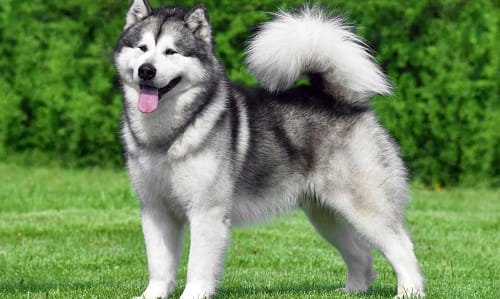
Article Overview — At a Glance
| Attribute | Alaskan Malamute | Siberian Husky |
| Origin | Alaska, USA (Mahlemut Inuit people) | Siberia, Russia (Chukchi people) |
| Size | Large: 32–43 kg, 58–63 cm | Medium: 16–27 kg, 50–60 cm |
| Lifespan | 10–14 years | 12–15 years |
| Temperament | Independent, dominant, powerful, sociable | Friendly, mischievous, energetic, vocal |
| Coat | Thick double coat — heavy shedding | Thick double coat — heavy shedding |
| Price (2026) | Rs. 40,000 – Rs. 1,50,000 | Rs. 25,000 – Rs. 1,20,000 |
| Exercise Needed | 1.5–2 hours vigorous daily | 1.5–2 hours vigorous daily |
| Climate Suitability | Very poor in Indian plains | Very poor in Indian plains |
| Monthly Maintenance | Rs. 10,000 – Rs. 25,000 | Rs. 9,000 – Rs. 22,000 |
| Best Indian Location | Hill stations above 1,500 m | Hill stations above 1,500 m |
| AC Requirement | Full-time AC — non-negotiable | Full-time AC — non-negotiable |
About the Alaskan Breeds
The Alaskan Malamute is one of the oldest Arctic sled dog breeds, developed by the Mahlemut people of western Alaska specifically for hauling heavy freight loads across long distances in extreme cold. Unlike the Husky (built for speed), the Malamute was built for power and endurance — a distinction that is visible in its significantly larger, heavier frame. Alaskan Malamutes were used by Admiral Byrd’s Antarctic expeditions in the 1930s and served in the US Army in Alaska during World War II. They were formally recognised by the AKC in 1935.
The Siberian Husky, developed by the Chukchi people of northeastern Siberia over approximately 3,000 years, is the faster and more agile of the two. In 1925, a relay of Husky sled teams carried diphtheria antitoxin across 1,085 km of Alaskan wilderness in five and a half days to save the children of Nome, Alaska — one of the most celebrated events in dog history. The lead dog on the final leg, Balto, became a global hero. In India, both breeds have been growing steadily in popularity through 2022–2025 despite the well-documented climate challenges.
Alaskan Dog Price in India 2026 — City-Wise Breakdown
Both breeds are available across India, though the Husky is significantly more widely available than the Malamute. Prices below reflect reputable breeder rates as of early 2026.
| City / Category | Alaskan Malamute | Siberian Husky |
| Delhi / NCR | Rs. 45,000 – Rs. 1,20,000 | Rs. 28,000 – Rs. 95,000 |
| Mumbai | Rs. 50,000 – Rs. 1,30,000 | Rs. 32,000 – Rs. 1,05,000 |
| Bangalore | Rs. 40,000 – Rs. 1,10,000 | Rs. 26,000 – Rs. 90,000 |
| Hyderabad | Rs. 40,000 – Rs. 1,10,000 | Rs. 26,000 – Rs. 88,000 |
| Chandigarh / North India | Rs. 38,000 – Rs. 1,05,000 | Rs. 24,000 – Rs. 82,000 |
| Hill Stations (Shimla, Manali) | Rs. 35,000 – Rs. 90,000 | Rs. 22,000 – Rs. 78,000 |
| Tier-2 Cities | Rs. 30,000 – Rs. 75,000 | Rs. 18,000 – Rs. 62,000 |
| KCI Show / Import Quality | Rs. 70,000 – Rs. 1,50,000 | Rs. 60,000 – Rs. 1,20,000 |
Note: Blue-eyed or heterochromic (one blue, one brown eye) Huskies command a 20–40% premium. Giant Alaskan Malamutes (above standard weight) are marketed at premium prices but are associated with joint problems — avoid paying extra for extreme size.
Temperament & Suitability
Both Alaskan breeds are fundamentally working sled dogs — sociable, energetic, and independent. Neither makes an effective guard dog; their friendly nature extends to strangers, which reflects their pack-working heritage. The Husky is lighter, faster, and generally more adaptable than the Malamute for moderate owners. The Malamute is more dominant, more stubborn, and more physically powerful — requiring a genuinely confident, experienced handler.
Both breeds are notorious escape artists. They can scale surprisingly high fences and dig under enclosures with remarkable efficiency. Any outdoor area must be thoroughly secured before bringing either breed home. Their exercise requirements — 1.5 to 2 hours of vigorous daily activity — are non-negotiable. A bored Alaskan breed will redecorate your home in ways you will not appreciate.
Huskies are particularly vocal — they howl, “woo-woo,” and generally vocalise their feelings with enthusiasm. In apartments or closely spaced housing, this can be a significant issue with neighbours. Both breeds have strong prey drives and should always be kept on a leash or in securely fenced areas when outdoors.
Critical climate note: Do NOT shave either breed’s coat in Indian summers. The double coat insulates against heat as well as cold — shaving removes this protection and can cause permanent coat damage. Regular brushing to remove dead undercoat, combined with AC management, is the correct approach.
Factors That Affect the Price
- Eye Colour (Husky): Blue eyes and heterochromia command a 20–40% premium in India — an aesthetic preference with no health correlation.
- Size (Malamute): Standard-sized Malamutes (32–43 kg) are healthier than “Giant” variants marketed at premiums. Choose standard size for better joint health outcomes.
- KCI Registration: Registered litters from health-tested parents start at Rs. 60,000+ for Huskies and Rs. 70,000+ for Malamutes.
- Coat Colour: Pure white Huskies and agouti (wolf grey) Malamutes command premiums in India.
- Import Source: AKC or FCI registered bloodlines from USA or Russia add Rs. 55,000–Rs. 1,20,000 in import costs.
- Gender: Females typically Rs. 6,000–Rs. 15,000 higher across both breeds.
Health & Lifespan
The Alaskan Malamute is prone to hip dysplasia (OFA testing of parents essential), Progressive Retinal Atrophy (PRA — DNA test available), Polyneuropathy (hereditary neurological condition — DNA test available), and Chondrodysplasia (skeletal dwarfism gene — DNA test available). The Siberian Husky shares the PRA concern and also has documented hereditary cataracts and epilepsy.
For both breeds in India, heat stroke is the primary emergency health concern. Signs include excessive panting, bright red gums, drooling, and loss of coordination. If observed: move immediately to cool air, apply cool (not cold) water to paw pads and neck, and seek emergency veterinary care. Indian veterinary emergency data from summer 2024–2025 consistently identifies Arctic breeds among the most at-risk dogs during peak summer months.
Monthly Maintenance Cost in India (2026 Estimate)
| Cost Category | Alaskan Malamute | Siberian Husky |
| Premium Dog Food | Rs. 4,500 – Rs. 8,500/month | Rs. 3,000 – Rs. 6,000/month |
| AC Electricity (March–September) | Rs. 2,500 – Rs. 6,000/month | Rs. 2,000 – Rs. 5,000/month |
| Professional Grooming | Rs. 1,800 – Rs. 3,500/session | Rs. 1,500 – Rs. 3,000/session |
| Veterinary Care (annual) | Rs. 10,000 – Rs. 24,000 | Rs. 8,000 – Rs. 20,000 |
| Total Monthly Estimate | Rs. 10,000 – Rs. 25,000 | Rs. 9,000 – Rs. 22,000 |
Conclusion
Alaskan dogs — whether the powerful Malamute or the spirited Husky — are among the most visually spectacular and personality-rich breeds available in India. In 2026, their prices reflect genuine quality and the significant infrastructure required to keep Arctic breeds comfortable in a tropical country. For buyers in Indian hill stations or those with robust AC infrastructure and genuinely active lifestyles, these breeds offer a uniquely exhilarating, vocal, and deeply beautiful ownership experience. For everyone else, the honest advice is to admire them on social media and choose a breed more naturally suited to India’s conditions.
Frequently Asked Questions (FAQs)
Q1. What is the Alaskan dog price in India in 2026?
A: The Alaskan Malamute ranges from Rs. 38,000 to Rs. 1,50,000 from reputable breeders. The Siberian Husky ranges from Rs. 22,000 to Rs. 1,20,000. Both prices reflect metro city reputable breeder rates. KCI-registered show-quality animals are at the upper end of these ranges.
Q2. Can an Alaskan dog survive in India’s hot climate?
A: Only with significant management. Both breeds require fully air-conditioned living spaces (18–22°C) during India’s warm months. Walks must be restricted to before 8 AM and after 7 PM during April–June. Hill stations above 1,500 m altitude (Shimla, Manali, Ooty, Mussoorie) are the most naturally appropriate Indian environments for these breeds.
Q3. What is the difference between an Alaskan Malamute and a Siberian Husky?
A: The Malamute (32–43 kg) is larger, slower, and was bred for hauling heavy loads. The Husky (16–27 kg) is smaller, faster, and was bred for pulling lighter loads quickly over long distances. The Malamute is significantly more dominant and independent — even more challenging for inexperienced owners than the Husky.
Q4. Do Alaskan dogs shed heavily in India?
A: Yes — both breeds shed heavily year-round with two dramatic seasonal “coat blow” periods. Daily brushing during shedding season and professional grooming every 6–8 weeks are essential. In India’s humid climate, the dense undercoat can trap moisture and cause skin infections if not regularly maintained.
Q5. Are Alaskan dogs good with children?
A: Both breeds are generally gentle and sociable with children they are raised with. However, their size, energy, and enthusiasm can overwhelm small children unintentionally. Their high prey drive means small pets should be introduced carefully. Supervised interaction with young children is always recommended.