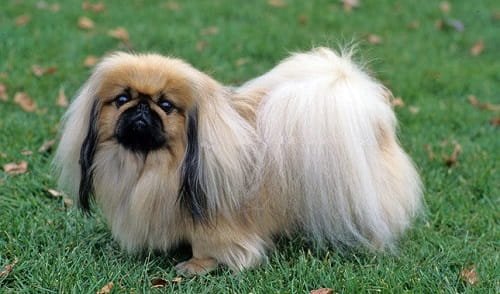
The Pekingese is one of the most ancient and historically significant dog breeds in the world — a small, luxuriously coated companion dog that lived exclusively within the walls of the Imperial Palace in Beijing for centuries, seen by ordinary Chinese people only when imperial processions passed through the streets and the tiny dogs were carried in the sleeves of court ladies or rode in sedan chairs alongside the emperor’s family. No commoner could own a Pekingese; theft of one was punishable by death. This extraordinary heritage has given the Pekingese a bearing that its devotees describe as “regal” and its detractors describe as “haughty” — and both assessments contain truth.
In India, the Pekingese has a long and devoted following. Its manageable size, apartment-friendly exercise requirements, and deeply affectionate bond with its primary owner make it particularly well-suited to urban Indian households. If you are searching for the Pekingese dog price in India in 2026, this guide gives you accurate pricing, the honest temperament reality, the important health information about this brachycephalic breed, and the complete grooming guide for one of the most demanding coats in the small breed world.
Article Overview — At a Glance
| Attribute | Details |
| Breed Name | Pekingese (Peking Palasthund / Lion Dog) |
| Origin | Beijing (Peking), China — Imperial Forbidden City |
| Size | Small: 3–6 kg, 15–23 cm |
| Lifespan | 12–15 years |
| Temperament | Independent, dignified, loyal, affectionate with family, aloof with strangers |
| Coat | Long, flowing double coat with mane — profuse and demanding; wide colour range |
| Price Range (2026) | Rs. 12,000 – Rs. 50,000 |
| KCI / Show Quality | Rs. 28,000 – Rs. 50,000+ |
| Monthly Maintenance | Rs. 4,000 – Rs. 10,000 |
| Brachycephalic | Yes — flat face; heat management critical in Indian summers |
| Best For | Calm households, seniors, apartment owners, experienced small breed owners |
| Grooming Requirement | Very high — daily brushing + professional grooming every 4–6 weeks |
About the Pekingese
The Pekingese’s origin story is woven through with Chinese legend and documented imperial history in equal measure. According to the “lion dog legend” of Chinese Buddhism, a lion fell in love with a marmoset — the lion prayed to the Buddha to be reduced in size so he could be with his beloved, and the Buddha granted the wish, creating the first Pekingese. Whether legend or fantasy, this story perfectly captures the essence of the breed: the heart and courage of a lion in the body of a small companion dog.
In documented history, Pekingese were bred exclusively within the walls of the Imperial Forbidden City in Beijing for over 2,000 years, maintaining bloodlines through imperial breeding programs that were among the most controlled in canine history. These dogs were so precious that dedicated servants cared for them exclusively, and the imperial dogs had their own hierarchical rankings within the palace social structure. Some were designated “imperial” or “sleeve” dogs (small enough to be carried in the wide sleeves of court robes), and these miniature specimens held the highest prestige.
The West first encountered Pekingese in 1860, when British and French troops looted the Summer Palace outside Beijing during the Second Opium War. Five small dogs found in the palace were taken to Britain — one was presented to Queen Victoria, who named it “Looty.” This single dog, along with four others brought back by British officers, established the entire Western Pekingese gene pool.
In India, the Pekingese has been present since the colonial era and has maintained a loyal following in urban households, particularly among those who appreciate its independent personality and the historical weight of owning one of the world’s oldest imperial breeds.
Pekingese Price in India 2026 — City-Wise Breakdown
| City / Category | Min Price (INR) | Max Price (INR) |
| Delhi / NCR | Rs. 14,000 | Rs. 45,000 |
| Mumbai | Rs. 16,000 | Rs. 48,000 |
| Bangalore | Rs. 12,000 | Rs. 42,000 |
| Hyderabad | Rs. 12,000 | Rs. 40,000 |
| Chennai | Rs. 10,000 | Rs. 38,000 |
| Kolkata | Rs. 10,000 | Rs. 36,000 |
| Pune / Chandigarh | Rs. 12,000 | Rs. 42,000 |
| Tier-2 / Tier-3 Cities | Rs. 7,000 | Rs. 25,000 |
| KCI Registered / Show Quality | Rs. 28,000 | Rs. 50,000+ |
Note: Pekingese come in an extraordinarily wide range of coat colours — all colours except albino (pure white with pink eyes) and liver are accepted. Black-and-tan, red, fawn, cream, grey, and particolour are all available in India. “Sleeve Pekingese” — individuals smaller than the standard 3 kg minimum weight — are sometimes marketed at premiums but carry the same health risks as all extreme miniaturisation and should not command a premium over healthy standard-sized individuals.
Temperament & Suitability
The Pekingese’s temperament is the direct product of two millennia of breeding exclusively as an imperial companion — and it shows. This is a dog that has never in its history been expected to work, hunt, herd, or guard. Its entire evolutionary purpose has been to be a magnificent, self-possessed companion to people of the highest status. The result is a breed of extraordinary dignity and independence that reserves its affection for those it chooses to bestow it upon — typically its immediate family — while maintaining imperial disregard for everyone else.
They are genuinely affectionate and devoted with their chosen person, enjoying being near their owner and displaying a quiet, steady loyalty that is deeply satisfying for those who appreciate their personality. They are not demonstratively enthusiastic in the way a Labrador or Cocker Spaniel is — they express their affection with measured, dignified attention rather than exuberant tail-wagging. With strangers, they range from disinterested to coolly wary, depending on individual personality.
Their exercise requirements are modest — 20–30 minutes of gentle daily walking is sufficient. They are not built for vigorous activity and should never be pushed into high-intensity exercise, particularly in warm weather. Their flat faces create a permanent compromise in breathing efficiency that limits their physical capacity. In Indian summers, outdoor activity must be restricted to the coolest hours of the day, and cool indoor spaces are essential.
One important temperament reality: the Pekingese’s independence means training is less straightforward than with more eager-to-please breeds. They learn at their own pace, respond to gentle positive reinforcement (never harsh methods — they will simply withdraw), and benefit from patient, consistent owners who work with their nature rather than against it. They are best suited to calm, patient households — not busy families with very young children who might misinterpret the Pekingese’s dignified aloofness as an invitation for enthusiastic handling.
Factors That Affect the Price
- Coat Quality: Full, flowing, well-maintained double coat in correct texture is show quality. Puppy coat quality is a predictor of adult coat quality.
- Face Structure: Rounder, flatter face is fashionable in the show ring but more severely brachycephalic — associated with greater breathing compromise. A slightly more moderate face structure is healthier.
- KCI Registration: Registered pedigree from champion bloodlines starts at Rs. 28,000+.
- Colour: All colours equally priced; very dark black-and-tan and pure partis may command slight premiums in show contexts.
- Sleeve Pekingese Warning: Extremely small individuals marketed as “sleeve” Pekingese at premiums carry health risks identical to teacup dogs. Standard weight (3–6 kg) individuals are healthiest.
Health & Lifespan
The Pekingese faces health challenges primarily from its brachycephalic anatomy and its profuse coat in India’s climate. Brachycephalic Obstructive Airway Syndrome (BOAS) affects the breed at significant rates — the compressed facial structure narrows the airways, causing breathing difficulties that range from snoring and snorting to serious respiratory distress in severe cases. Surgical correction (soft palate resection, nares widening) is available and recommended for severely affected dogs. In India, Pekingese are among the brachycephalic breeds most frequently presenting for heat-related emergencies in summer months from 2024–2025 veterinary data.
Eye conditions are a major concern — the Pekingese’s large, prominent eyes are vulnerable to corneal ulceration (from scratching on surfaces or from hair contact), dry eye (KCS), and distichiasis (extra eyelashes irritating the cornea). Daily eye-area cleaning and keeping hair away from the eyes is essential preventive care. Intervertebral Disc Disease (IVDD) affects the breed due to its long back relative to leg length — avoid allowing Pekingese to jump from height.
In India’s humidity, the dense double coat must be thoroughly dried after every bath. Skin fold dermatitis in the facial wrinkles is common — daily cleaning of the nose fold and facial folds prevents bacterial accumulation.
Monthly Maintenance Cost in India (2026 Estimate)
| Cost Category | Estimated Cost |
| Premium Small Breed Food | Rs. 1,200 – Rs. 3,000/month |
| Professional Grooming (major cost) | Rs. 1,000 – Rs. 2,200/session; every 4–6 weeks |
| Daily Home Brushing Supplies | Rs. 300 – Rs. 700/month |
| Veterinary Care (eye + respiratory monitoring) | Rs. 7,000 – Rs. 15,000 annually |
| Vaccinations & Preventives | Rs. 1,500 – Rs. 3,500 annually |
| Total Estimated Monthly Cost | Rs. 4,000 – Rs. 10,000 |
Frequently Asked Questions (FAQs)
Q1. What is the Pekingese price in India in 2026?
A: Pekingese prices from reputable breeders in India in 2026 range from Rs. 10,000 to Rs. 48,000 for pet-quality dogs. KCI-registered show-quality Pekingese from champion bloodlines start at Rs. 28,000. These prices make the Pekingese one of the more accessible rare-heritage companion breeds in India.
Q2. What is the “lion dog legend” of the Pekingese?
A: In Chinese Buddhist legend, a lion fell in love with a marmoset and prayed to the Buddha to reduce his size so he could be with his beloved. The Buddha granted this wish, creating the first Pekingese — a dog that carries the lion’s heart and courage in a small body. This legend inspired the breed’s alternative name “Lion Dog” and explains the intentional lion-like appearance of the full-coated Pekingese with its magnificent mane around the shoulders.
Q3. Why are Pekingese considered “imperial” dogs?
A: The Pekingese was bred exclusively within the walls of Beijing’s Forbidden City for over 2,000 years as a companion for Chinese emperors and their courts. No commoner could legally own one; theft was punishable by death. The breed entered Western hands only in 1860 when British forces looted the Summer Palace during the Second Opium War. This extraordinary history of extreme privilege is the origin of both the breed’s “imperial” status and its characteristic dignified independence.
Q4. How does a Pekingese handle Indian summers?
A: With difficulty — the Pekingese is brachycephalic (flat-faced) and has a profuse double coat, combining two significant heat-related challenges. Indian summer management is essential: outdoor activity restricted to before 8 AM and after 7 PM during April–June; cool or air-conditioned indoor spaces mandatory during afternoon hours; never leaving a Pekingese in an unventilated space or vehicle. The combination of a compressed airway that already compromises breathing efficiency with Indian summer temperatures creates a genuine heat stroke risk that requires serious preventive management.
Q5. Is the Pekingese suitable for first-time dog owners in India?
A: With caveats. The Pekingese’s independent, dignity-first temperament requires an owner who understands that this is not an eager-to-please breed and who approaches training with patience and positive reinforcement. Its grooming requirement is substantial. Its brachycephalic health management in India’s climate adds another layer of responsibility. For first-time owners who research the breed thoroughly, appreciate independent personalities, and can commit to daily grooming and summer heat management, the Pekingese can be a rewarding and fascinating first companion. Those expecting a trainable, outgoing people-pleaser would be better served by a Shih Tzu or Maltese first.
Conclusion
The Pekingese carries within its compact, majestic frame more history, legend, and imperial heritage than perhaps any other dog breed on Earth. In India in 2026, its accessible price makes this extraordinary ancient breed available to households that appreciate its unique combination of independence, dignity, and genuine devotion to its chosen family. The commitments are real and should be honestly assessed before purchase — brachycephalic heat management in Indian summers, daily coat brushing, and the patient approach that this imperial breed’s independent nature deserves. For those who embrace these commitments with understanding rather than frustration, the Pekingese offers a companionship experience that connects its owner to two thousand years of the most extraordinary canine history ever written.