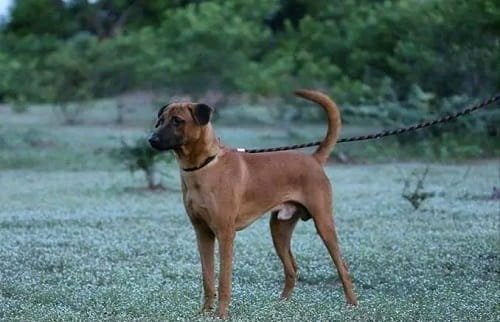
The Kombai is one of India’s most ancient and most ferociously capable native dog breeds — a medium-large hound from the Kombai region of Tamil Nadu that has been used for centuries by the Marava (Maravar) people as a hunting dog capable of confronting bears, wild boar, and bison, and as a loyal family guardian that has earned a devoted following among Indian native breed enthusiasts. Also known as the “Indian Bear Hound” and “Kombai Hound,” this breed represents one of the finest examples of India’s rich and deeply underappreciated native dog heritage.
In 2026, the Kombai sits at an important crossroads — growing recognition from KCI’s native breed preservation initiative, increasing awareness among urban dog enthusiasts discovering India’s own extraordinary dog breeds, and a genuine conservation concern about maintaining pure bloodlines as the breed’s original rural working context evolves. If you are searching for the Kombai dog price in India in 2026, this guide gives you accurate pricing, the complete breed profile, and the honest assessment of what owning one of India’s most ancient hunting breeds actually involves.
| Attribute | Details |
| Breed Name | Kombai (Combai / Indian Bear Hound) |
| Origin | Kombai village, Theni district, Tamil Nadu |
| Historical Use | Bear, bison, and wild boar hunting; personal and property guardian |
| Size | Medium-Large: 20–32 kg, 43–55 cm |
| Lifespan | 13–15 years — excellent longevity |
| Temperament | Loyal, courageous, alert, independent, protective, energetic |
| Coat | Short, dense — brown or red-brown with distinctive black muzzle/mask |
| Price Range (2026) | Rs. 3,000 – Rs. 20,000 |
| KCI Status | Recognised — KCI native breed category |
| Monthly Maintenance | Rs. 2,500 – Rs. 6,000 — very affordable |
| Best For | Active owners with outdoor space, South Indian rural properties, native breed enthusiasts |
| Climate Suitability | Excellent — perfectly adapted to India’s climate over centuries |
| Conservation Status | Declining purebred population — preservation priority |
About the Kombai Dog
The Kombai takes its name from the town of Kombai in Tamil Nadu’s Theni district, which sits in the foothills of the Western Ghats — a region historically rich in wildlife and home to the Marava people, a community of hunters and warriors who developed this breed for big-game hunting and personal protection over centuries.
The breed’s most celebrated historical connection is with the Marava kings and chieftains of the 17th and 18th centuries, who maintained packs of Kombai dogs for hunting and warfare. Historical accounts describe Kombai dogs being used in battles against the British East India Company, with Marava chieftains releasing them against British cavalry — an extraordinary testament to the breed’s courage and capability. The Kombai’s reputation for confronting animals as formidable as bears (hence the “Indian Bear Hound” alternative name) reflects a genuine working heritage from a time when the Western Ghats teemed with wildlife.
Physically, the Kombai is immediately recognisable: a lean, athletic, medium-large dog with a distinctive brown or red-brown short coat and an invariable black muzzle and mask that frames bright, alert eyes. The combination of the warm brown body and black face marking creates an appearance that is uniquely striking among Indian native breeds. The build is that of an efficient hunter — deep-chested for lung capacity, long legs for speed, a muscular but lean frame built for endurance rather than brute force.
The KCI officially recognises the Kombai as a native Indian breed, and the breed has been featured in KCI native breed shows since the early 2020s. However, the purebred Kombai population faces pressure from crossbreeding with other dogs in the breed’s native Tamil Nadu region, making preservation an active concern among dedicated breed enthusiasts and the KCI’s native breed initiative through 2024–2025.
Kombai Price in India 2026 — City-Wise Breakdown
| City / Category | Min Price (INR) | Max Price (INR) |
| Tamil Nadu — Native Region (Theni, Madurai) | Rs. 3,000 | Rs. 10,000 |
| Chennai | Rs. 5,000 | Rs. 15,000 |
| Bangalore / Hyderabad | Rs. 5,000 | Rs. 18,000 |
| Mumbai / Delhi (rare availability) | Rs. 8,000 | Rs. 22,000 |
| Tier-2 Cities (South India) | Rs. 3,000 | Rs. 10,000 |
| KCI Registered / Documented Pedigree | Rs. 10,000 | Rs. 20,000+ |
| Conservation Program / Breed Club | Rs. 5,000 | Rs. 15,000 |
| Online Platforms (verify before purchase) | Rs. 3,000 | Rs. 12,000 |
Note: The Kombai’s most accessible and authentic sourcing remains its native Tamil Nadu region — particularly Theni, Madurai, and surrounding districts where traditional breeding families still maintain working lines. Formal KCI documentation for Kombai is still being developed and is limited — most transactions occur informally within the breed’s native community. Physical identification characteristics (the distinctive brown coat with invariable black muzzle and mask) are the most reliable visual indicators of breed purity.
Temperament & Suitability
The Kombai’s temperament is the product of centuries of dual selection — for the courage and athleticism to hunt large, dangerous game, and for the loyalty and territorial instinct to guard its family and property. The result is a dog of genuine dual capability: a hunting companion with remarkable prey drive and stamina, and a devoted family guardian with strong territorial instincts.
With its immediate family, the Kombai is deeply loyal, affectionate, and protective — forming close bonds with its primary handler and family members it is raised with. It is playful and energetic as a puppy, mellowing into a confident, calm adult that observes its territory with alert vigilance. The breed is known for its courage — Kombai owners consistently describe a dog that does not back down from confrontation, regardless of the size of the threat.
With strangers, the Kombai is appropriately wary — not randomly aggressive, but not immediately welcoming. This instinct is part of its guardian heritage and should be managed through thorough socialisation from puppyhood rather than suppressed. A well-socialised Kombai is controllable and reliable around unfamiliar people; an undersocialised one can be problematically territorial.
The breed’s hunting instinct means it has significant prey drive — it should be kept on a leash or in a securely fenced area in environments where it might encounter small animals. Its energy levels are moderate-to-high — it needs at least 45–60 minutes of vigorous daily exercise to remain physically and psychologically content. For urban apartment living without access to outdoor exercise, the Kombai is genuinely not the ideal choice. For active owners with outdoor access, particularly those in South India, it thrives.
Factors That Affect the Price
- Source Region: Native Tamil Nadu breeders and working family lines are most affordable and most genetically authentic.
- Physical Purity Indicators: Correct brown/red-brown coat with invariable black muzzle and mask — deviation from these characteristics suggests mixed breeding.
- KCI Documentation: Formal pedigree documentation is being developed but limited; adds premium when available.
- Working Lineage: Dogs from families with documented multi-generational hunting use are most prized by serious native breed enthusiasts.
- Geographic Location: Price increases significantly as distance from native Tamil Nadu region increases — transport and rarity add to cost in North Indian metro cities.
Health & Lifespan
The Kombai’s health profile is one of its most significant attributes — the product of centuries of natural selection without artificial breeding pressures. Like India’s other native breeds, it is generally free of the hereditary conditions that affect popular imported purebred dogs. Hip dysplasia occurs at lower rates than in European breeds. The short, dense coat requires minimal grooming and is perfectly adapted to India’s climate.
Primary health management requirements are the same as for any working dog kept in South India’s environment: monthly tick and flea prevention (ticks are particularly problematic in the Western Ghats region and carry serious tick-borne diseases), quarterly deworming (particularly important for dogs in contact with wildlife or livestock), and complete vaccination schedule including Leptospirosis vaccination for dogs in rural environments. The breed’s short coat handles Indian heat with natural ease — no special climate management is required.
The 13–15 year lifespan is exceptional for a medium-large breed and reflects the genetic robustness of natural selection over centuries.
Monthly Maintenance Cost in India (2026 Estimate)
| Cost Category | Estimated Cost |
| Quality Dog Food | Rs. 1,200 – Rs. 2,800/month |
| Grooming (short coat — very minimal) | Rs. 200 – Rs. 400/month (primarily home bathing) |
| Tick & Flea Prevention (critical in South India) | Rs. 300 – Rs. 600/month |
| Veterinary Care (annual) | Rs. 4,000 – Rs. 10,000 |
| Vaccinations & Deworming | Rs. 2,000 – Rs. 4,000 annually |
| Total Estimated Monthly Cost | Rs. 2,500 – Rs. 6,000 |
Frequently Asked Questions (FAQs)
Q1. What is the Kombai dog price in India in 2026?
A: Kombai prices from reputable sources in 2026 range from Rs. 3,000 to Rs. 10,000 in Tamil Nadu’s native Kombai region, and Rs. 5,000–Rs. 22,000 in other Indian cities. KCI-documented Kombai dogs start at Rs. 10,000. The breed’s affordability compared to imported dogs of similar size reflects its native Indian availability rather than lower quality — the Kombai is one of India’s most historically significant and capable native breeds.
Q2. Why is the Kombai called the “Indian Bear Hound”?
A: The “Indian Bear Hound” alternative name refers to the breed’s documented historical use by the Marava people of Tamil Nadu for hunting sloth bears — one of the most dangerous prey animals a dog can confront. Historical accounts from the 17th and 18th centuries describe Kombai dogs pursuing and engaging bears in the Western Ghats, a testament to the breed’s extraordinary courage that is without parallel among Indian native breeds.
Q3. Is the Kombai different from the Chippiparai?
A: Yes — both are South Indian native breeds from Tamil Nadu, but they are distinct breeds from different districts with different physical profiles. The Chippiparai is a lighter, sleeker sight hound from Virudhunagar district, bred primarily for coursing (chasing by sight). The Kombai is heavier and more powerful, built for confronting large game rather than coursing. The Chippiparai resembles a small greyhound; the Kombai resembles a working mastiff-hound cross. Both have the distinctive black mask as a shared South Indian breed characteristic.
Q4. Can a Kombai live in a North Indian city?
A: Yes — the Kombai adapts reasonably well to different Indian environments. Its climate-optimised short coat handles heat across India without special management. The primary consideration for North Indian city owners is exercise — the Kombai needs 45–60 minutes of vigorous daily outdoor activity, which requires commitment in urban settings. It also needs secure outdoor space for its daily patrol and territorial instincts. Apartment living without outdoor access is genuinely challenging for this breed.
Q5. How do I find a genuine Kombai breeder?
A: The most authentic sourcing is direct contact with traditional breeding families in Theni, Madurai, and Virudhunagar districts of Tamil Nadu through connections with local agricultural communities, Marava community networks, or the KCI’s native breed coordinator in Tamil Nadu. Online platforms including Indian native dog breed Facebook groups and the KCI’s breeder directory are also useful. Physical identification — the distinctive brown coat with invariable black muzzle is the most reliable authenticity indicator when formal documentation is unavailable.