The Bakharwal dog is one of India’s most ancient, most powerful, and least-known native dog breeds — a large, heavy-coated livestock guardian developed over thousands of years by the Gujjar and Bakarwal nomadic communities of the Jammu & Kashmir and Himachal Pradesh regions. Named after the Bakarwal people (bakar = goat, wal = keeper), this breed has been the working companion and guardian of the most remote Himalayan pastoralist communities for generations, protecting their flocks of sheep and goats from wolves, snow leopards, and bears in some of the most demanding terrain on Earth.
In 2026, the Bakharwal dog is experiencing a moment of important transition — growing recognition from breed enthusiasts, conservation advocates, and the Kennel Club of India, combined with concerns about its declining population in its native Himalayan range. If you are searching for the Bakharwal dog price in India in 2026, this guide gives you accurate pricing, the honest realities of finding and owning this rare native breed, and the cultural context that makes this breed one of India’s most significant canine heritage stories.
| Attribute | Details |
| Breed Name | Bakharwal Dog (Kashmiri Sheepdog / Gujjar Watchdog / Kashmir Mastiff) |
| Origin | Jammu & Kashmir, Himachal Pradesh — bred by Gujjar and Bakarwal nomads |
| Size | Large: 30–60 kg, 60–76 cm |
| Lifespan | 10–12 years |
| Temperament | Loyal, fearless, protective, calm, independent, devoted to family/flock |
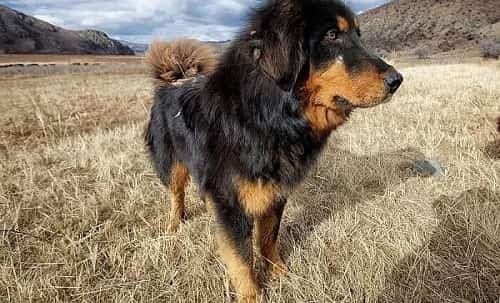
| Coat | Long, thick double coat — black-and-tan most common; tricolour available |
| Price Range (2026) | Rs. 5,000 – Rs. 25,000 (from Himalayan sources); Rs. 20,000–Rs. 50,000 in metro cities |
| KCI Status | Under recognition process — limited formal documentation |
| Monthly Maintenance | Rs. 4,000 – Rs. 10,000 |
| Availability | Very rare outside J&K and Himachal Pradesh |
| Climate Suitability | Excellent in Himalayan region; challenging in Indian plains summer |
| Conservation Status | Declining population — breed preservation is an active concern as of 2025 |
About the Bakharwal Dog
The Bakharwal’s history is inseparable from the story of the Gujjar and Bakarwal communities — nomadic pastoralists who have practiced seasonal transhumance (migration between lowland winter pastures and high-altitude summer pastures) across Jammu & Kashmir and Himachal Pradesh for centuries. These communities developed the Bakharwal dog through generations of purely functional selection: only dogs that could guard a flock of several hundred animals through a Himalayan winter, hold their ground against a snow leopard or pack of wolves, and travel hundreds of kilometres of mountain terrain without complaint survived to reproduce.
The resulting dog is a breed of extraordinary natural robustness — free of the hereditary health conditions that affect many modern breeds because it was shaped by natural selection rather than artificial breeding for aesthetics. The Bakharwal is vegetarian by tradition — the Gujjar communities are largely Muslim or Hindu with vegetarian practices, and the dogs have historically been fed bread, rice, milk, and vegetables rather than meat. This is a fascinating adaptation unique among working guardian breeds globally.
The breed faces a genuine conservation challenge in 2026. As Bakarwal communities increasingly settle in fixed locations, use fewer dogs, and as crossbreeding with other dogs occurs in the absence of systematic breeding programs, the purebred Bakharwal population has been declining. The Animal Husbandry Department of J&K, several Indian dog breed conservation NGOs, and the KCI’s native breed initiative have been working through 2024–2025 to document, register, and protect the remaining purebred Bakharwal population.
Bakharwal Dog Price in India 2026 — City-Wise Breakdown
| City / Category | Min Price (INR) | Max Price (INR) |
| J&K — From Gujjar/Bakarwal Community | Rs. 5,000 | Rs. 15,000 |
| Himachal Pradesh (Local Sources) | Rs. 5,000 | Rs. 18,000 |
| Chandigarh / Jammu | Rs. 8,000 | Rs. 25,000 |
| Delhi / NCR | Rs. 15,000 | Rs. 45,000 |
| Punjab / Haryana | Rs. 12,000 | Rs. 38,000 |
| Mumbai / Bangalore (very rare) | Rs. 20,000 | Rs. 50,000 |
| KCI / Documented Pedigree (if available) | Rs. 25,000 | Rs. 55,000+ |
| Conservation Program Registered Dogs | Varies | Contact J&K AHD |
Note: Bakharwal dogs available outside J&K and Himachal Pradesh are often of uncertain purity — without formal KCI documentation (which is still being developed for this breed), verifying genuine Bakharwal heritage requires either direct sourcing from known Gujjar/Bakarwal communities or through breed conservation programs. Physical characteristics — black-and-tan or tricolour coat, large mastiff build, thick double coat, and the characteristic broad head — are the primary visual indicators, but DNA breed testing provides more certainty.
Temperament & Suitability
The Bakharwal’s temperament is that of a classic livestock guardian dog — calm and measured in the absence of threat, decisive and fearless when its flock or family is at risk. Like the Kangal, Alabai, and Caucasian Shepherd, the Bakharwal makes independent guardian decisions without needing human direction, a trait developed over generations of protecting flocks in remote terrain where the shepherd was kilometres away.
With its adopted family, the Bakharwal is devoted and affectionate in a measured, dignified way — not the exuberant tail-wagging of a Labrador, but a deep, steady loyalty that its handlers describe as profoundly moving. It is patient and gentle with family children it is raised with, but its size (30–60 kg) means supervision with young children is important simply due to physical scale.
Socialisation from puppyhood is important for Bakharwals kept in non-working contexts — their natural wariness of strangers is appropriate for Himalayan pastoral life but needs calibration for urban or semi-urban Indian settings where it should not escalate into generalised aggression. The breed is best kept in large rural or semi-rural properties where it has meaningful territory to patrol. Apartment living is entirely unsuitable.
Factors That Affect the Price
- Source Authenticity: Dogs from documented Gujjar/Bakarwal communities or conservation programs are the most genetically authentic.
- Physical Conformation: Large, well-built dogs with correct coat and typical black-and-tan markings command higher prices from enthusiast buyers.
- Geographic Availability: Prices are lowest at source (J&K, HP) and increase significantly in plains cities due to transport and rarity.
- KCI/Conservation Documentation: Any formal breed documentation adds premium and is currently rare.
- Working Lineage: Dogs from families with multi-generational pastoral working history are most prized by serious breed enthusiasts.
Health & Lifespan
The Bakharwal dog’s natural health robustness is one of its most significant attributes — the product of thousands of years of survival-based natural selection without artificial breeding pressures. It is generally free of the hereditary conditions that affect many popular purebred breeds. Hip dysplasia occurs at lower rates than in many European guardian breeds. The primary health management considerations are tick prevention (critical in Himalayan and sub-Himalayan environments where tick-borne diseases are common), regular deworming (particularly important for dogs in contact with livestock), and standard vaccination schedule.
In India’s plains climate, the thick double coat requires AC management during peak summer months. Regular brushing to remove dead undercoat prevents matting and skin infections in humid conditions. The breed’s vegetarian dietary tradition means it can thrive on high-quality vegetarian dog food supplemented with dairy — though most modern Indian veterinary nutritionists recommend including some protein from eggs or fish for optimal health.
Monthly Maintenance Cost in India (2026 Estimate)
| Cost Category | Estimated Cost |
| Dog Food (vegetarian or mixed) | Rs. 1,500 – Rs. 3,500/month |
| Professional Grooming | Rs. 800 – Rs. 1,800/session; every 6–8 weeks |
| Veterinary Care (incl. tick prevention) | Rs. 5,000 – Rs. 12,000 annually |
| Vaccinations & Preventives | Rs. 2,000 – Rs. 4,000 annually |
| Property / Space (rural/semi-rural required) | Infrastructure cost — non-urban setting essential |
| Total Estimated Monthly Cost | Rs. 4,000 – Rs. 10,000 |
Frequently Asked Questions (FAQs)
Q1. What is the Bakharwal dog price in India in 2026?
A: Bakharwal dogs sourced directly from Gujjar/Bakarwal communities in J&K and Himachal Pradesh range from Rs. 5,000 to Rs. 18,000. In Chandigarh and North Indian cities, prices reach Rs. 25,000–Rs. 38,000. In metro cities like Delhi and Mumbai (very rare availability), prices range from Rs. 20,000 to Rs. 50,000. KCI-documented specimens from conservation programs, where available, may be priced higher.
Q2. Are Bakharwal dogs really vegetarian?
A: Traditionally yes — the Gujjar and Bakarwal communities that developed the breed maintain largely vegetarian lifestyles and fed their dogs bread (roti), rice, milk, and vegetables rather than meat. This dietary tradition has been maintained over generations and the Bakharwal has adapted accordingly. Modern nutritionists recommend supplementing with eggs or dairy for complete protein in domestically kept Bakharwals, though the breed can thrive on well-formulated high-protein vegetarian diets.
Q3. Is the Bakharwal dog facing extinction?
A: The Bakharwal is facing a genuine population challenge as of 2026. The combination of changing pastoral lifestyles among Gujjar/Bakarwal communities, crossbreeding with other dogs, and the absence of systematic purebred breeding programs has reduced the genuine purebred population. The KCI’s native breed initiative and J&K’s Animal Husbandry Department are actively engaged in documentation and preservation efforts, but the breed’s status warrants concern from any person interested in India’s canine heritage.
Q4. How does the Bakharwal compare to other Indian guardian breeds?
A: India has several native guardian breed traditions. The Gaddi Kutta (Himachal Pradesh) is the Bakharwal’s closest Himalayan counterpart — somewhat lighter in build and used in slightly different mountain terrain. The Rajapalayam, Mudhol Hound, and Chippiparai are sighthound traditions from South India — athletic hunters rather than guardian breeds. The Bakharwal and Gaddi Kutta represent India’s contribution to the global livestock guardian dog tradition and are genuine equivalents of the Kangal, Alabai, and Caucasian Shepherd in their regional working capability.
Q5. Where can I find a genuine Bakharwal dog in India?
A: The most reliable sources are: direct contact with Gujjar/Bakarwal pastoral communities in J&K (through connections with local animal husbandry officers or community leaders); the Animal Husbandry Department of J&K which has been involved in Bakharwal conservation; KCI-affiliated breed conservation contacts through kennelindia.com; and social media groups specifically dedicated to Indian native dog breed preservation. In metro cities, very few genuine Bakharwals are available — patience and direct Himalayan region sourcing is usually required.