The Sphynx cat is one of the most polarising and simultaneously most captivating cat breeds in existence — a cat that appears entirely hairless yet produces more body heat than any other domestic breed, feels like warm suede when touched, and possesses a personality so outgoing, affectionate, and theatrical that its owners describe living with one as the closest thing to owning a dog in cat form. Named after the ancient Egyptian stone sculpture despite having no genuine Egyptian heritage — the breed originated in Toronto, Canada in 1966 — the Sphynx has grown from a genetic curiosity into one of the world’s most sought-after pedigreed cats.
In India’s growing premium cat market of 2026, the Sphynx occupies a unique position. Its hairlessness would seem to make it ideal for India’s warm climate — and in some ways it does — but the absence of coat creates its own significant care requirements that make the Sphynx one of the most maintenance-intensive cat breeds despite having no fur to brush. If you are searching for the Sphynx cat price in India in 2026, this guide provides accurate current pricing, the honest skin care reality that every Indian Sphynx owner must understand, complete health information, and everything needed to make a responsible decision about this extraordinary breed.
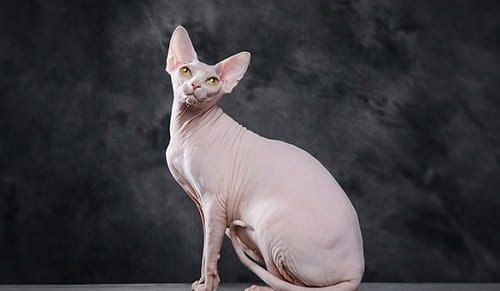
| Attribute | Details |
| Breed Name | Sphynx Cat |
| Origin | Toronto, Canada — natural mutation discovered 1966 |
| Size | Medium: 3.5–7 kg |
| Lifespan | 8–14 years |
| Temperament | Extremely affectionate, social, playful, dog-like, attention-seeking, vocal |
| Coat | Appears hairless — fine down covering; feels like warm suede or chamois leather |
| Body Temperature | 4°C warmer than other cats — feels very warm to touch |
| Price Range (2026) | Rs. 40,000 – Rs. 1,80,000+ |
| TICA / CFA Show Quality | Rs. 1,00,000 – Rs. 1,80,000+ |
| Monthly Maintenance | Rs. 5,000 – Rs. 12,000 |
| Best For | Experienced cat owners, active households, allergy-sensitive buyers |
| Skin Care | Weekly bathing essential — most demanding grooming requirement of any cat breed |
| Climate Note | Cold-sensitive — AC paradox; sunburn risk in Indian conditions |
About the Sphynx Cat
The Sphynx’s origin is traced to a single natural genetic mutation that occurred in a litter of domestic cats owned by a woman named Elizabeth Tica in Toronto, Canada in 1966. A hairless kitten named Prune was born and subsequently bred — though early breeding attempts produced inconsistent results. The modern Sphynx breeding program was established more successfully in the 1970s when additional hairless kittens appeared in Toronto and Minnesota, with Siamese and Devon Rex cats used as outcrosses to maintain genetic diversity while perpetuating the hairless trait.
The Sphynx is not entirely hairless — a fine, barely perceptible layer of downy fuzz covers the skin, creating the warm suede or chamois leather feel that surprises first-time handlers expecting cold bare skin. The skin shows all the colour patterns that fur would display — tabby markings, solid colours, tortoiseshell patterns, and points are all visible as skin pigmentation. TICA accepted the Sphynx for championship competition in 2002.
In India, the Sphynx began attracting serious interest from approximately 2019 onward, driven by international social media content. By 2024–2025, a small number of established Sphynx breeders operate in Delhi and Mumbai, though most quality specimens remain import-dependent. The breed’s combination of extreme appearance, extraordinarily affectionate temperament, and the practical skin care requirement that distinguishes ownership makes it one of India’s most fascinating premium cat choices.
Sphynx Cat Price in India 2026 — City-Wise Breakdown
| City / Category | Min Price (INR) | Max Price (INR) |
| Delhi / NCR | Rs. 45,000 | Rs. 1,40,000 |
| Mumbai | Rs. 50,000 | Rs. 1,50,000 |
| Bangalore | Rs. 40,000 | Rs. 1,20,000 |
| Hyderabad | Rs. 38,000 | Rs. 1,10,000 |
| Chennai / Kolkata | Rs. 35,000 | Rs. 1,00,000 |
| Tier-2 / Tier-3 Cities | Rs. 25,000 | Rs. 75,000 |
| TICA / CFA Registered / Show Quality | Rs. 1,00,000 | Rs. 1,80,000+ |
| Imported — USA / Canada / Europe | Rs. 1,20,000 | Rs. 2,00,000+ |
| Bambino (Sphynx × Munchkin cross) | Rs. 60,000 | Rs. 1,50,000 |
| Elf Cat (Sphynx × American Curl cross) | Rs. 70,000 | Rs. 1,60,000 |
Note: Sphynx cats in wrinkled, loose-skinned individuals with maximum wrinkle coverage command premiums in India’s show market. Always request TICA registration papers and HCM cardiac screening results for both parents — HCM is the most serious hereditary condition in the breed. Avoid purchasing Sphynx cats without pedigree documentation as the breed’s maintenance requirements and health vulnerabilities make source quality particularly critical.
The Sphynx Skin Care Reality
The Sphynx’s most important care distinction — and the one that surprises every new owner — is that its absence of coat does not mean low grooming maintenance. Quite the opposite: the Sphynx requires more active skin care than almost any other cat breed, making it paradoxically one of the highest-maintenance cats available.
All cats produce sebaceous oils that coat the fur — in coated cats, these oils are distributed and absorbed through the coat. In the Sphynx, with no coat to absorb them, these oils accumulate on the skin surface, creating a visible, slightly tacky residue that feels oily to the touch and can cause skin infections if not regularly removed. Weekly bathing is non-negotiable for a Sphynx cat — using a gentle, cat-safe shampoo specifically formulated for sensitive or hairless cats.
In India’s climate specifically, the combination of heat, humidity, and the Sphynx’s naturally elevated body temperature creates conditions where oil accumulation occurs rapidly. Indian Sphynx owners report that some individuals require bathing twice weekly during monsoon and summer months. Between baths, gentle wiping with unscented baby wipes or specially formulated cat skin wipes removes surface oil accumulation from skin folds and wrinkles.
Sun exposure is a genuine risk for Sphynx cats in India. Without coat to filter UV radiation, the Sphynx’s skin is vulnerable to sunburn from direct sunlight through windows or balcony access. Cat-safe sunscreen (specifically formulated — human sunscreens contain ingredients toxic to cats) or sun-blocking window films are important protective measures for Indian Sphynx households.
Cold sensitivity creates the paradox for Indian Sphynx management. Despite India’s warm climate, Sphynx cats lose body heat rapidly without a coat — they seek warm surfaces constantly and are genuinely uncomfortable in heavily air-conditioned environments below approximately 22°C. The management challenge is providing adequate cooling in Indian summers without chilling the cat. Maintaining indoor temperatures between 24–27°C with strategic warm bedding represents the practical balance most Indian Sphynx owners arrive at.
Temperament and Suitability
The Sphynx’s temperament is its most universally celebrated characteristic and the primary reason for its devoted global following. These cats are extraordinarily extroverted, affectionate, and attention-seeking — described by owners as part cat, part dog, and part monkey in their social behaviour. They are the quintessential lap cat, seeking body warmth from their humans with the same instinct that leads them to warm bedding and sunny spots.
They are genuinely theatrical — performing for attention, learning which behaviours generate the most human response, and repeating those behaviours with shameless enthusiasm. They greet visitors warmly rather than hiding, investigate new objects with bold curiosity, and vocalise their opinions with frequency. For Indian households where cats are expected to be decorative and independent, the Sphynx delivers something completely different — an intensely engaged, emotionally present companion that demands and gives affection in equal and generous measure.
They should not be kept as single cats without substantial human presence throughout the day — their social needs are significant and isolation causes genuine distress. A companion cat or a household with regular human presence is genuinely important for Sphynx welfare.
Health and Lifespan
The Sphynx has a shorter average lifespan than many cat breeds — 8–14 years — primarily due to elevated rates of Hypertrophic Cardiomyopathy (HCM), which is the most serious hereditary condition in the breed. HCM rates in Sphynx cats are among the highest of any pedigreed breed — annual echocardiographic cardiac screening of all breeding cats by a board-certified cardiologist is the absolute standard that responsible breeders follow. Always request current echocardiogram results dated within the past 12 months for both parents.
Hereditary Myopathy (muscle weakness) is documented in some Sphynx bloodlines. Skin infections in the skin folds and wrinkles are the most common ongoing health management issue — kept in check through regular bathing and cleaning. Respiratory infections affect Sphynx cats at higher rates than coated breeds, possibly related to reduced physical barriers. Vaccination currency is especially important.
Monthly Maintenance Cost in India (2026 Estimate)
| Cost Category | Estimated Cost |
| Premium Cat Food | Rs. 2,000 – Rs. 4,500/month |
| Cat-Safe Bathing Products | Rs. 500 – Rs. 1,200/month |
| Skin Wipes and Care Products | Rs. 400 – Rs. 900/month |
| Veterinary Care (annual incl. cardiac) | Rs. 8,000 – Rs. 20,000 |
| Vaccinations & Preventives | Rs. 2,000 – Rs. 4,500 annually |
| Warm Bedding and Heating Pads | Rs. 300 – Rs. 700/month amortised |
| Total Estimated Monthly Cost | Rs. 5,000 – Rs. 12,000 |
Frequently Asked Questions (FAQs)
Q1. What is the Sphynx cat price in India in 2026?
A: Sphynx cat prices from reputable breeders in India in 2026 range from Rs. 35,000 to Rs. 1,50,000 depending on city, quality, and documentation. TICA or CFA-registered show-quality Sphynx from HCM-screened parents start at Rs. 1,00,000. Imported Canadian, American, or European specimens reach Rs. 1,20,000–Rs. 2,00,000+ including import costs. Always request TICA papers and current echocardiogram results for both parents.
Q2. Are Sphynx cats truly hairless?
A: Not completely. Sphynx cats have a very fine layer of downy fuzz covering their skin — typically invisible to the eye but perceptible to touch, creating the characteristic warm suede or chamois leather feeling. The skin shows all the colour patterns that fur would display as visible skin pigmentation. The hairlessness is significant enough to prevent normal oil absorption, creating the bathing requirement that defines Sphynx ownership.
Q3. Are Sphynx cats good for allergy sufferers?
A: Sphynx cats are often recommended for allergy sufferers, but the relationship is complex. Cat allergies are primarily triggered by the Fel d 1 protein present in saliva and skin secretions — not cat hair itself. Since Sphynx cats produce Fel d 1 like any other cat, they are not truly hypoallergenic. However, the absence of coat means allergen-carrying hair is not distributed through the home environment, which reduces allergen exposure for many allergy sufferers. Results vary significantly between individuals.
Q4. How often does a Sphynx cat need bathing in India?
A: Weekly bathing is the absolute minimum for Sphynx cats in India. During summer and monsoon months (April–September), many Indian Sphynx owners find twice-weekly bathing necessary to manage the increased oil production triggered by heat and humidity. Use only gentle, cat-safe shampoos specifically formulated for hairless cats — human shampoos disrupt the skin’s pH balance and can cause skin problems.
Q5. Is the Sphynx suitable for India’s climate?
A: With careful management, yes. The Sphynx’s absence of coat means it handles India’s ambient warmth better than thick-coated breeds. However, it requires sun protection from direct UV exposure, regular bathing to manage heat-accelerated oil production, and protection from over-chilling in heavily air-conditioned environments. Maintaining indoor temperatures between 24–27°C with warm bedding options represents the practical management approach most successful Indian Sphynx owners adopt.