Macaws are among the most magnificent and most sought-after exotic birds in the world — their vibrant plumage, impressive size, extraordinary intelligence, and remarkable ability to mimic human speech make them a dream pet for bird enthusiasts worldwide. In India, the growing interest in exotic pets has created a significant market for macaw parrots, though the legal and financial considerations involved are complex and consequential. Before exploring macaw prices in India, understanding the legal framework governing exotic bird ownership is absolutely essential — the Wildlife Protection Act of 1972 strictly prohibits the ownership, breeding, or trading of most native Indian bird species, but this law does not apply to foreign exotic birds bred in captivity and legally imported. Macaws are native to Central and South America, meaning legally sourced, captivity-bred macaws can be owned in India with appropriate documentation. This guide comprehensively covers macaw parrot prices in India, the factors determining cost, the most popular species and their price ranges, ongoing expenses, and the considerations every prospective macaw owner must understand before purchasing.
Legal Status of Macaws in India
Before discussing prices, the legal landscape must be clearly understood. The Wildlife Protection Act of 1972 prohibits ownership of native Indian birds including parrots like the Alexandrine and Rose-Ringed parakeet. However, foreign exotic birds — including macaws, which are South American species — can be legally owned in India provided they are bred in captivity and imported with proper CITES (Convention on International Trade in Endangered Species) documentation. Any macaw you purchase in India should come with documentation proving its captive-bred status, import permits, and CITES certification. Purchasing an illegally sourced macaw not only risks criminal prosecution but also supports wildlife trafficking that threatens already vulnerable wild parrot populations. Always insist on complete, verified paperwork from any reputable breeder or seller.
Factors That Determine Macaw Prices in India
Species and Rarity: Different macaw species command dramatically different prices — the Blue and Gold Macaw is far more accessible than the Hyacinth Macaw, whose price reflects both its extraordinary beauty and its endangered status. The rarer and more visually spectacular the species, the higher the price.
Age and Training Level: Hand-raised, hand-fed macaw chicks — weaned on human contact from birth — command significantly higher prices than parent-raised or untamed adult birds. A hand-tame macaw that already recognises human interaction is more valuable and more desirable than an untrained bird requiring months of patient socialisation work.
Documentation and Legal Status: Macaws with complete CITES documentation, import permits, and breeder certification cost significantly more than undocumented birds sold through informal channels. This documentation premium is genuine and appropriate — it represents legal security for the buyer and support for ethical breeding practices.
Source and Reputation of Breeder: Reputable, established avian breeders who invest in proper nutrition, veterinary care, and socialisation produce healthier, better-adjusted birds that command premium prices. Cheaper birds from unknown sources frequently carry hidden health problems, stress-related behavioural issues, or legal documentation gaps that create significant future costs.
Geographic Location in India: Prices vary significantly across Indian cities — Mumbai, Delhi, Bengaluru, Hyderabad, and Chennai typically have more active exotic bird markets with greater availability and somewhat more competitive pricing, while smaller cities and tier-2 locations may see premium pricing due to limited local availability and transportation costs from primary breeding locations.
Macaw Species and Their Price Ranges in India
The table below provides a comprehensive overview of all commonly available and occasionally available macaw species in India, their price ranges, size, temperament, talking ability, and availability status.
| Species | Price Range (₹) | Size | Temperament | Talking Ability | Availability in India |
| Hahn’s Macaw (Mini) | ₹40,000 – ₹80,000 | Small (30 cm) | Playful, Social | Moderate | Moderate |
| Noble Macaw (Mini) | ₹45,000 – ₹85,000 | Small (30 cm) | Friendly, Active | Moderate | Limited |
| Blue and Gold Macaw | ₹80,000 – ₹1,50,000 | Large (86 cm) | Gentle, Trainable | Excellent | Good |
| Military Macaw | ₹90,000 – ₹1,75,000 | Large (70 cm) | Playful, Social | Good | Limited |
| Scarlet Macaw | ₹1,00,000 – ₹2,00,000 | Large (81 cm) | Bold, Active | Good | Moderate |
| Green-Winged Macaw | ₹1,20,000 – ₹2,50,000 | Large (90 cm) | Calm, Gentle | Moderate | Limited |
| Catalina Macaw (Hybrid) | ₹1,25,000 – ₹2,50,000 | Large (85 cm) | Affectionate, Curious | Good | Limited |
| Blue-Throated Macaw | ₹2,00,000 – ₹4,00,000 | Large (85 cm) | Gentle, Friendly | Moderate | Very Limited |
| Spix’s Macaw | ₹3,00,000 – ₹8,00,000 | Medium (55 cm) | Shy, Sensitive | Moderate | Extremely Rare |
| Hyacinth Macaw | ₹5,00,000 – ₹15,00,000 | Extra Large (100 cm) | Gentle, Affectionate | Good | Very Limited |
Blue and Gold Macaw (Ara ararauna): The Blue and Gold Macaw is the most popular and most commonly available macaw in India — its stunning combination of cobalt blue back and golden yellow underside, combined with its exceptionally trainable nature and strong talking ability, makes it the entry point for most Indian macaw enthusiasts. Price range: ₹80,000 to ₹1,50,000 for a hand-tame chick with documentation. Older, untrained birds are occasionally available for ₹50,000–₹70,000 but require significantly more time investment.
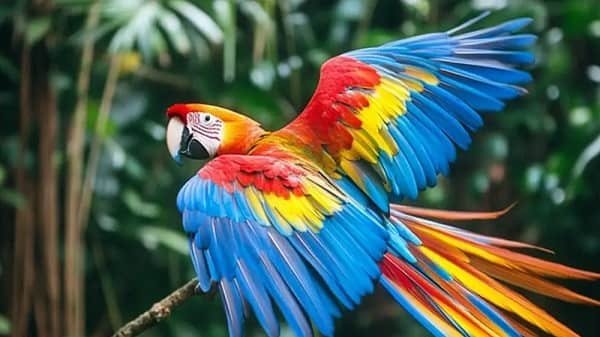
Scarlet Macaw (Ara macao): The Scarlet Macaw’s breathtaking red, yellow, and blue plumage makes it one of the world’s most photographed birds and one of India’s most desired exotic pets. Scarlet Macaws are somewhat more demanding in temperament than Blue and Gold Macaws, requiring consistent training and socialisation, but their visual impact is unmatched. Price range: ₹1,00,000 to ₹2,00,000 for a hand-raised chick with complete documentation.
Green-Winged Macaw (Ara chloropterus): The Green-Winged Macaw — sometimes called the Gentle Giant for its calm temperament despite its large size — is valued among experienced bird owners for its affectionate, patient character. Its deep red and green plumage with distinctive red feather lines around the eyes creates striking visual appeal. Price range: ₹1,20,000 to ₹2,50,000 in India.
Military Macaw (Ara militaris): The Military Macaw is one of the smaller large macaws — predominantly olive green with red and blue wing accents — and is valued for its playful, social personality. Availability in India is more limited than Blue and Gold Macaws. Price range: ₹90,000 to ₹1,75,000.
Catalina Macaw (Blue and Gold x Scarlet Hybrid): Catalina Macaws — hybrids between Blue and Gold and Scarlet Macaws — display extraordinary colour combinations inherited from both parent species. Each bird’s colouration is unique, making them particularly desirable for collectors. Price range: ₹1,25,000 to ₹2,50,000.
Hyacinth Macaw (Anodorhynchus hyacinthinus): The Hyacinth Macaw is the largest flying parrot in the world and arguably the most magnificent exotic bird available — its entirely cobalt blue plumage with vivid yellow eye rings creates an appearance of otherworldly beauty. It is also among the world’s most endangered parrot species, making its legal captive-bred documentation requirements the most stringent. Price range: ₹5,00,000 to ₹15,00,000 — making it one of the most expensive pet birds in the Indian market. Extremely limited availability from verified legal breeders.
Mini Macaws — Hahn’s and Noble Macaw: For those interested in macaw ownership without the spatial and financial commitment of large macaws, Hahn’s Macaw and Noble Macaw represent smaller species with comparable personality traits at more accessible price points. Price range: ₹40,000 to ₹80,000 for hand-tame birds.
One-Time Setup Costs After Purchase
Purchasing a macaw is only the beginning of the financial commitment. Before bringing your bird home, significant one-time setup investments are necessary to provide a safe, enriching, and appropriate living environment. The table below outlines the essential one-time purchases every macaw owner must budget for.
| Item | Cost Range (₹) | Notes |
| Macaw Cage (Stainless Steel) | ₹25,000 – ₹80,000 | Heavy-duty, powder-coated or SS recommended |
| Outdoor Aviary | ₹30,000 – ₹1,50,000 | Optional but highly beneficial |
| Initial Vet Consultation | ₹2,000 – ₹5,000 | Full health check on purchase |
| Initial Toy Set | ₹3,000 – ₹8,000 | Starter enrichment package |
| Food and Water Dishes | ₹1,000 – ₹3,000 | Stainless steel recommended |
| Perches (Natural Wood) | ₹2,000 – ₹5,000 | Multiple diameters for foot health |
| Carrier Cage | ₹3,000 – ₹8,000 | For vet visits and travel |
| Total One-Time Setup | ₹66,000 – ₹2,59,000 | Excluding bird purchase price |
Macaws require spacious, heavy-duty stainless steel or powder-coated cages — cheap thin-wire cages are both structurally inadequate for their powerful beaks and potentially toxic through wire coating ingestion. A quality macaw cage in India typically costs ₹25,000 to ₹80,000 depending on size, material, and features. An outdoor aviary for additional space adds further cost but significantly improves the bird’s quality of life and psychological health.
Monthly and Annual Ongoing Expenses
Responsible macaw ownership involves significant ongoing costs that every prospective owner must budget for honestly before committing. The table below summarises the realistic monthly and annual maintenance expenses for a healthy macaw in India.
| Expense Category | Monthly Cost (₹) | Annual Cost (₹) | Notes |
| Diet and Food | ₹3,000 – ₹8,000 | ₹36,000 – ₹96,000 | Pellets, fruits, vegetables, nuts |
| Toys and Enrichment | ₹2,000 – ₹5,000 | ₹24,000 – ₹60,000 | Foraging toys, wood chews |
| Veterinary Care | ₹800 – ₹2,500 | ₹10,000 – ₹30,000 | Annual check-ups, emergencies |
| Cage Maintenance | ₹500 – ₹1,500 | ₹6,000 – ₹18,000 | Cleaning supplies, perch replacements |
| Supplements and Vitamins | ₹500 – ₹1,500 | ₹6,000 – ₹18,000 | Calcium, vitamin D3 supplements |
| Grooming (Beak and Nails) | ₹200 – ₹500 | ₹2,400 – ₹6,000 | Professional trimming |
| Total Estimated Monthly | ₹7,000 – ₹19,000 | ₹84,000 – ₹2,28,000 | Varies by species size and care level |
Diet: Macaws require a varied, nutritionally complete diet combining high-quality pellets, fresh fruits, vegetables, seeds, and nuts. Monthly food costs typically range from ₹3,000 to ₹8,000 depending on the species size and the quality of products offered. Cheap seed-only diets are nutritionally inadequate and cause long-term health deterioration.
Veterinary Care: Finding an avian veterinarian experienced with large parrots in India can be challenging — in many cities, exotic bird veterinary expertise is limited to a handful of practitioners. Annual check-ups, beak and nail trimming, blood panel tests, and emergency medical care collectively create annual veterinary costs of ₹10,000 to ₹30,000 for a healthy bird, significantly more for birds with health complications.
Enrichment and Toys: Macaws are extraordinarily intelligent — boredom creates destructive behaviour, feather plucking, and psychological stress that are genuinely difficult to reverse. High-quality foraging toys, wood chews, and enrichment activities represent a continuous monthly expense of ₹2,000 to ₹5,000 as toys are destroyed and require replacement.
Important Considerations Before Buying a Macaw in India
Longevity: Large macaws live 50–80 years in captivity — purchasing a macaw is a lifelong commitment that may outlast the original owner. Prospective buyers must consider who will care for the bird if they cannot, and arrange for the bird’s long-term welfare proactively.
Space Requirements: Large macaws need significant indoor space and ideally outdoor aviary access — they are fundamentally unsuitable for small apartments regardless of how much the owner wants one.
Noise: Macaws are extremely loud — their contact calls can reach 90 decibels and carry long distances. This is non-negotiable and cannot be trained away — neighbours in apartment complexes and residential colonies have legitimate grounds for complaint.
Time Commitment: Macaws are highly social, emotionally bonded birds that require several hours of daily interaction — isolation causes psychological damage. Busy working professionals without adequate time for daily engagement should carefully reconsider whether a macaw is appropriate for their lifestyle.
Where to Buy Macaws in India
Reputable avian breeders — particularly those registered with exotic pet associations and able to provide complete CITES and import documentation — are the only recommended source. Pet stores occasionally sell macaws but rarely provide adequate documentation verification. Online platforms sometimes list macaws but verification of seller credibility and documentation authenticity requires in-person inspection before any payment. Bird fairs and exotic pet expos in Mumbai, Delhi, and Hyderabad periodically feature reputable breeders where multiple birds and breeders can be compared simultaneously.
Conclusion
Macaw parrots represent some of India’s most magnificent and most expensive exotic pets — combining extraordinary visual beauty, remarkable intelligence, and deep emotional bonding capacity that few other animals match. The financial investment — ranging from ₹40,000 for mini macaws to ₹15,00,000 for Hyacinth Macaws — reflects genuine value in terms of the bird’s qualities and longevity. However, the lifelong commitment of time, space, financial resources, and emotional investment that responsible macaw ownership requires demands serious, honest self-assessment before purchase. Those who make the commitment wholeheartedly and thoughtfully discover in macaws one of the most rewarding companionships in the animal kingdom.