Indian Ringneck Parrots are one of the most recognisable and widely kept pet birds across the country — and yet, a deep irony surrounds their ownership that every prospective buyer must understand before making any purchase decision. The Indian Ringneck, known scientifically as Psittacula krameri manillensis, is a native Indian species. Under the Wildlife Protection Act of 1972, owning, trading, breeding, or capturing any native Indian bird species is strictly illegal, regardless of whether the bird was born in captivity. This means that technically, keeping a wild-caught or illegally bred Indian Ringneck is a punishable offence under Indian law.
However, the ground reality is considerably more complex. Indian Ringnecks have been bred in captivity in significant numbers for generations — including colour mutations that do not exist in the wild — and a substantial informal market exists across the country. Many bird keepers and pet stores continue to sell them openly. Law enforcement around this issue varies dramatically by state and city. That said, the legal risk is real and every buyer should be fully aware of it. Some breeders argue that captive-bred colour mutations constitute a separate category, though this position has not been definitively upheld in Indian courts. Proceed with this context clearly in mind.
Why Indian Ringnecks Remain So Popular
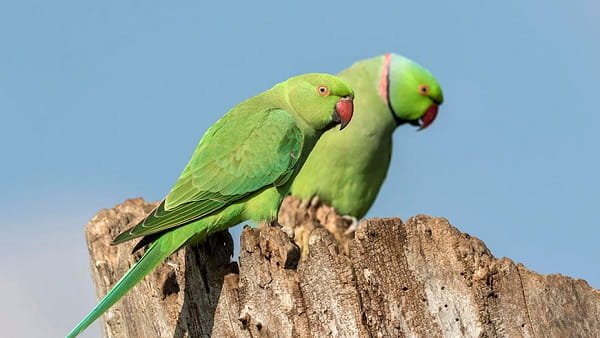
Despite the legal complexity, Indian Ringnecks hold their popularity for very tangible reasons. They are strikingly beautiful birds — the classic green form with its distinctive black and rose-pink neck ring in males is instantly eye-catching, while the dozens of colour mutations available in the captive market offer an extraordinary visual range. Lutino (yellow), blue, violet, turquoise, albino, cinnamon, and pied variants all exist, each commanding different price points. Beyond appearance, Ringnecks are intelligent, capable talkers — with patient training, they develop impressive vocabularies and clear speech. They are also relatively independent compared to cockatoos or macaws, making them more manageable for working owners with moderately busy schedules.
Factors That Determine Indian Ringneck Prices
Several variables push prices up or down significantly within the Indian market.
Colour mutation is the single largest price driver. A standard green Indian Ringneck — the natural wild-type colouration — sells for the lowest prices in the market, typically ₹1,500 to ₹5,000, because they are the most common. As mutations become rarer or more visually dramatic, prices climb steeply. Lutino and blue mutations are moderately priced, while violet, turquoise, and especially rare combinations like albino or pied variants command premium prices that can reach ₹15,000 to ₹40,000 or more for exceptional specimens.
Age and hand-taming status matter considerably. A freshly weaned, hand-fed chick accustomed to human handling will always cost more than an adult bird of unknown socialisation history. Hand-tame birds that step up readily, tolerate handling, and have begun basic training are the most valuable from a pet suitability perspective. Untamed birds require months of patient daily work to socialise and are better suited to experienced bird keepers.
Gender plays a role in price as well — males develop the characteristic neck ring that gives the species its name, and are generally considered more desirable for their talking ability and visual appeal. Females and young birds before their first full moult (around 18 months to 3 years) cannot be visually sexed without DNA testing, and some sellers will charge extra for DNA-confirmed males.
Price Range by Colour Mutation
Green (wild-type): ₹1,500 – ₹5,000. The most common and least expensive, widely available across India.
Lutino (yellow): ₹4,000 – ₹10,000. A popular, attractive mutation with good availability in most major cities.
Blue: ₹5,000 – ₹12,000. Clean, elegant colouration — consistently in demand.
Albino: ₹8,000 – ₹18,000. White body with red eyes, produced from combining lutino and blue genetics.
Violet: ₹10,000 – ₹20,000. A visually striking mutation with growing popularity in the Indian market.
Turquoise: ₹8,000 – ₹16,000. Soft blue-green colouration, moderately available.
Pied and rare combinations: ₹15,000 – ₹40,000+. Exceptional specimens from quality breeders working with complex genetic combinations.
Ongoing Care Costs
Indian Ringnecks are not particularly expensive to maintain compared to larger parrots. A quality cage appropriate for a Ringneck runs ₹4,000 to ₹15,000 depending on size and material. Monthly diet costs — pellets, fresh fruits, vegetables, seeds — average ₹500 to ₹1,500. Veterinary care for a healthy bird typically costs ₹3,000 to ₹10,000 annually including routine check-ups. Toys and enrichment add another ₹500 to ₹1,500 monthly.
Important Ownership Considerations
Indian Ringnecks go through a developmental phase known as the “bluffing stage” — typically between four months and one year of age — during which previously tame birds may become nippy, aggressive, and resistant to handling. This phase is temporary and passes with consistent, patient interaction, but it surprises many first-time owners who interpret it as permanent personality change. Understanding this phase in advance is essential for getting through it successfully.
Ringnecks require daily interaction and mental stimulation. Though more independent than cockatoos, neglected Ringnecks develop feather conditions, repetitive behaviours, and generalised stress that significantly reduce their quality of life. A minimum of one to two hours of direct engagement daily is recommended.
Noise levels are moderate — Ringnecks are not as loud as cockatoos or macaws, but they do vocalise actively, particularly in the morning and evening. They are generally apartment-compatible from a noise perspective, though individual birds vary. With consistent training that begins early, Indian Ringnecks can become genuinely rewarding companions — affectionate, entertaining, and impressively vocal — that reward the time invested many times over.