Indian summers are not subtle. They arrive decisively, escalate rapidly, and stay with a commitment that demands genuine strategic response. Long before refrigeration, air conditioning, or packaged beverages existed, Indian culinary tradition had already developed an extraordinary pharmacopoeia of cooling drinks — rooted in ayurvedic principles, seasonal ingredients, and the accumulated wisdom of thousands of years of living with extreme heat. These drinks are not merely refreshing. Many of them are genuinely therapeutic — addressing dehydration, heat exhaustion, and digestive stress with ingredients that work at a physiological level, not just a sensory one.
Aam Panna
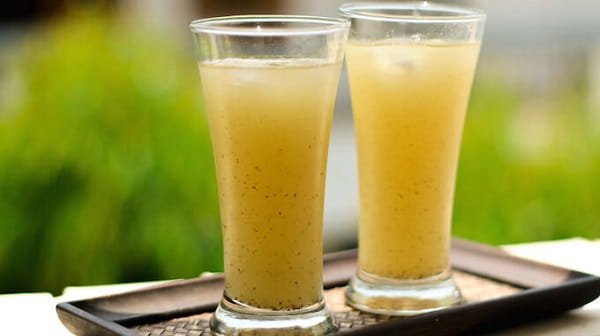
The raw mango drink that defines North Indian summer — tart, sweet, and deeply cooling. Raw mangoes are roasted directly over flame or pressure-cooked, then the pulp is blended with sugar, roasted cumin powder, black salt, and mint. The resulting drink is served chilled over ice and is one of the most genuinely effective heat-protective drinks in the Indian tradition — the raw mango’s natural Vitamin C content and the black salt’s electrolyte replacement make it legitimately restorative rather than merely pleasant.
Aam Panna is also arguably the drink that most perfectly captures the smell and taste of an Indian summer — the smokiness from the roasted mango skin, the green freshness of raw fruit, and the warmth of cumin creating a flavour profile entirely specific to its season.
Jaljeera
Delhi and North India’s quintessential street-side cooler — water seasoned with roasted cumin, black salt, tamarind, fresh mint, ginger, and chilli into a spiced, tangy drink that simultaneously refreshes and stimulates digestion. Jaljeera is the savouriest entry in the Indian summer drink canon — served in clay cups at street stalls with a garnish of boondi, it is a complete sensory experience rather than simply a beverage.
The digestive properties of jaljeera’s cumin and ginger base make it particularly valuable in summer when heat-related digestive sluggishness is common.
Lassi
Punjab’s gift to India’s summer — the yoghurt-based drink that exists in infinite regional variations. Sweet lassi with sugar and cardamom. Salty lassi with black salt and cumin. Rose lassi perfumed with rose water and topped with cream. Mango lassi blended with Alphonso pulp. Bhang lassi consumed during Holi with the ceremonial addition that requires no further description.
The probiotic culture of the curd base makes lassi genuinely cooling at a cellular level — the lactic acid bacteria reduce the gut inflammation that heat and dietary imbalance cause, and the protein content provides sustained energy without the sugar spike of fruit-based drinks.
Thandai
Rajasthan and Uttar Pradesh’s celebration drink — almond and milk-based, perfumed with rose petals, fennel seeds, cardamom, black pepper, and poppy seeds. Thandai is associated with Holi and with Shiva temples in North India, but its cooling, calming properties make it an ideal everyday summer drink when the bhang is left out. The combination of almonds, rose, and cooling spices creates a drink that genuinely reduces body temperature rather than simply providing cold relief.
Coconut Water
Nature’s most perfect summer hydration beverage — fresh coconut water directly from a green coconut contains electrolytes in ratios that are remarkably close to human blood plasma, making it the most effective natural rehydration drink available. Every coastal Indian state has its version — tender coconut vendors on Chennai beaches, roadside coconut stalls in Kerala, and the ubiquitous green coconut carts that appear throughout India as temperatures rise.
Nimbu Pani (Shikanji)
The simplest and most universally available Indian summer drink — fresh lime juice with water, sugar, and salt in proportions that each family adjusts to their own preference. Shikanji — the North Indian version that adds roasted cumin, black salt, and ginger — elevates the basic lemonade into something far more complex and genuinely refreshing. The salt in nimbu pani is not merely flavour — it addresses the sodium loss from sweating that creates the headaches and fatigue associated with summer dehydration.
Bel Sherbet
The wood apple drink that is among the most underappreciated summer beverages in Indian food culture. Bel fruit — cracked open, its fibrous orange pulp scooped out and blended with water, sugar, and black salt — creates a thick, slightly tangy, deeply cooling drink that the Ayurvedic tradition specifically recommends for summer heat management. The fruit’s natural digestive properties make it particularly valuable during the summer months when digestive function is routinely compromised by heat.
Sol Kadhi
Goa and the Konkan coast’s signature summer drink — kokum fruit steeped in water to produce a deep pink, tangy liquid that is then combined with fresh coconut milk. The result is a drink of extraordinary complexity — simultaneously sour, slightly sweet, cooling, and deeply flavoured with the kokum’s distinctive berry tartness. Sol Kadhi is served alongside Goan meals but functions equally well as a standalone summer drink that addresses both thirst and digestive health simultaneously.
Frequently Asked Questions (FAQs)
Q1. Which Indian summer drink is most effective for preventing heat stroke?
A: Aam Panna and Coconut Water are the most clinically supported choices for heat stroke prevention. Aam Panna’s raw mango content provides Vitamin C and electrolytes. Coconut water’s natural electrolyte profile addresses the sodium, potassium, and magnesium loss from excessive sweating that creates heat stroke vulnerability. Both should be consumed proactively — before extended sun exposure — rather than reactively after symptoms appear.
Q2. Can these drinks be made in advance and stored?
A: Aam Panna concentrate stores excellently in the refrigerator for a week and can be diluted as needed. Jaljeera powder stores for weeks in an airtight container. Lassi is best consumed fresh but stores for 24 hours refrigerated. Thandai concentrate keeps for five days refrigerated. Coconut water must be consumed immediately after the nut is opened. Making concentrates and diluting daily is the most practical approach for regular summer consumption.
Q3. Are these drinks suitable for children?
A: All of the drinks listed — excluding bhang thandai — are entirely suitable for children with minor adjustments. Reduce chilli in jaljeera for younger children. Ensure adequate dilution in Aam Panna for children who find tartness overwhelming. Lassi and nimbu pani are among the most child-friendly summer drinks in the Indian repertoire. Sol Kadhi’s distinctive sourness may require introduction at reduced concentration for young children.
Q4. Do these drinks have benefits beyond hydration?
A: Yes — this is what distinguishes traditional Indian summer drinks from commercial beverages. Lassi’s probiotic culture supports gut health. Thandai’s rose and almond combination has documented calming properties. Bel Sherbet is a traditional digestive. Sol Kadhi’s kokum has anti-inflammatory properties. Jaljeera’s cumin supports digestion. Indian summer drinks were developed within a food-as-medicine tradition — their health properties are not incidental but foundational.
Q5. Which of these drinks are easiest to make at home for someone new to Indian cooking?
A: Nimbu Pani is the simplest — fresh lime juice, water, sugar, and salt require no preparation skill. Lassi requires only curd, water, and your choice of sugar or salt blended together. Coconut water requires only purchasing the right coconut. These three require no cooking, no special ingredients, and no technique — making them the most accessible entry points for anyone building a summer drink repertoire.