Introduction
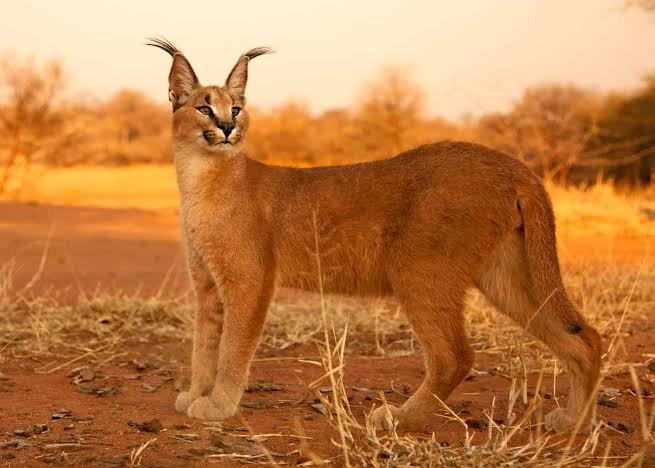
The caracal is one of the most breathtakingly beautiful wild cats on Earth — a medium-sized African and Asian wild cat famous for its extraordinarily long black ear tufts, tawny-golden coat, and remarkable athletic ability that allows it to leap over 3 metres vertically to snatch birds from flight with its paws. Its name derives from the Turkish “karakulak” meaning “black ear,” and its elegant, minimalist beauty has made it one of the most admired wild felines in human history — depicted in ancient Egyptian art, kept in the courts of Indian Mughal emperors, and now frequently appearing in viral social media content that has generated enormous curiosity about keeping one as a pet.
If you are searching for the caracal cat price in India in 2026, this guide provides you with the most important information first: the caracal is a wild animal whose keeping as a pet is illegal in India under the Wildlife Protection Act 1972, and whose welfare needs cannot be met in any domestic Indian household regardless of size or resources. This guide explains why, covers the legal situation fully, and suggests what Indian buyers genuinely seeking an exotic wild-cat aesthetic should actually pursue through legal, ethical channels.
Article Overview — At a Glance
| Attribute | Details |
| Animal Name | Caracal (Caracal caracal) |
| Classification | Wild cat — not a domestic animal |
| Indian Legal Status | ILLEGAL to keep as pet — Wildlife Protection Act 1972 Schedule I |
| CITES Status | Appendix I / II depending on subspecies |
| Size | Medium: 8–20 kg, 40–50 cm shoulder height |
| Wild Range | Africa, Middle East, Central Asia, India (Rajasthan, Gujarat, Madhya Pradesh) |
| Indian Caracal Status | Endangered in India — fewer than 50 individuals estimated |
| Historical Use | Trained for bird hunting by Mughal emperors |
| Price in India | Illegal — any offer to sell is a criminal transaction |
| Penalty Under WPA 1972 | Imprisonment up to 7 years and/or fine |
| Legal Alternative | Savannah cat, Bengal cat — domestic wild-cat aesthetic breeds |
About the Caracal
The caracal (Caracal caracal) is a medium-sized wild cat distributed across Africa, the Middle East, Central Asia, and historically into the Indian subcontinent. It is one of the fastest, most agile, and most athletic cats relative to its size — capable of leaping over 3 metres vertically to catch birds in mid-flight, accelerating to 80 km/h in short bursts, and catching prey as large as small antelopes despite weighing only 8–20 kg. Its characteristic long black ear tufts serve multiple functions — breaking up the outline of the head for camouflage and potentially amplifying directional sound for hunting.
In India, the caracal has an extraordinary historical connection to Mughal imperial culture. Mughal emperors including Akbar and Jahangir kept trained caracals for the sport of “chasing” — the cats were trained to catch birds, particularly cranes and peacocks, demonstrating their extraordinary leaping ability for the court’s entertainment. Akbar is recorded as having maintained over 1,000 trained caracals at one point. Historical miniature paintings from the Mughal period frequently depict caracals alongside imperial hunting parties.
Today, the Indian caracal is in a state of critical endangerment. The Wildlife Institute of India’s most recent population assessment estimates fewer than 50 individual caracals remain in India — primarily in Rajasthan, Gujarat, and Madhya Pradesh. The species is listed on Schedule I of India’s Wildlife Protection Act 1972, affording it the highest level of legal protection. Hunting, capturing, keeping, or trading in caracals carries penalties of imprisonment up to 7 years and significant fines.
The Legal Reality — Why Caracals Cannot Be Kept in India
The Wildlife Protection Act 1972 is unambiguous. The caracal is a Schedule I protected species — the same list that includes tigers, leopards, and snow leopards. Any person found keeping, trading, transporting, or otherwise possessing a caracal or caracal parts faces criminal prosecution with penalties including 7 years of imprisonment and fines that the court may impose without upper limit in cases involving Schedule I species.
There is no permit system for private exotic pet keeping of Schedule I species in India. Zoos and research institutions operating under Wildlife (Protection) Act licenses are the only entities permitted to keep caracals under strictly controlled conditions. No private individual — regardless of wealth, property size, or claimed exemption — may legally keep a caracal as a pet in India.
Any seller offering caracals for sale in India is engaging in illegal wildlife trafficking — a criminal offense under both Indian law and international law (CITES). Purchasing from such a seller makes the buyer a co-conspirator in wildlife trafficking. Indian and international law enforcement agencies including the Wildlife Crime Control Bureau (WCCB) and INTERPOL’s Environmental Security programme actively investigate and prosecute wildlife trafficking cases in India.
Why Caracals Cannot Be Ethically Kept as Pets
Beyond legality, the welfare case against keeping caracals in domestic environments is decisive. Caracals in the wild require home ranges of 31–1,128 km² depending on gender and habitat. They are solitary, territorial hunters that require the physical and psychological stimulation of hunting live prey. Their dietary requirements include fresh whole prey including bones, organs, and fur — nutritional components that domestic cat food cannot provide. They are not domesticated — 10,000+ years of dog-human co-evolution and similar timescales for domestic cat development have produced animals whose nervous systems are adapted for human proximity. The caracal’s nervous system is adapted for survival in African and Asian wilderness — the stress of domestic confinement causes physiological damage including chronic cortisol elevation, immune suppression, and stereotypic behaviour (repetitive pacing, self-injury) that are well-documented in captive wild cats.
What You Should Actually Buy — Legal Wild-Cat Aesthetic Alternatives
For Indian buyers genuinely attracted to the caracal’s wild aesthetic — its tawny coat, athletic build, and extraordinary presence — two legal, ethical, and practically available alternatives offer the wild-cat experience within domestic and legal boundaries.
The Bengal cat — with its spotted or rosette coat descended from Asian Leopard Cat ancestry — offers a domestic cat of genuinely wild appearance whose TICA-recognised SBT generation is fully legal and domestic. Prices in India range Rs. 30,000–Rs. 1,30,000.
The Savannah cat — crossed from the African Serval — offers tall-legged, spotted wild elegance in an SBT-generation domestic cat that is legal and available in India. Prices range Rs. 80,000–Rs. 1,50,000.
Both offer genuinely extraordinary wild aesthetics within legal, ethical, and welfare-appropriate domestic cat frameworks.
Frequently Asked Questions (FAQs)
Q1. What is the caracal cat price in India in 2026?
The caracal cannot be legally sold, purchased, or kept as a pet in India under any circumstances. It is a Schedule I protected species under the Wildlife Protection Act 1972. Any price offered for a caracal in India represents an illegal wildlife transaction carrying criminal penalties of up to 7 years imprisonment. There is no legal price for a caracal as a pet in India.
Q2. Are there any caracals left in India?
Yes — but barely. The Wildlife Institute of India estimates fewer than 50 individual caracals survive in India, primarily in Rajasthan, Gujarat, and Madhya Pradesh. The Indian caracal population is critically endangered due to habitat loss, prey base depletion, and illegal capture. The species requires every available legal protection to have any chance of survival in India.
Q3. Did Mughal emperors really keep caracals?
Yes — historical records from Mughal court chronicles confirm that caracals were kept and trained for bird-hunting sport. Emperor Akbar reportedly maintained over 1,000 trained caracals. Mughal miniature paintings frequently depict caracals in hunting contexts. This historical practice — conducted in a very different legal, ecological, and ethical context — is entirely separate from modern domestic pet keeping and cannot be cited as justification for current ownership.
Q4. What domestic cat looks most like a caracal?
No domestic cat breed closely replicates the caracal’s specific appearance — the long black ear tufts are uniquely the caracal’s most distinctive feature. However, the Maine Coon’s lynx-tipped ears, large size, and tawny tabby colouration create the closest domestic approximation of wild-cat ear features. For spotted wild-cat aesthetics, the Bengal and Savannah remain the best legal alternatives.
Q5. I saw caracals being sold online in India — what should I do?
Report immediately to the Wildlife Crime Control Bureau (WCCB) — India’s central government authority for combating wildlife crime. WCCB operates a 24-hour helpline and online complaint portal. Reporting information to wildlife authorities directly contributes to enforcement action and prosecution of wildlife traffickers. Do not engage with the seller, do not purchase, and report all available information including seller contact details, platform, and listing details.
Conclusion
The caracal is one of India’s most critically endangered wild animals — a magnificent, ancient hunter with deep cultural roots in Indian Mughal history that survives today in fewer than 50 individuals across the country’s remaining suitable habitat. In 2026, the only appropriate relationship between Indians and the caracal is one of protection, admiration, and conservation support. For those drawn to the wild-cat aesthetic, India’s legal market offers genuinely extraordinary alternatives — the Bengal and Savannah cats deliver spectacular wild appearance within ethical, legal, and welfare-appropriate frameworks. The caracal belongs in Rajasthan’s dry scrublands — not in a Delhi apartment.