Indian interior design has entered one of its most interesting periods — a confident synthesis of global contemporary aesthetics with India’s extraordinarily rich material, colour, and craft traditions. The trend direction in 2026 isn’t about choosing between modern and traditional — it’s about understanding that the most compelling spaces in Indian homes are those where these two vocabularies speak to each other fluently.
The trends below reflect what design-forward Indian apartment dwellers are actually living with — not imported Pinterest boards, but a design sensibility that is distinctly and proudly Indian in its foundations while being entirely contemporary in its expression.
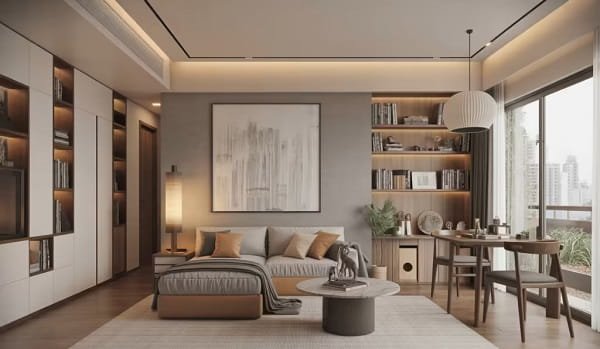
Earthy Tones Replacing Sterile Whites
The decade-long dominance of all-white interiors — driven by social media aesthetics and a desire for clean, contemporary minimalism — is giving way to a warmer, earthier colour palette that better suits India’s climate, culture, and aesthetic inheritance.
Terracotta, ochre, warm taupe, burnt sienna, and deep rust — the colours of Indian soil, pottery, and spice — are replacing the cool whites and greys that dominated the previous decade. These tones work beautifully with natural materials, respond warmly to Indian lighting conditions, and create the sense of warmth and livability that all-white spaces consistently struggle to achieve in Indian homes.
The application doesn’t require full room repaints — an accent wall in deep terracotta, warm-toned textiles against neutral walls, or earth-toned ceramic accessories create the palette shift without complete commitment.
Natural Materials: Cane, Jute, Wood, and Terracotta
Sustainable, natural materials are dominating contemporary Indian interior design in ways that feel neither rustic nor ethnically niche — they are simply the most beautiful, most appropriate materials for Indian homes.
Cane furniture — chairs, coffee tables, pendant lights — provides texture, lightness, and visual warmth that manufactured furniture materials can’t replicate. Jute rugs ground living spaces with natural texture at accessible price points. Terracotta tile flooring and accessories connect modern Indian homes to a material tradition that is thousands of years old without being historically heavy. Reclaimed wood furniture and teak accessories bring warmth and character that new wood doesn’t yet carry.
These materials are also India’s own — available from domestic artisans and manufacturers, reducing both cost and environmental impact relative to imported alternatives.
Maximalist Craft-Centric Spaces
The global design pendulum has swung away from stark minimalism toward what is being called maximalism — but in Indian hands, this trend finds its most authentic expression as curated, craft-centric abundance.
Gallery walls featuring Indian folk art — Madhubani, Warli, Pattachitra — alongside contemporary prints. Shelves with intentionally collected craft objects rather than mass-produced decorative items. Multiple textile patterns layered with the confidence that Indian aesthetic tradition has always encouraged. This isn’t clutter — it’s cultural richness expressed with design intention. The key is curation — every object has been chosen for its beauty or meaning rather than accumulated without consideration.
Biophilic Design: Plants as Architecture
Indoor plants have moved from accent elements to fundamental design components in modern Indian apartments. The biophilic design trend — incorporating natural elements into built environments for psychological and aesthetic benefit — finds natural expression in India where greenery is culturally embedded in the concept of a welcoming home.
Statement plants — large fiddle-leaf figs, monstera deliciosas, and indoor banana plants — function as architectural elements that define and soften corners the way furniture used to. Hanging planters from ceilings, plant ledges at window heights, and bathroom plant walls create immersive natural environments within compact urban apartments.
Multifunctional Spaces with Intentional Design
The post-pandemic reality of apartments that must serve multiple functions — home office, fitness space, guest accommodation, creative studio — has driven design thinking toward spaces that are flexible without looking provisional.
Murphy bed walls with integrated shelving that convert a study into a guest room. Dining tables with hidden storage. Living room seating arrangements that reconfigure for yoga practice. These multifunctional solutions are increasingly being designed with visual intention — they look designed rather than makeshift, which is the critical distinction between a space that functions well and one that also feels good.
Statement Ceilings and Textured Walls
As floor plans become increasingly compact, designers are drawing attention upward — creating visual interest on ceilings and walls that previously went undesigned. A jali-patterned gypsum ceiling panel, a hand-painted mural on a bedroom ceiling, a deeply textured limewash finish on an accent wall — these vertical and overhead interventions create visual richness without consuming floor space.
Limewash wall finishes — an ancient technique that creates organic, layered texture — are particularly popular in modern Indian apartments where the finish evokes both contemporary European interiors and India’s own lime plaster architectural heritage simultaneously.
Frequently Asked Questions (FAQs)
Q1. How do I incorporate Indian craft and folk art aesthetics without the space feeling like a museum or ethnic restaurant?
A: The key is restraint in selection combined with confidence in placement. Choose two to three pieces of genuine quality — a single Madhubani painting rather than several smaller prints, one statement dhurrie rug rather than multiple craft elements competing for attention — and place them with the same intentionality you’d give any design element. Surrounding craft pieces with contemporary furniture and neutral walls gives them space to speak rather than overwhelming the room.
Q2. Are these design trends practical for apartment living on a mid-range budget?
A: All the trends described work across budget ranges. Earthy tones require only paint — the least expensive room transformation available. Natural materials like jute rugs, cane stools, and terracotta accessories are significantly more affordable than designer furniture alternatives. Plants are inexpensive. The craft-centric approach to decor is actually more budget-friendly than purchasing contemporary imported decor — Indian craft objects are available at remarkable value relative to their quality and beauty.
Q3. How do I blend contemporary furniture with traditional Indian design elements without the space looking inconsistent?
A: Consistency of material and colour palette is what creates visual cohesion rather than stylistic match. A contemporary sofa in a warm neutral alongside a traditional brass lamp, a handloom cushion cover, and a wooden side table all share the same warm material palette — they look intentionally composed rather than inconsistent. When the palette is coherent, stylistic mixing reads as sophisticated rather than confused.
Q4. What are the most cost-effective interior design upgrades for an Indian apartment currently?
A: Wall paint — particularly accent walls in the new earthy tones — delivers the highest visual impact per rupee spent of any design intervention. Adding indoor plants transforms the energy and aesthetics of a room at minimal cost. Replacing existing cushion covers and adding a quality jute or dhurrie rug refreshes a living room completely for ₹3,000 to ₹8,000. These three interventions collectively transform a tired apartment into a current, considered space.
Q5. Is hiring an interior designer worth the cost for a standard two-bedroom Indian apartment?
A: For a complete renovation with custom furniture, an interior designer’s planning expertise genuinely adds value — avoiding costly mistakes in layout, material selection, and contractor management. For a decor refresh — new colours, furniture additions, textile updates — the frameworks in this article enable self-directed decisions that don’t require professional fees. The middle ground — a single consultation with a designer for room layout advice and material direction — can be arranged for ₹5,000 to ₹15,000 and provides professional guidance without ongoing engagement costs.