India’s relationship with food trends has undergone a complete transformation in the age of social media. A dish that is filmed in a Pune cloud kitchen at noon can be replicated in a Delhi home kitchen by evening and trending across four cities by midnight. The speed at which food ideas travel has compressed what was once a generational process of culinary exchange — regional dishes taking decades to reach national consciousness — into a matter of days.
What’s particularly fascinating about India’s viral food trends is that they are not passively consumed. Indian food culture is fundamentally participatory — people don’t just watch food content, they cook it, adapt it, personalise it, and film their own version. This active participation means each trend evolves rapidly through thousands of regional interpretations.
Birria Tacos: The Indo-Mexican Crossover
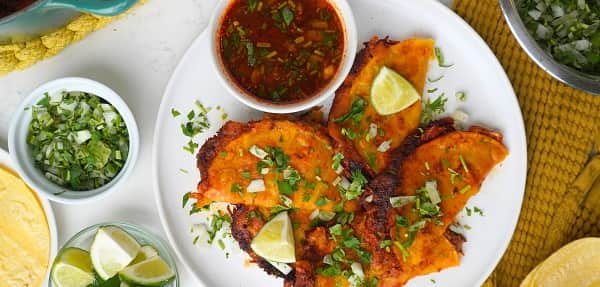
The Mexican birria taco — slow-cooked beef or lamb in a deeply spiced consommé, served in a corn tortilla dipped in the braising liquid and crisped on a griddle — arrived in India through Instagram food reels and found enthusiastic adaptation. Indian versions use mutton keema or slow-cooked lamb in a masala-forward braising liquid, served in wheat roti or maida tortillas, with the same dramatic cheese pull and consommé dip that made the original viral.
The Indo-Birria taco trend is particularly active in Mumbai, Bengaluru, and Delhi’s food truck and cloud kitchen scenes — and in home kitchens where cooks have adapted the technique with entirely Indian spice profiles.
Dalgona Coffee’s Indian Relatives
The global Dalgona coffee trend — whipped instant coffee, sugar, and hot water folded into chilled milk — sparked an Indian trend of whipped beverages that extended well beyond coffee. Whipped jaggery chai, whipped Bournvita, whipped thandai, and whipped rose milk all appeared in the months following Dalgona’s peak, each applying the same aeration technique to thoroughly Indian flavour bases.
The whipped beverage trend democratised cafe-style drinks for home consumption — requiring only a hand beater and basic pantry ingredients to produce visually spectacular results.
Smash Burgers With Indian Masala Fills
The global smash burger trend — beef patties smashed thin on a very hot griddle to develop maximum crust and caramelisation — has been thoroughly Indianised. Mutton keema smash patties seasoned with chaat masala and garam masala. Paneer smash burgers with green chutney and pickled onion. Chicken tikka smash burgers where the meat carries its own marinade caramelisation into the crust.
Indian smash burgers have become one of the most active home cooking trends — accessible for anyone with a cast iron tawa, good quality mince, and the willingness to apply genuine pressure to the patty.
Kulhad Pizza
A trend that emerged from Jalandhar street vendors and spread nationally — pizza base cooked inside a kulhad clay cup, topped with Indian-spiced vegetables and cheese, and served in the fired clay vessel that imparts a smoky, earthy note to the base. The kulhad pizza’s visual appeal drove its viral spread, but the genuinely interesting flavour — clay, smoke, cheese, and chaat spice together — sustained the trend beyond its initial novelty.
Chilli Oil on Everything
The global chilli oil trend — crispy, fragrant oil made with dried chillies, garlic, shallots, and spices — found instant resonance in a food culture that has its own deeply developed tradition of aromatic tempering oils. Indian versions of chilli oil incorporate curry leaves, mustard seeds, kashmiri chilli, and dried garlic into the base — creating products that are simultaneously aligned with the global trend and distinctly Indian in character.
Chilli oil has appeared on everything from regular dosa and idli to pasta, eggs, bread, and cocktails in Indian food content.
Overnight Oats With Indian Flavours
The overnight oats trend — oats soaked in milk or yoghurt overnight with sweetener and flavourings — has been enthusiastically adapted with Indian flavour profiles. Rose and cardamom overnight oats. Mango lassi overnight oats. Masala chai-spiced overnight oats with dates and almonds. Indian fitness and wellness content creators have driven this trend as a nutritionally dense breakfast option that requires no morning preparation time.
Frequently Asked Questions (FAQs)
Q1. Do viral food trends in India replace traditional food culture or coexist with it?
A: The evidence strongly supports coexistence rather than replacement. India’s traditional food culture is deeply embedded in regional identity, family tradition, and festival calendars — it doesn’t yield to viral trends. What happens instead is additive — the Indian food vocabulary expands to include new techniques and flavour combinations while the traditional repertoire remains active. A household making Indo-Birria tacos on Saturday evening will make Sunday’s traditional dal-chawal without cognitive conflict.
Q2. Which viral food trend has had the most lasting impact on Indian eating habits rather than just generating temporary attention?
A: The overnight oats trend has had the most lasting behavioural impact because it addresses a genuine daily problem — quick, nutritious breakfast preparation — rather than simply offering a novel eating experience. Trends that solve real problems outlast trends that offer novelty alone. The incorporation of Indian flavour profiles has made overnight oats culturally sustainable in Indian households beyond the initial health content trend cycle.
Q3. How do Indian home cooks access recipes for these viral trends?
A: Instagram Reels, YouTube Shorts, and food-specific content creators have become the primary recipe source for viral food trends — the same platform that makes the trend viral simultaneously provides the recipe. The trend-to-recipe pipeline is now entirely contained within social media, bypassing cookbooks and food websites as discovery channels entirely for trend-driven cooking.
Q4. Are these viral trends creating opportunities for food entrepreneurs in India?
A: Significantly. Cloud kitchens, home bakers, and food truck operators have built businesses specifically around viral food trends — Kulhad pizza stalls, Indo-Mexican fusion carts, and speciality chilli oil brands have launched and scaled on the back of trend-driven consumer demand. The low barrier to entry for cloud kitchen and home kitchen businesses means that viral food trends create immediate commercial opportunity for entrepreneurial cooks.
Q5. How can home cooks adapt viral international food trends using locally available Indian ingredients?
A: The most successful Indian viral adaptations share a common approach — keeping the technique while replacing the flavour profile. Birria’s slow braise technique works with mutton and Indian spices. Smash burger’s high-heat crust technique works with keema and masala. Overnight oats’ soak-and-serve technique works with chai spices and Indian fruits. The principle is consistently: master the technique, then make the flavour entirely your own.