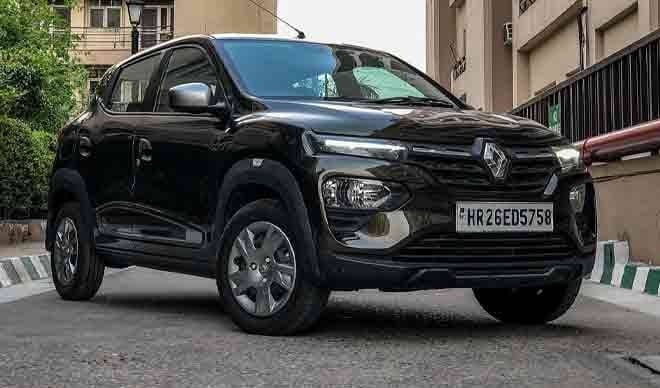
The Renault Kwid turned ten years old in 2025 — a milestone that few entry-level hatchbacks in India achieve while still being in active production — and celebrated with a limited 10th Anniversary Edition. Its decade-long success story is built on a genuinely clever formula: take a small, economical hatchback and dress it in SUV-inspired clothing, give it more ground clearance than the competition, add a generous feature list for the price, and price it below the segment’s psychological threshold. It worked when it launched in 2015 and continues to work in 2026, with the Kwid holding a respectable position at number nine on the TeamBHP sales leaderboard with consistent monthly sales that confirm its enduring relevance in the brutally competitive entry-level segment.
Kwid Variants and Price Range
The 2026 Renault Kwid is available in seven variants across three broad trims — Authentic, Techno, and Climber — with manual and AMT automatic options. Ex-showroom prices start from Rs. 4.30 lakh for the base Authentic 0.8-litre petrol manual and go up to Rs. 5.99 lakh for the top Climber 1.0-litre AMT. The 10th Anniversary Edition starts at Rs. 5.14 lakh for the manual and Rs. 5.63 lakh for the AMT. On-road prices in Delhi range from approximately Rs. 4.70 lakh to Rs. 7.18 lakh depending on variant, registration charges, and insurance. At this price bracket, the Kwid competes with the Maruti Suzuki S-Presso, Tata Tiago, and Alto K10 — a segment where every ten-thousand-rupee price difference matters to the buyer.
A Kwid facelift has been spotted testing in camouflage, expected to bring a larger touchscreen, digital instrument cluster, and updated headlamp design. A Kwid EV has also been observed in testing and is anticipated to compete with the Tata Tiago EV in the affordable electric hatchback segment, potentially priced near Rs. 7 lakh.
Engine Options and Performance of Kwid Car
Two engine options power the Kwid. The 0.8-litre three-cylinder naturally aspirated petrol — available only with a 5-speed manual — produces 54 bhp and 72 Nm and is reserved for the base Authentic trim. The 1.0-litre three-cylinder naturally aspirated petrol producing 68 bhp and 91 Nm is the more popular unit, paired with either a 5-speed manual or a 5-speed AMT automatic. The AMT’s gear selector uses an unusual rotary dial on the centre console rather than a traditional lever — a distinctive Renault design choice that frees up console space. Both engines are smooth, appropriately powered for the vehicle’s sub-800 kg kerb weight, and adequately flexible for urban commuting. Highway overtaking with the smaller engine requires planning; the 1.0-litre unit is considerably more relaxed.
Features of Kwid Car
The Kwid’s feature list relative to its price has always been one of its strongest commercial arguments. Higher Techno and Climber variants carry an 8-inch touchscreen infotainment system with Android Auto and Apple CarPlay — a specification previously associated with cars costing significantly more. A digital driver’s display replaces the traditional analogue cluster, a rear-view camera, remote keyless entry, roof rails, body cladding, a skid plate, and a manual air conditioner feature across the range. Six airbags, ABS with EBD, Electronic Stability Programme, hill-start assist, and a tyre pressure monitoring system are available on higher variants — a meaningful safety improvement over the Kwid’s earlier specification that was criticised for offering only two airbags.
The Kwid’s defining physical feature is its SUV-inspired stance — 184 mm of ground clearance, the highest in its class, giving it genuine ability to navigate the broken surfaces, flooded roads, and steep speed breakers that characterise Indian city driving. The bold front grille with LED DRLs, chunky wheel arch cladding, and roof rails create a visual presence that punches well above what a Rs. 4-6 lakh car would typically suggest. Boot space of 279 litres — extendable to 620 litres with rear seats folded — is genuinely practical for a car of this size.
Mileage of Kwid Car
The Kwid’s fuel efficiency is excellent and consistent with its segment-leading position. The 1.0-litre manual delivers approximately 21.46 to 22.05 kmpl as per ARAI certification, while the AMT returns a slightly improved 22.3 to 22.5 kmpl — one of the more efficient AMT-over-manual reversals in the segment. The 0.8-litre engine in the base variant achieves similar efficiency. Real-world figures in mixed urban conditions typically land at 16 to 19 kmpl. The 28-litre fuel tank provides a practical range of approximately 450 to 550 km per full fill — impressive for such a compact, affordable car and a genuine operational convenience for daily city commuters.
FAQs
Q: What is the starting price of the Renault Kwid in 2026?
A: The Kwid starts at Rs. 4.30 lakh ex-showroom for the base Authentic 0.8-litre petrol manual, going up to Rs. 5.99 lakh for the top Climber 1.0-litre AMT.
Q: What is the Kwid’s ground clearance?
A: 184 mm — the highest ground clearance in the entry-level hatchback segment, giving the Kwid a genuine functional advantage on Indian city roads and flooded streets.
Q: Does the Kwid have a touchscreen in 2026?
A: Yes — higher Techno and Climber variants carry an 8-inch infotainment touchscreen with Android Auto and Apple CarPlay.
Q: What is the Kwid’s best mileage figure?
A: The 1.0-litre AMT variant delivers approximately 22.3 to 22.5 kmpl as per ARAI certification — the most fuel-efficient version in the lineup.
Q: Is a Kwid EV coming to India?
A: A Kwid EV has been spotted testing and is expected to arrive in India, potentially priced around Rs. 7 lakh to compete with the Tata Tiago EV in the affordable electric hatchback space.