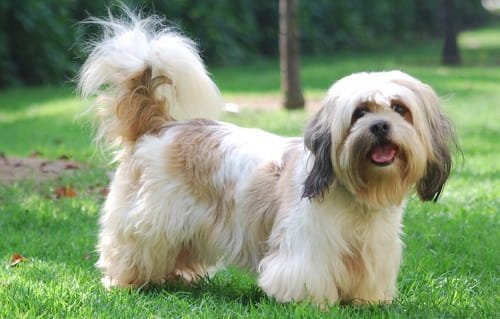
The Lhasa Apso is one of the world’s oldest and most spiritually significant dog breeds — a small, long-coated companion and alert dog that has been bred in Tibetan monasteries and palaces for over a thousand years. Its name in Tibetan means “Bark Lion Sentinel Dog” — a name that perfectly captures both its distinctive long flowing coat (lion-like) and its primary historical role as an indoor sentinel that alerted the larger Tibetan Mastiff outdoor guardians to intruders. In Tibetan Buddhist tradition, Lhasa Apsos were considered sacred animals — believed to carry the souls of deceased monks awaiting reincarnation — and were never sold, only gifted.
In India, the Lhasa Apso has been a popular companion breed since the colonial era and has maintained a consistent following through 2024–2025. Its combination of manageable size, elegant appearance, and independent yet loyal character makes it particularly well-suited to India’s urban apartment lifestyle — with the important caveat that its long coat demands a genuine grooming commitment from its owner. This guide covers current 2026 pricing, the breed’s remarkable history, honest temperament facts, and everything a prospective Indian Lhasa owner needs to know.
| Attribute | Details |
| Breed Name | Lhasa Apso |
| Origin | Lhasa, Tibet — bred in Buddhist monasteries and Dalai Lama’s palace |
| Size | Small: 5–8 kg, 25–28 cm |
| Lifespan | 12–15 years (often reaching 16–20 years) — one of longest-lived breeds |
| Temperament | Independent, assertive, loyal to family, wary of strangers, surprisingly bold |
| Coat | Long, dense, flowing — parted down the middle; wide colour range |
| Price Range (2026) | Rs. 15,000 – Rs. 50,000 |
| KCI / Show Quality | Rs. 30,000 – Rs. 50,000+ |
| Monthly Maintenance | Rs. 4,000 – Rs. 10,000 (grooming is major cost) |
| Best For | Apartment owners, experienced small breed owners, calm adult households |
| Climate Suitability | Moderate — long coat requires management in Indian summers |
| Grooming Requirement | Daily home brushing + professional grooming every 4–6 weeks — non-negotiable |
About the Lhasa Apso
The Lhasa Apso has been bred in Tibet for over 1,000 years — possibly much longer. At the heart of the breed’s history is its role in Tibetan Buddhist monasteries and the Dalai Lama’s Potala Palace in Lhasa. These dogs were kept as indoor alert sentinels: their acute hearing and natural wariness of strangers meant they would sound the alarm at any unusual presence, alerting the larger Tibetan Mastiffs kept outside the monastery walls to investigate.
The breed’s sacred status in Tibetan culture meant it was never bought or sold — only the Dalai Lama could bestow a Lhasa Apso as a gift, and doing so was considered a great honour. This tradition of gifting rather than selling is documented from at least the 17th century. The breed came to the Western world primarily through gifts from the 13th Dalai Lama to British visitors in the early 20th century — one such gift to a Colonel Kennedy in 1921 introduced the breed to England, and subsequent gifts to American naturalist Suydam Cutting in the 1930s established the breed in the United States.
In India, the Lhasa Apso has been present since at least the British colonial period through the Himalayan trade and diplomatic connections with Tibet. The breed was among the earlier small breeds to achieve popularity in Indian urban households, and it has maintained consistent KCI registration numbers through 2024–2025, with the breed particularly popular in Maharashtra, Delhi, and Karnataka.
Lhasa Apso Price in India 2026 — City-Wise Breakdown
Lhasa Apsos are moderately well-established in India with breeders in most major cities. Prices below reflect reputable breeder rates as of early 2026.
| City / Category | Min Price (INR) | Max Price (INR) |
| Delhi / NCR | Rs. 18,000 | Rs. 45,000 |
| Mumbai | Rs. 20,000 | Rs. 48,000 |
| Bangalore | Rs. 16,000 | Rs. 42,000 |
| Hyderabad | Rs. 15,000 | Rs. 40,000 |
| Chennai | Rs. 14,000 | Rs. 38,000 |
| Kolkata | Rs. 14,000 | Rs. 36,000 |
| Chandigarh / Jaipur | Rs. 15,000 | Rs. 38,000 |
| Pune | Rs. 16,000 | Rs. 42,000 |
| Tier-2 / Tier-3 Cities | Rs. 10,000 | Rs. 28,000 |
| KCI Registered / Show Quality | Rs. 30,000 | Rs. 50,000+ |
Note: The Lhasa Apso comes in a wide variety of colours — golden, honey, dark grizzle, slate, smoke, parti-colour, black, and white are all accepted by breed standards. Golden and honey are most common and popular in India. Show dogs are maintained in full floor-length coat — most pet owners opt for a shorter “puppy cut” which is more practical, easier to maintain, and better suited to Indian climate. Always verify vaccination records and parental health history before purchase.
Temperament & Suitability
The Lhasa Apso’s temperament is genuinely surprising to many first-time small dog owners who expect a cuddly, deferential lap dog. The Lhasa is assertive, opinionated, and distinctly independent — it decides on its own terms when it wants affection and with whom it will interact. This is a dog that has been bred for a thousand years as an alert sentinel, not as a submissive companion, and its personality reflects this heritage with admirable consistency.
They are deeply loyal to their own family while remaining persistently suspicious of strangers — a characteristic that made them excellent monastery sentinels and that makes them surprisingly effective little watchdogs. They do not bark constantly, but when they do alert, it means something. Early socialisation is important to ensure this wariness does not become excessive defensiveness in adult life.
Their relationship with children deserves honest assessment: Lhasa Apsos are generally better suited to households with older children (10+ years) who understand and respect a dog’s boundaries. Their assertive, independent nature means they do not tolerate rough handling or forced interaction patiently, and they will communicate displeasure with a growl or snap if pushed. With respectful handling and proper socialisation, they are perfectly safe family dogs — but they are not the endlessly tolerant “nanny dogs” that some other breeds are.
One genuine asset for Indian apartment owners: the Lhasa Apso has modest exercise requirements (20–30 minutes of daily walking plus indoor play) and is genuinely comfortable as an indoor companion. They adapt well to apartment rhythms and do not require extensive outdoor activity to be content and well-behaved.
Factors That Affect the Price
- Coat Quality and Length: Show-quality Lhasas with correct parting, coat texture, and fall are priced at the upper end. Pet-quality with slightly less perfect coat are more accessible.
- Colour: Golden and honey most widely available; darker colours and parti-colour less common and may command slight premiums.
- KCI Registration: Registered pedigree from champion bloodlines starts at Rs. 30,000+.
- Breeding Quality: Health-tested parents (specifically for hereditary eye conditions and hip/kidney health) justify higher prices.
- Gender: Females typically Rs. 3,000–Rs. 8,000 higher.
- City: Metro city prices consistently 25–35% higher than tier-2/3 cities.
Health & Lifespan
The Lhasa Apso is one of the longest-lived dog breeds — regularly reaching 12–15 years and frequently extending to 17–20 years with good care. This exceptional longevity is one of the breed’s most remarkable characteristics and is worth honestly factoring into the commitment calculation before purchase.
Known health concerns include hereditary eye conditions (PRA and other hereditary eye diseases — responsible breeders have parents eye-certified), renal dysplasia (a hereditary kidney condition that can be severe — responsible breeders screen parent dogs), and Hip Dysplasia (lower rates than in large breeds but documented in Lhasas). Patellar luxation occurs in some bloodlines. Skin issues under the long coat are a significant concern in India’s humid climate — the dense coat must be thoroughly dried after bathing (a high-velocity pet dryer is essential) to prevent skin infections and hot spots forming under the insulating coat.
In India’s summer climate, the Lhasa’s long coat requires active management. Many Indian Lhasa owners maintain a “summer cut” — a shorter trim that reduces heat retention while preserving the breed’s characteristic appearance. This does not harm the coat and returns the Lhasa to a more comfortable working temperature during April–June.
Monthly Maintenance Cost in India (2026 Estimate)
| Cost Category | Estimated Cost |
| Premium Small Breed Food | Rs. 1,500 – Rs. 3,000/month |
| Professional Grooming (major cost) | Rs. 1,000 – Rs. 2,000/session; every 4–6 weeks |
| Home Grooming Supplies | Rs. 400 – Rs. 800/month |
| Veterinary Care (incl. eye + kidney monitoring) | Rs. 6,000 – Rs. 14,000 annually |
| Vaccinations & Preventives | Rs. 1,500 – Rs. 3,500 annually |
| Total Estimated Monthly Cost | Rs. 4,000 – Rs. 10,000 |
Frequently Asked Questions (FAQs)
Q1. What is the Lhasa Apso price in India in 2026?
A: Lhasa Apso prices from reputable breeders in India in 2026 range from Rs. 14,000 to Rs. 48,000 for pet-quality puppies depending on city and bloodline. KCI-registered show-quality Lhasas from champion bloodlines start at Rs. 30,000. These prices make the Lhasa one of the more accessible long-coated companion breeds in India.
Q2. Is the Lhasa Apso the same as a Shih Tzu?
A: No — they are closely related but distinct breeds. The Lhasa Apso is the older breed (Tibetan origin, bred as a sentinel dog) and was actually used in the development of the Shih Tzu (which was developed in China by crossing Tibetan breeds including the Lhasa with Chinese palace dogs). Key differences: the Lhasa is slightly longer in body, has a less flat face (less brachycephalic), is more independent in temperament, and has a slightly harder coat texture. The Shih Tzu is generally more outgoing and eager to please.
Q3. Why is the Lhasa Apso considered sacred in Tibet?
A: In Tibetan Buddhist tradition, Lhasa Apsos were believed to carry the souls of deceased monks awaiting reincarnation — making them spiritually significant animals that deserved reverence rather than commerce. This belief meant they were never bought or sold, only gifted by the Dalai Lama as marks of great honour. The breed’s association with the Potala Palace and Buddhist monasteries gave it a religious cultural significance that persists in Tibetan cultural memory to this day.
Q4. How much grooming does a Lhasa Apso need in India?
A: The Lhasa Apso requires daily home brushing (10–15 minutes minimum to prevent matting), professional grooming every 4–6 weeks for trimming and bathing, and immediate thorough drying after any bath — the dense coat must be completely dry to the skin to prevent bacterial and yeast infections in India’s humidity. Many Indian Lhasa owners find a high-velocity pet dryer to be one of the most important purchase decisions after the dog itself. Annual grooming costs typically run Rs. 12,000–Rs. 24,000.
Q5. Is a Lhasa Apso suitable for first-time dog owners in India?
A: With reservations. The Lhasa Apso’s independent, assertive temperament requires an owner who understands that this is not a submissive breed and who is comfortable with a dog that has its own opinions. Its grooming requirement is substantial and non-negotiable. For first-time owners who research the breed thoroughly, are committed to daily grooming, and approach the Lhasa’s independence as a charming characteristic rather than a training failure, it can be a rewarding first breed. For owners expecting unconditional eagerness to please, a Labrador or Golden Retriever would be a better starting point.
Conclusion
The Lhasa Apso brings over a thousand years of Tibetan monastery heritage, Buddhist spiritual significance, and independent sentinel character into India’s contemporary apartment lifestyle — a small dog with genuinely ancient dignity and a personality that respects those who respect it in return. In 2026, the Lhasa Apso price in India is among the most accessible of any long-coated companion breed, making its qualities available to a wide range of Indian households. For buyers who commit to the daily grooming routine, approach the breed’s independence with appreciation rather than frustration, and provide the consistent, respectful interaction this breed thrives on, the Lhasa Apso offers 12–20 years of quietly devoted, alert, and characterful companionship that carries within it the spirit of the Himalayas.