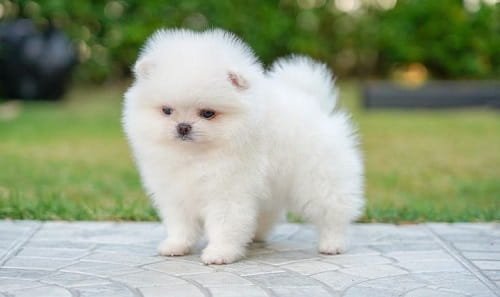
The “Teacup Pomeranian” is one of the most searched dog terms across India — and one of the most important subjects that requires completely honest, health-first guidance before any buyer makes a purchase decision. In India’s 2026 pet market, Teacup Pomeranians are being sold for prices ranging from Rs. 30,000 to Rs. 1,50,000 or more, with sellers leveraging the irresistible appeal of impossibly small, fluffy, round-faced puppies that fit in a palm.
This guide will give you accurate pricing, but more importantly it will give you the complete truth about what “teacup” actually means, what health realities come with extremely miniaturised Pomeranians, and how to find a genuinely healthy small Pomeranian without falling into the premium-for-poor-health trap that costs Indian buyers lakhs of rupees in veterinary bills every year. Understanding this distinction before purchase is the most valuable thing this guide can offer.
Article Overview — At a Glance
| Attribute | Details |
| Breed Name | Pomeranian (Toy Group) — “Teacup” is a marketing term, not a breed or size category |
| Origin | Germany/Poland (Pomerania region) — popularised by Queen Victoria |
| Official Size Standard | 1.4–3.2 kg adult weight |
| “Teacup” Definition | Marketing term for individuals below 1.4 kg adult weight — outside standard |
| KCI / AKC Recognition | “Teacup” is NOT recognised — only standard-weight Pomeranians are registered |
| Bear Face vs Fox Face | Bear face (round, compact) vs fox face (pointed muzzle) — both purebred Poms |
| Lifespan (standard Pom) | 12–16 years |
| Lifespan (teacup — often shorter) | Potentially shorter due to health complications |
| Price Range (2026) | Rs. 8,000 – Rs. 1,50,000 (standard to extreme teacup) |
| Monthly Maintenance | Rs. 3,500 – Rs. 8,000 |
| Key Warning | Extreme miniaturisation = elevated health risk; premium price ≠ health quality |
| Best For | Informed buyers who choose healthy standard-sized individuals |
About the Teacup Pomeranian
The Pomeranian in its standard form is already one of the world’s smallest dog breeds — an official toy breed with an adult weight of 1.4–3.2 kg, descended from the much larger Spitz-type working dogs of the Pomerania region (now largely Poland). Queen Victoria’s passion for smaller and smaller Pomeranians during her reign dramatically accelerated the miniaturisation of the breed in the 1880s and 1890s — she is credited with reducing the average Pomeranian from approximately 13 kg to the compact toy dog we know today.
The “teacup” designation emerged in American and subsequently Asian pet markets from the 1990s onward as sellers recognised that marketing the smallest possible animals — those that could literally fit in a teacup — generated enormous consumer demand and premium pricing. A “teacup Pomeranian” is typically an individual expected to weigh under 1.4 kg as an adult — below the bottom of the breed standard. Some “micro” or “palm-sized” Pomeranians are marketed at under 1 kg adult weight.
These extreme measurements are achieved primarily through two methods: deliberately selecting the most undersized individuals (runts of runts) from consecutive litters, or introducing genes that affect skeletal development. Both methods prioritise extreme small size over health, with predictable consequences documented extensively in veterinary literature and in Indian pet owner communities through 2023–2025.
In India, “Teacup Pomeranian” is one of the top five most searched dog terms on Google India, generating hundreds of thousands of monthly searches. The emotional appeal of palm-sized fluffiness is entirely understandable — the challenge is that sellers exploit this appeal by charging premium prices for dogs that carry significantly higher health risks than their price suggests.
Teacup Pomeranian Price in India 2026 — City-Wise Breakdown
| City / Category | Min Price (INR) | Max Price (INR) |
| Standard Pom (1.4–3.2 kg adult) — any city | Rs. 8,000 | Rs. 55,000 |
| Bear Face Pom (popular premium) | Rs. 15,000 | Rs. 75,000 |
| Small Standard Pom (1.4–2 kg adult) | Rs. 12,000 | Rs. 45,000 |
| “Teacup” Pom (marketed under 1.4 kg adult) | Rs. 30,000 | Rs. 1,00,000 |
| “Micro/Nano/Pocket” Pom (under 1 kg) | Rs. 60,000 | Rs. 1,50,000 |
| Delhi / NCR (all types) | Rs. 10,000 | Rs. 1,00,000 |
| Mumbai (all types) | Rs. 12,000 | Rs. 1,10,000 |
| Tier-2 Cities | Rs. 6,000 | Rs. 60,000 |
| KCI Registered / Show Quality (standard) | Rs. 30,000 | Rs. 75,000+ |
Important pricing reality: The most expensive Pomeranians in India are the “teacup” and “micro” variants at Rs. 60,000–Rs. 1,50,000. The healthiest Pomeranians in India are standard-sized individuals from health-tested parents at Rs. 15,000–Rs. 45,000. These are inverse relationships — the premium price is for miniaturisation, not health quality.
The Bear Face vs Fox Face Debate
One of the most common Pomeranian questions in India’s pet market deserves direct explanation. Bear face Pomeranians have a rounder, more compact facial structure with a shorter muzzle, creating an appearance reminiscent of a teddy bear — extremely popular in India and commanding premiums of 15–30% over standard pricing. Fox face Pomeranians have the more traditional pointed muzzle and sharper facial structure that is actually closer to the breed standard recognised by kennel clubs.
Both are purebred Pomeranians — the difference is in which facial traits breeders have emphasised through selective breeding. Neither type is inherently healthier than the other if from well-bred bloodlines. However, extreme bear-face breeding that has been pushed toward very flat, compressed facial structure begins to introduce brachycephalic anatomy (similar to Pugs and Bulldogs), which is associated with breathing difficulties. A naturally round, compact face is charming; a deliberately flattened face that compromises breathing is not in the dog’s interest.
Temperament & Suitability
The Pomeranian — regardless of whether it is marketed as standard, toy, bear face, or teacup — has the same fundamental temperament: bold, spirited, curious, affectionate, alert, and vocal. These are small dogs with large personalities and absolutely no awareness of their own diminutive size. They will challenge dogs many times their weight, alert to any unusual sound with surprising volume, and carry themselves with the confident self-possession of a breed that has been a royal favourite for over a century.
They form deep bonds with their primary owner and are genuinely affectionate, enjoying being held, carried, and kept close to their person. Their intelligence makes training enjoyable — they respond enthusiastically to positive reinforcement and enjoy learning tricks. Their vocal alertness makes them effective watchdogs in apartments, though training to control excessive barking is important for peaceful co-existence with neighbours.
For extremely miniaturised “teacup” individuals, temperament observation must also include health monitoring — a puppy that is unusually quiet, lethargic, or uninterested in food may be experiencing hypoglycemia (low blood sugar), which is a veterinary emergency in very small dogs.
Factors That Affect the Price
- Size Below Standard: The primary driver of “teacup” pricing — smaller = more expensive in this market segment, with health risk also increasing proportionally.
- Face Type: Bear face commands 15–30% premium over fox face from the same litter.
- Coat Colour: White, cream, and chocolate are rarest and most premium. Orange sable most common. Merle increasingly popular but double-merle breeding carries serious health risks.
- KCI Registration: Available only for standard-weight Pomeranians. No KCI registration is possible for “teacup” variants below standard weight.
- Health Testing: Parents’ OFA patella screening, trachea health, and cardiac clearances justify premium pricing from responsible breeders.
- Breeder Ethics: Any breeder specifically breeding for extreme miniaturisation is a red flag regardless of price.
Health & Lifespan
Standard Pomeranians (1.4–3.2 kg) from responsible breeders are generally healthy dogs with a 12–16 year lifespan. The most common health issues include patellar luxation (slipping kneecap — most frequent orthopedic concern), tracheal collapse (use harnesses, never neck collars), Alopecia X (a coat condition causing hair loss without itching, triggered in some bloodlines by shaving), and dental disease from small-mouth crowding.
Teacup Pomeranians (below 1.4 kg adult weight) carry significantly elevated risks of all the above conditions plus: hypoglycemia (low blood sugar — a life-threatening emergency requiring honey rubbed on gums and immediate veterinary care), organ underdevelopment (kidneys, liver, or heart that did not fully form), fontanelle (open skull bone — brain unprotected), fragile bone structure (fractures from minor falls that would not affect a standard-sized dog), and liver shunts.
Indian veterinary professionals in Mumbai, Delhi, and Bangalore consistently report seeing Teacup Pomeranian patients with these conditions, particularly hypoglycemic crises. The consensus across the Indian veterinary community is clear: the premium charged for teacup Pomeranians will very often be exceeded by veterinary bills, and many teacup owners face significant heartbreak alongside significant financial loss.
Monthly Maintenance Cost in India (2026 Estimate)
| Cost Category | Standard Pom | Teacup Pom |
| Premium Food | Rs. 1,200 – Rs. 2,800/month | Rs. 1,000 – Rs. 2,500/month |
| Professional Grooming | Rs. 700 – Rs. 1,500/session; every 4–6 weeks | Rs. 700 – Rs. 1,500/session |
| Veterinary Care (annual) | Rs. 5,000 – Rs. 12,000 | Rs. 10,000 – Rs. 40,000+ (significantly higher) |
| Emergency Vet (hypoglycemia etc.) | Rare | Rs. 5,000 – Rs. 25,000 per incident |
| Total Monthly Estimate | Rs. 3,500 – Rs. 7,500 | Rs. 6,000 – Rs. 20,000+ |
Frequently Asked Questions (FAQs)
Q1. What is the Teacup Pomeranian price in India in 2026?
A: Dogs marketed as “Teacup Pomeranians” in India in 2026 are priced Rs. 30,000–Rs. 1,00,000, with “micro” and “nano” variants reaching Rs. 1,50,000. However, the healthiest small Pomeranians — standard-sized individuals at the lower end of the weight range (1.4–2 kg adult weight) from reputable breeders — are available at Rs. 15,000–Rs. 45,000 with significantly better health outcomes.
Q2. Is “teacup” a recognised Pomeranian size category?
A: No. “Teacup” is a marketing term with no recognition from any kennel club worldwide — not the KCI, AKC, FCI, or any other official body. The only official Pomeranian size range is 1.4–3.2 kg adult weight. Dogs marketed as “teacup” are below this standard, and sellers use the term to charge premiums for extreme miniaturisation rather than health quality.
Q3. Should I shave my Pomeranian in Indian summers?
A: Never. This is the most damaging mistake Indian Pomeranian owners make. The double coat insulates against heat and cold — shaving removes this protection and leaves the skin exposed to solar radiation. Shaving also triggers Alopecia X in genetically predisposed Poms — a condition where the coat fails to regrow properly. The correct summer management is regular high-velocity brushing to remove dead undercoat, professional grooming every 4–6 weeks, and AC during peak summer afternoon hours.
Q4. What is the difference between bear face and fox face Pomeranian?
A: Bear face has a shorter, rounder muzzle and more compact facial structure creating a teddy bear appearance — popular in India and typically 15–30% more expensive. Fox face has the traditional pointed muzzle and sharper facial structure that is closer to the official breed standard. Both are purebred Pomeranians. If bear-face breeding has pushed toward very flat, compressed facial structure, watch for breathing difficulties.
Q5. What is the healthiest way to buy a small Pomeranian in India?
A: Ask the breeder for the expected adult weight of both parents — they should both be within the 1.4–3.2 kg standard range. Choose the smallest healthy-weighted puppy from a litter of normally sized dogs rather than a puppy specifically bred for extreme miniaturisation. Request KCI papers for both parents (available for standard-weight Poms), vaccination and deworming records, and have an independent vet examine the puppy before final payment. A 1.6–2 kg adult Pomeranian is already genuinely tiny and beautiful — without the health costs of sub-standard miniaturisation.
Conclusion
The Teacup Pomeranian represents one of the most important buying decisions that requires head-over-heart discipline in India’s 2026 pet market. The emotional pull of a palm-sized, round-faced ball of fluff is completely understandable — but the health realities of extreme miniaturisation, the inflated premium prices charged for those health risks, and the documented veterinary consequences for many Indian teacup buyers demand honest consideration before purchase. The wisest Pomeranian choice in India in 2026 is a healthy standard-sized individual — already genuinely tiny, already genuinely beautiful — from a responsible breeder who prioritises health over marketing. That dog will give you 12–16 years of bold, spirited, devoted companionship without the hypoglycemic emergencies, the fragile bones, and the heartbreak that so frequently accompanies India’s teacup premium.