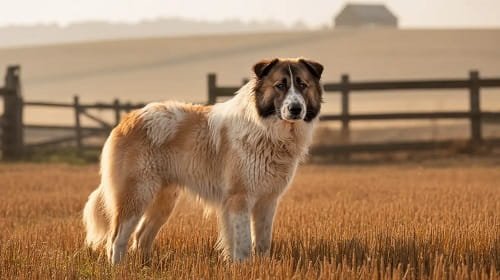
The Alabai — officially known as the Central Asian Shepherd Dog (CASD) or Sredneaziatskaya Ovcharka — is one of the most ancient and powerful dog breeds in existence. With a recorded history spanning over 4,000 years, the Alabai was developed across the vast steppes of Central Asia (Kazakhstan, Uzbekistan, Turkmenistan, Afghanistan, and surrounding regions) as a livestock guardian against wolves, bears, and human predators. In India, the Alabai is a rare but growing breed that commands serious attention from experienced large-breed enthusiasts.
If you are searching for the Alabai dog price in India in 2026, be prepared for one of the most significant investments in the Indian dog market. The Alabai is exceptionally rare in India, and genuine, purebred specimens from established Central Asian bloodlines require either import or access to the very few breeders working with this livestock guardian in the country.
| Attribute | Details |
| Breed Name | Alabai / Central Asian Shepherd Dog (CASD) / Sredneaziatskaya Ovcharka |
| Origin | Central Asia (Kazakhstan, Uzbekistan, Turkmenistan, Afghanistan) |
| Size | Very Large: 40–80 kg, 65–78+ cm |
| Lifespan | 12–15 years (exceptional for such a large breed) |
| Temperament | Calm, independent, fearless, loyal to family, intensely territorial |
| Coat | Short or long double coat — several coat varieties |
| Price Range (2026) | Rs. 60,000 – Rs. 2,50,000+ |
| Availability in India | Very rare — limited breeders; most are imported |
| Monthly Maintenance | Rs. 12,000 – Rs. 28,000 |
| Best For | Large farm/property, experienced livestock guardian dog handlers |
| Climate Suitability | Moderate — adapts better than Arctic breeds but needs shade and water in Indian heat |
About the Alabai (Central Asian Shepherd Dog)
The Alabai is one of the oldest dog breeds in the world, shaped not by deliberate selective breeding programs but by 4,000+ years of natural and functional selection in the harsh conditions of the Central Asian steppe. They were bred to protect livestock from wolves, snow leopards, and bears, and to guard human encampments and caravans against thieves. Only the most capable, healthy, and temperamentally stable dogs survived and reproduced in this environment, creating a breed of extraordinary robustness and natural instinct.
The breed is a national treasure in several Central Asian countries. In Kazakhstan, Alabai breeding and preservation is taken seriously at a governmental level. In Turkmenistan, the Alabai (known as “Alabay”) is the national symbol, and President Berdimuhamedow has gifted Alabais to several world leaders as diplomatic presents — including to Russian President Putin in 2017.
In India, genuine Alabais began appearing from approximately 2015 onward, primarily among serious working dog enthusiasts and farmers in Punjab, Haryana, and Rajasthan seeking effective livestock guardian dogs. By 2024-2025, interest has grown among urban dog enthusiasts as well, though the breed’s genuine requirements — space, experience, and livestock guardian context — make urban ownership genuinely challenging.
Alabai Price in India 2026 — City-Wise Breakdown
Alabais are extremely rare in India. The prices below reflect the very limited market for this breed as of early 2026. Most Alabais in India are imported directly from Central Asia, Kazakhstan, Russia, or Eastern Europe, which significantly adds to the total cost.
| City / Category | Min Price (INR) | Max Price (INR) |
| India-Bred (rare — limited local stock) | Rs. 60,000 | Rs. 1,20,000 |
| Imported — Kazakhstan / Uzbekistan | Rs. 80,000 | Rs. 1,80,000 |
| Imported — Russia / Eastern Europe | Rs. 90,000 | Rs. 2,00,000 |
| Show / Working Quality (with FCI pedigree) | Rs. 1,20,000 | Rs. 2,50,000+ |
| Delhi / NCR (primary availability hub) | Rs. 70,000 | Rs. 1,80,000 |
| Mumbai / Pune | Rs. 75,000 | Rs. 2,00,000 |
| Punjab / Haryana (farm demand) | Rs. 60,000 | Rs. 1,50,000 |
| Rajasthan / MP (livestock guardian use) | Rs. 55,000 | Rs. 1,20,000 |
Due to extreme rarity in India, buyers must exercise significant caution. Dogs sold as “Alabai” may be mixed breeds, Kangal-crosses, or other Central Asian/Caucasian dog types. Always request FCI/RKF pedigree documentation for genuine bloodline verification. Import costs (AQCS permits, international shipping, quarantine) add Rs. 60,000–Rs. 1,20,000 to the purchase price.
Temperament & Suitability
The Alabai’s temperament is fundamentally that of a working livestock guardian — calm, independent, and self-sufficient in the absence of threats, but immediately decisive and formidable when it perceives a threat to its territory or family. Unlike herding breeds or sporting dogs that look to their handlers for direction, Alabais make their own threat assessments. This independence is not disobedience — it is the core of what makes them effective guardians.
Alabais are deeply loyal to their own family or pack but can be intensely suspicious of strangers and highly dog-aggressive, particularly with unknown dogs of the same sex. They do not make appropriate dogs for casual visitors, and their sheer size and strength mean encounters with unfamiliar people must be carefully managed. Socialisation from early puppyhood is critical but does not eliminate their natural wariness.
The Alabai is emphatically not a breed for first-time owners, apartment dwellers, or households without significant outdoor space. They need a minimum of 0.5 acres of securely fenced land to patrol and exercise. Without adequate territory and meaningful guardian work (or structured exercise equivalent), they become bored, restless, and may redirect their guarding instincts in undesirable ways.
Factors That Affect the Price
- Bloodline Verification: FCI/RKF registered pedigree from verified Central Asian or Russian registries is the minimum standard
- Import Origin: Kazakhstan, Uzbekistan, and Turkmenistan offer the purest working bloodlines; Russia and Eastern Europe also have strong programs
- Size & Physical Conformation: Larger, more massively built individuals are prized in India — but health must not be sacrificed for extreme size
- Import Costs: Add Rs. 60,000–Rs. 1,20,000 for shipping, AQCS permits, health certification, and quarantine
- Coat Type: Short and long coat varieties both exist; long coat may require slightly more grooming in India’s humidity
- Gender: Males significantly larger and more imposing; females often easier to manage; both priced similarly from top breeders
Health & Lifespan
The Alabai is one of the healthiest large breeds in the world — a direct result of thousands of years of natural selection without the artificial breeding pressures that compromise many modern breeds. They are significantly freer of hereditary conditions than German Shepherds, Rottweilers, or other popular large breeds. Hip dysplasia occurs at lower rates than in many comparable breeds, though OFA screening of import parents is still advisable.
The primary health management considerations in India are bloat (GDV — feed 2–3 smaller meals, avoid post-meal exercise), joint health during the growth phase (no over-exercise before 18 months; supplement with glucosamine from 6 months), and heat management. Alabais from desert-adjacent Central Asian regions handle heat reasonably well compared to Arctic breeds, but India’s humid heat still requires shade, fresh water, and limited midday outdoor activity in summer.
Monthly Maintenance Cost in India (2026 Estimate)
- Premium Large Breed Food (high protein): Rs. 5,000 – Rs. 9,000/month (very large dogs eat substantially)
- Property / Fencing Infrastructure: Significant one-time investment for secure perimeter
- Professional Grooming: Rs. 1,200 – Rs. 2,500/session; every 8 weeks (short coat) or 6 weeks (long coat)
- Veterinary Care: Rs. 12,000 – Rs. 25,000 annually
- Vaccinations & Preventives: Rs. 3,000 – Rs. 6,000 annually
- Total Estimated Monthly Cost: Rs. 12,000 – Rs. 28,000
Frequently Asked Questions (FAQs)
Q1. What is the Alabai dog price in India in 2026?
Ans: Alabai prices in India in 2026 range from Rs. 60,000 for rare India-bred animals from limited local stock to Rs. 2,50,000+ for FCI-registered working or show-quality imports from Central Asia, Kazakhstan, or Russia. Import costs (Rs. 60,000–Rs. 1,20,000) are additional to the purchase price.
Q2. What is the difference between Alabai, Kangal, and Caucasian Shepherd?
Ans: These are related but distinct breeds. The Alabai (Central Asian Shepherd) is from the Central Asian steppes, lighter and more agile than the Caucasian. The Kangal is from Turkey, specifically Sivas province, known for the highest recorded bite force of any dog. The Caucasian Shepherd (Caucasian Ovcharka) is from the Caucasus mountain region and is generally the heaviest and most bear-like. All three are ancient livestock guardian dogs, but from different geographic regions.
Q3. Can an Alabai live in India’s climate?
Ans: Better than Arctic breeds like Huskies or Samoyeds. Alabais originated in Central Asia which experiences extreme temperature ranges. They handle India’s dry heat reasonably well but require shade, fresh water, and reduced midday activity in peak summer. Humid coastal cities are more challenging than dry interior regions for this breed.
Q4. Is an Alabai suitable as a pet in an Indian city?
Ans: An Alabai is fundamentally a working livestock guardian breed that needs large open spaces, meaningful guardian work, and an experienced handler. Urban city keeping is genuinely not appropriate for this breed — apartment or small-plot urban ownership would be stressful for the dog and potentially unsafe for neighbours. They are best kept on large rural properties or farms where their natural instincts can be appropriately expressed.
Q5. How do I import an Alabai to India?
Ans: Importing a dog to India requires: (1) Import permit from the Animal Quarantine and Certification Services (AQCS) under the Ministry of Agriculture; (2) Health certificate from a government-accredited vet in the country of origin; (3) Rabies vaccination; (4) Microchipping; (5) Potential quarantine at an AQCS-approved facility on arrival. Contact AQCS offices in Chennai, Mumbai, Delhi, or Kolkata for current requirements, as these change periodically. A professional pet relocation service is strongly recommended.
Conclusion
The Alabai is a breed that commands respect in every sense of the word — ancient, powerful, fiercely loyal, and self-sufficient in a way that few modern breeds can claim. In India in 2026, the Alabai is a genuinely rare find that requires significant financial investment, appropriate physical infrastructure, and experienced handling. For farmers, ranchers, and serious working dog enthusiasts with large properties and the genuine commitment this breed requires, the Alabai offers a unique combination of guardianship and quiet, devoted loyalty that has been refined over four millennia.