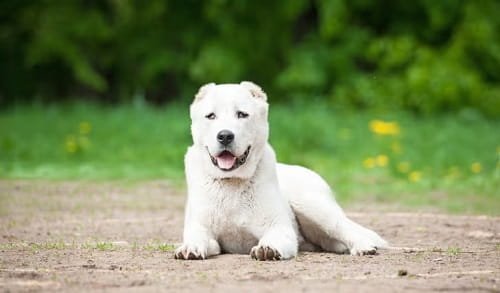
The Central Asian Shepherd Dog — known internationally as the Alabai, Sredneaziatskaya Ovcharka, or CAO — is one of the most ancient, powerful, and self-sufficient livestock guardian breeds on Earth. Developed across the vast steppes of Central Asia over 4,000+ years of natural and functional selection, this massive breed has guarded the flocks and families of Kazakh, Uzbek, Turkmen, and Afghan nomadic communities through some of history’s harshest conditions, facing down wolves, snow leopards, bears, and human predators with equal composure.
If you are searching for the Central Asian Shepherd Dog price in India in 2026, you are considering one of the rarest, most expensive, and most demanding breeds available in the Indian market — a genuine specialist purchase that requires large property, experienced handling, and a genuine understanding of what a 4,000-year-old livestock guardian instinct actually means in practice. This guide gives you the complete, honest picture.
Article Overview — At a Glance
| Attribute | Details |
| Breed Name | Central Asian Shepherd Dog (CASD / Alabai / Sredneaziatskaya Ovcharka) |
| Origin | Central Asia — Kazakhstan, Uzbekistan, Turkmenistan, Afghanistan |
| Size | Giant: 40–79 kg, 65–78+ cm |
| Lifespan | 12–15 years — exceptional for such a large breed |
| Temperament | Calm, independent, fearless, loyal to family, intensely territorial |
| Coat | Short or long double coat — cream, white, fawn, grey, brindle, black |
| Price Range (2026) | Rs. 60,000 – Rs. 2,50,000+ |
| Import Source | Kazakhstan, Uzbekistan, Russia, Eastern Europe |
| Monthly Maintenance | Rs. 12,000 – Rs. 28,000 |
| Availability | Very rare — limited breeders; most are imported |
| Property Requirement | Minimum 1 acre securely fenced |
| Climate Suitability | Moderate — semi-arid origin; better than Arctic breeds but needs shade in Indian heat |
About the Central Asian Shepherd Dog
The Alabai’s history predates virtually every other domestic dog breed in existence. Archaeological evidence from burial sites and ancient settlements across Kazakhstan, Uzbekistan, and Afghanistan dates CASD-type dogs to at least 4,000 years ago — some researchers extend this timeline to 6,000 years based on skeletal analysis. Unlike breeds shaped by human aesthetic preferences in kennel clubs, the Alabai was shaped entirely by the unforgiving demands of survival: only dogs that could protect a 500-sheep flock through a Siberian winter, hold their ground against a pack of wolves without human backup, and return calm and obedient to their shepherd the next morning survived to reproduce.
This 4,000-year natural selection process has produced a breed of extraordinary physical and psychological robustness — free of the hereditary weaknesses that affect many modern breeds, and possessed of a self-sufficient intelligence that operates according to its own deeply embedded guardian logic rather than constant human direction.
The breed is a national symbol in several Central Asian countries. Turkmenistan has declared the Alabai a national treasure — the country’s president has written books about the breed and gifted Alabai dogs to world leaders as diplomatic presents, including to Russian President Putin in 2017. Kazakhstan holds annual Alabai dog shows and competitions as national cultural events.
In India, genuine Alabais began appearing from approximately 2015 onward, primarily among serious working dog enthusiasts and large farm owners in Punjab, Haryana, and Rajasthan. Interest has grown through 2022–2025 as urban dog enthusiasts increasingly discover the breed through international social media content.
Central Asian Shepherd Dog Price in India 2026 — City-Wise Breakdown
| City / Category | Min Price (INR) | Max Price (INR) |
| India-Bred (very limited local stock) | Rs. 60,000 | Rs. 1,20,000 |
| Imported — Kazakhstan / Uzbekistan | Rs. 80,000 | Rs. 1,80,000 |
| Imported — Russia / Eastern Europe | Rs. 90,000 | Rs. 2,00,000 |
| FCI / RKF Pedigree Show Quality | Rs. 1,20,000 | Rs. 2,50,000+ |
| Delhi / NCR (primary availability hub) | Rs. 70,000 | Rs. 1,80,000 |
| Punjab / Haryana (farm demand) | Rs. 60,000 | Rs. 1,50,000 |
| Mumbai / Pune | Rs. 75,000 | Rs. 2,00,000 |
| Import Costs (additional to purchase) | Rs. 60,000 | Rs. 1,20,000 |
Note: Dogs sold as “Alabai” without FCI, RKF (Russian Kennel Federation), or Central Asian breed club pedigree documentation should be treated with caution — Caucasian Shepherd crosses and other Central Asian livestock guardian dog types are sometimes sold as pure Alabais. The correct cream-to-fawn coat with or without black mask, and conforming to established CASD breed standards, is an important visual verification alongside paperwork.
Temperament & Suitability
The Central Asian Shepherd Dog’s temperament is defined by one fundamental characteristic: it makes its own decisions. Unlike herding breeds or sporting breeds that constantly reference their handler for direction, the Alabai was bred to operate independently — to assess threats, determine appropriate responses, and take guardian action without waiting for human instruction. This is not stubbornness; it is the core working intelligence of a livestock guardian dog that operated in remote mountain terrain where the shepherd was often kilometres away.
In practice, this means the Alabai is a calm, self-possessed dog in the absence of threat — not hyperactive, not needy, not demanding constant attention. It observes its territory and family with quiet vigilance, and when it determines a genuine threat exists, it responds with complete conviction. The threshold for what constitutes a threat is calibrated by genetics and socialisation — thorough puppy socialisation from 8 weeks is absolutely critical to prevent excessive territorial aggression in urban or semi-urban contexts.
The Alabai is emphatically not suited to apartment living, small urban plots, or first-time large dog owners. Its minimum appropriate environment is 1 acre of securely fenced property where it has meaningful territory to patrol. Without territory and purpose, the Alabai becomes frustrated and potentially redirects its guardian instincts in problematic ways.
With its family, the Alabai is calm, gentle, and deeply loyal — particularly patient with family children it has been raised with. It does not demand constant affection but is genuinely devoted to the security of its people. Many Alabai owners describe the relationship as one of mutual respect rather than conventional pet-owner devotion — and find this quality uniquely satisfying.
Factors That Affect the Price
- Country of Origin: Kazakhstan and Uzbekistan bloodlines represent the most direct working heritage. Russian (RKF-registered) and Eastern European lines are more widely available internationally and typically more accessible for Indian importers.
- FCI / RKF Registration: The most reliable pedigree verification — insist on documentation going back at least 3 generations.
- Physical Conformation: Larger, more massively built individuals with correct coat and head type are prized in India and command premiums.
- Working vs Show Bloodlines: Documented working lineage from active livestock guardian contexts commands premiums among serious enthusiasts. Show-ring refined lines are available from European programs.
- Import Costs: All genuine quality Alabais require import — add Rs. 60,000–Rs. 1,20,000 for shipping, AQCS permits, health certification, and quarantine.
- Gender: Males significantly larger and more imposing; both genders are effective guardians. Females often slightly easier to manage for less experienced large-breed handlers.
Health & Lifespan
The Central Asian Shepherd Dog is one of the healthiest large breeds in the world — a direct consequence of 4,000 years of natural selection without the artificial pressures of show-ring breeding that have compromised many modern breeds. Hip dysplasia occurs at rates notably lower than in most popular large European breeds like the German Shepherd or Rottweiler. The breed is generally free of the cardiac, eye, and neurological conditions that affect many heavily line-bred modern breeds.
The primary health management considerations for Indian Alabai owners are bloat prevention (feed 2–3 smaller meals rather than one large meal; avoid vigorous exercise immediately after eating; discuss prophylactic gastropexy with your vet), joint protection during the growth phase (no high-impact exercise before 18 months; large-breed puppy food during this period; glucosamine supplementation from 6 months), and heat management in Indian summers (shade, fresh water, limited midday activity — the breed handles Indian semi-arid conditions better than Arctic breeds but still needs sensible heat management).
Monthly Maintenance Cost in India (2026 Estimate)
| Cost Category | Estimated Cost |
| Premium Giant Breed Dog Food | Rs. 5,000 – Rs. 9,500/month |
| Property / Fencing Infrastructure | Significant one-time investment |
| Professional Grooming | Rs. 1,200 – Rs. 2,500/session; every 8 weeks |
| Veterinary Care (annual) | Rs. 12,000 – Rs. 25,000 |
| Vaccinations & Preventives | Rs. 3,000 – Rs. 6,000 annually |
| Total Estimated Monthly Cost | Rs. 12,000 – Rs. 28,000 |
Frequently Asked Questions (FAQs)
Q1. What is the Central Asian Shepherd Dog price in India in 2026?
A: Central Asian Shepherd Dog prices in India in 2026 range from Rs. 60,000 for rare India-bred animals from limited local stock to Rs. 2,50,000+ for FCI or RKF-pedigreed imports from Kazakhstan, Russia, or Eastern Europe. Import costs add a further Rs. 60,000–Rs. 1,20,000. Total investment for a quality Alabai in India can exceed Rs. 3,50,000.
Q2. What is the difference between the Alabai, Kangal, and Caucasian Shepherd?
A: All three are ancient livestock guardian breeds of formidable capability from related but distinct geographic regions. The Kangal is from Sivas province, Turkey — known for the world’s highest recorded bite force (743 PSI) and a more refined breed standard. The Alabai (Central Asian Shepherd) is from the Central Asian steppes — lighter and more agile than the Caucasian but equally ancient. The Caucasian Shepherd is from the Caucasus mountains — typically the heaviest and most bear-like of the three. All three are rare and expensive in India.
Q3. Is the Alabai suitable as a family pet in an Indian city?
A: Only with the correct infrastructure. An Alabai needs a minimum of 1 acre of securely fenced land, experienced handling, and a genuine guardian role (patrolling a property perimeter rather than sitting in a flat). For large farm or estate owners with appropriate experience, the Alabai can be both an effective guardian and a devoted family dog. For urban apartment or small-plot city dwellers, it is genuinely not appropriate.
Q4. How do I import a Central Asian Shepherd Dog to India?
A: Importing requires: AQCS import permit (apply 60 days in advance); health certificate from a government-accredited vet in the source country; current rabies vaccination; microchipping; and potential quarantine on arrival at AQCS facilities in Chennai, Mumbai, Delhi, or Kolkata. A professional pet import agent simplifies the process significantly and is strongly recommended for first-time importers.
Q5. Is the Alabai recognised by the KCI?
A: The Central Asian Shepherd Dog is FCI-recognised (Group 2) and the KCI as an FCI-affiliated member organisation recognises FCI breeds. However, the Alabai’s presence in India is sufficiently limited that formal KCI studbook establishment for the breed is still developing as of 2026. FCI pedigree documentation from the source country’s registered breeding program is the current gold standard for Indian Alabai purchases.
Conclusion
The Central Asian Shepherd Dog is a breed that commands respect in the fullest, most literal sense — 4,000 years of proven guardian capability, natural health robustness, and a quiet, self-possessed loyalty that does not seek approval but earns it completely. In India in 2026, the Alabai remains genuinely rare and demands both significant financial investment and the appropriate physical environment and handler experience to thrive. For serious working dog enthusiasts with large rural properties who want the most authentic livestock guardian tradition available in India, the Central Asian Shepherd Dog delivers a partnership with history itself — and a level of natural protective capability that no modern breed development program has yet matched.