The Indian Pariah Dog — affectionately known as the “Indie,” “INDog,” or “desi dog” — is one of the oldest and most genetically significant dog breeds in the world. Not a stray or a mongrel in any meaningful sense, the Indian Pariah Dog is a distinct, naturally developed landrace breed that has existed on the Indian subcontinent for 15,000 years or more, shaped entirely by natural selection rather than human aesthetic preferences. It is, quite literally, what a dog looks like when left to evolve perfectly for its environment over thousands of generations.
In India’s 2026 pet market, the Indian Pariah Dog occupies a unique and profoundly important position. It is the most genetically healthy dog in India, the most climate-adapted dog on the subcontinent, the most affordable, and — for informed owners who approach the relationship with patience and understanding — one of the most loyal, intelligent, and rewarding companions available at any price point. This guide covers the Indian Pariah Dog comprehensively: its history, biology, current market context, and the adoption process that is the most appropriate route to bringing one of these extraordinary animals into your home.
Article Overview — At a Glance
| Attribute | Details |
| Breed Name | Indian Pariah Dog (INDog / Desi Dog / Indie) |
| Classification | Primitive breed / Landrace — one of the world’s oldest |
| Origin | Indian subcontinent — 15,000+ years of natural selection |
| Size | Medium: 15–25 kg, 45–55 cm |
| Lifespan | 13–15 years |
| Temperament | Intelligent, alert, loyal, adaptable, independent, excellent watchdog |
| Coat | Short, dense — fawn, brown, black, white, or piebald; minimal grooming |
| Acquisition Method | Primarily adoption (strongly recommended) — rescue or shelter |
| Adoption Cost | Free to Rs. 2,000 (many shelters include vaccinations) |
| Purchase Price (if available) | Rs. 1,000 – Rs. 5,000 from ethical placement programs |
| Monthly Maintenance | Rs. 1,500 – Rs. 4,000 — lowest of any dog in India |
| Health Profile | Exceptional — lowest hereditary disease rates of any Indian breed |
| Climate Suitability | Perfect — shaped by Indian climate over 15,000 years |
About the Indian Pariah Dog
The Indian Pariah Dog’s scientific and historical significance is extraordinary and deeply underappreciated. DNA studies published in journals including Nature and PLOS Genetics have established that Indian primitive dogs (of which the Indian Pariah is the primary surviving type) belong to a genetic lineage that represents the earliest split between the wolf-to-dog transition — making them among the most genetically ancient domestic dogs on Earth. Research from the National Centre for Biological Sciences in Bangalore and from international collaborations studying dog domestication has identified the Indian subcontinent as one of the most significant centres of early dog-human relationship development.
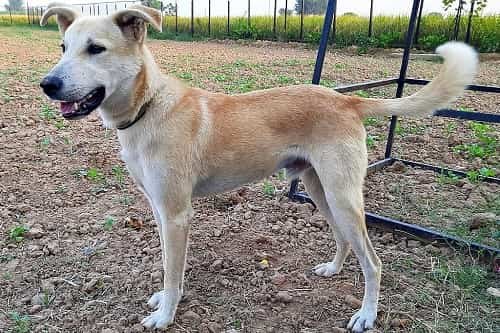
The Indian Pariah Dog’s physical appearance is remarkably consistent across the subcontinent — a medium-sized, lean, athletic dog with erect ears, almond-shaped eyes, a wedge-shaped head, and a moderately curved tail held upright. This consistency is not the result of intentional breeding but of thousands of years of natural selection converging on the most functionally optimal body type for the Indian environment. Scientists refer to this as the “village dog phenotype” — the shape that domestic dogs naturally tend toward when left to evolve without human intervention.
The term “pariah” — derived from a Tamil word for “drummer” used to describe outcaste communities — has carried unfortunate negative connotations that have contributed to the undervaluation of this breed in India’s own cultural context. Several organisations including the Indian National Kennel Club (INKC) and the Indian Pariah Dog Club have been working to promote the breed under alternative names including “INDog” and “Desi Dog” to remove the stigma and promote appropriate appreciation of this national canine heritage.
According to 2024–2025 data from major Indian animal welfare organisations, adoption rates for Indian Pariah Dogs in metro cities have increased by 25–35% since 2021, reflecting a genuine cultural shift in attitudes toward India’s native dogs. This trend is supported by growing social media communities celebrating Indie dogs, celebrity endorsements of adoption, and the growing recognition among informed dog owners that the Indie offers exceptional companionship at minimal cost with maximal health outcomes.
Indian Pariah Dog Price in India 2026 — Adoption & Placement Options
| Source / Category | Cost |
| Municipal Animal Shelter — Adoption | Free to Rs. 500 |
| SPCA Chapter Adoption | Rs. 500 – Rs. 2,000 (often includes first vaccinations) |
| Animal Welfare NGO (Friendicoes, CUPA, WSD etc.) | Rs. 500 – Rs. 2,500 (often includes vaccination, microchip, spay/neuter) |
| Street Rescue — Direct (puppy found) | Free |
| Responsible Indie Placement Program | Rs. 1,000 – Rs. 5,000 |
| Online Adoption Platform (PetKonnect, Adopt a Paw) | Free – Rs. 2,000 |
| Commercially “Sold” Indie (not adoption) | Rs. 2,000 – Rs. 8,000 (unnecessary — adopt instead) |
Note: There is almost never a good reason to purchase an Indian Pariah Dog. They are available through adoption in every Indian city at minimal or zero cost, with many shelters providing initial vaccinations, microchipping, and sometimes spaying/neutering as part of the adoption process. The “price” for an Indie is essentially the adoption fee — which represents institutional costs rather than the dog’s commercial value.
Temperament & Suitability
The Indian Pariah Dog’s temperament is shaped by 15,000 years of co-evolution with human communities — not as a servant or tool, but as a semi-dependent community member that benefited from proximity to humans while maintaining sufficient independence for self-sufficiency. This heritage produces a dog of remarkable intelligence, sensitivity, and adaptability — combined with an independence and self-directedness that is more cat-like than the eager-to-please temperament of purpose-bred companion dogs.
Indie dogs bond deeply with their adopted family once the relationship is established — but the establishment requires patience. An Indie adopted from a shelter, particularly one that spent time on the street, may need 2–6 weeks to fully settle into home life. During this adjustment period, the dog may be shy, avoidant, or cautious. This is not a permanent temperament — it is the reasonable caution of an intelligent animal adjusting to an entirely new social context. With consistent, gentle, positive interaction, the transformation from cautious newcomer to devoted family member typically occurs completely within the first few months.
Once settled, Indie dogs demonstrate alert watchdog capability, strong territorial loyalty, remarkable resilience to stress, and a quality that many Indie owners describe as unique — a depth of gratitude and devotion in rescue dogs that reflects the animal’s apparent awareness of the safety and love it has been given. Whether this is genuine emotional cognition or simply the expression of secure attachment, the experiential reality is deeply moving for most Indie owners.
For Indian apartment living, Indie dogs are genuinely excellent choices — naturally adapted to Indian spaces, food, climate, and social patterns in ways that no imported breed can match. Their exercise requirements are moderate (30–45 minutes of daily outdoor activity plus free play), their food requirements are modest, and their health maintenance costs are among the lowest of any dog available in India.
Factors That Affect Adoption (Not Price)
- Age: Puppies are most easily placed; adult dogs often wait longer in shelters despite frequently being easier to live with — already past the destructive puppy phase.
- Gender: Both males and females are equally wonderful; females may be slightly more independent; males sometimes slightly more affectionate.
- Background: Some Indics come from street backgrounds and need more adjustment time; others have been raised in homes from birth.
- Spay/Neuter Status: Most responsible shelters spay/neuter before adoption; this is a health benefit (cancer risk reduction) and a practical benefit (no heat cycles or roaming behaviour).
- Temperament Assessment: Good shelters assess each dog’s temperament — ask shelter staff about the specific dog’s character, energy level, and any known history.
Health & Lifespan
The Indian Pariah Dog’s health profile is one of the most significant arguments for choosing this breed — or rather, for adopting it. Multiple veterinary research papers from Indian institutions through 2023–2025 confirm that Indian Pariah Dogs have dramatically lower rates of hereditary conditions than popular purebred breeds. They are not predisposed to hip dysplasia (German Shepherd), cardiac conditions (Doberman, Boxer), respiratory disorders (Pug, French Bulldog), Alopecia X (Pomeranian), Progressive Retinal Atrophy (multiple breeds), or the host of other hereditary conditions that create significant veterinary costs for purebred dog owners.
Their genetic diversity — the natural product of non-inbreeding population dynamics over thousands of generations — provides inherent immune system robustness. They are naturally resistant to many tick-borne diseases at higher rates than immunologically naive imported breeds. Their standard healthcare requirements are identical to any dog: complete vaccination schedule, quarterly deworming, monthly tick and flea prevention, and annual veterinary check-up.
The most important one-time health investment for any adopted Indie is spaying or neutering (if not already done by the shelter) at around 6 months of age. This significantly reduces cancer risk, eliminates pregnancy-related complications, and contributes to responsible population management of India’s street dog population.
Monthly Maintenance Cost in India (2026 Estimate)
| Cost Category | Estimated Cost |
| Quality Dog Food | Rs. 800 – Rs. 2,000/month |
| Grooming (short coat — minimal at home) | Rs. 200 – Rs. 500/month (home bathing primary) |
| Veterinary Care (annual) | Rs. 3,000 – Rs. 8,000 |
| Tick & Flea Prevention (critical in India) | Rs. 300 – Rs. 600/month |
| Vaccinations & Deworming (annual) | Rs. 2,000 – Rs. 4,000 |
| Total Estimated Monthly Cost | Rs. 1,500 – Rs. 4,000 |
This is the lowest monthly maintenance cost of any dog available in India — 3 to 6 times less than popular imported breeds. Over a 14-year Indie lifespan, this difference represents a saving of Rs. 5,00,000 to Rs. 20,00,000 compared to the lifetime maintenance costs of large imported breeds.
Frequently Asked Questions (FAQs)
Q1. What is the Indian Pariah Dog price in India in 2026?
A: The Indian Pariah Dog is primarily an adoption, not a purchase. Adoption from shelters and animal welfare organisations typically costs free to Rs. 2,500, with many shelters including initial vaccinations, microchipping, and sometimes spaying/neutering in this fee. Purchasing an Indie from a seller is generally unnecessary and inadvisable — adopt from a shelter instead. The monthly maintenance cost of Rs. 1,500–Rs. 4,000 is the lowest of any dog in India.
Q2. Is the Indian Pariah Dog a separate breed or just a “stray”?
A: The Indian Pariah Dog is a distinct, scientifically documented primitive breed — one of the oldest domestic dog lineages on Earth. It is not a mongrel or a random stray. DNA research confirms it belongs to a genetically ancient lineage traceable to the earliest dog-human relationships on the subcontinent. Its remarkably consistent physical appearance across India — medium size, erect ears, wedge head, curved tail — reflects thousands of years of natural selection converging on an optimal form, not random mixed breeding.
Q3. How long does it take an adopted Indie to settle into a home?
A: Most adopted Indies settle meaningfully within 2–6 weeks of coming home. Dogs from street backgrounds may initially seem shy, cautious, or avoidant — this is intelligent self-protective behaviour, not permanent personality. With consistent, gentle, positive interaction and a stable routine, the vast majority of adopted Indies transform into deeply bonded, loyal family members within their first few months. The patience invested in this adjustment period pays dividends for the next 13–15 years.
Q4. Are Indie dogs good with children?
A: Yes, when adopted from shelters that have assessed the dog’s temperament with children. Indian Pariah Dogs that have been raised in family environments or assessed as child-friendly by shelter staff typically show the patient, gentle qualities that Indian families value. Their natural watchdog instincts also mean they tend to be protective of family children. As with any dog, supervised interaction with very young children is always recommended.
Q5. Where can I adopt an Indian Pariah Dog in India?
A: Every major Indian city has adoption options: Friendicoes SECA (Delhi), Welfare of Stray Dogs — WSD (Mumbai), CUPA (Bangalore), Blue Cross of India (Chennai), People for Animals chapters (nationwide), SPCA chapters (most cities), and dozens of local NGOs. Online adoption platforms including PetKonnect, Adopt Me India, and The Dogist India list available dogs. Searching “[Your City] dog adoption” on Google or Instagram will reveal local options within minutes.
Conclusion
The Indian Pariah Dog is India’s greatest unrecognised canine treasure — a 15,000-year-old natural masterpiece of adaptation, resilience, and intelligence that is available for free in shelters across every Indian city while Indians spend lakhs on imported breeds with fraction of the health robustness, climate adaptability, or deep genetic connection to the subcontinent. In 2026, the growing adoption movement in India reflects a long-overdue cultural recalibration — a recognition that the dog most perfectly suited to Indian life in every meaningful way has been living alongside us for millennia, waiting to be truly seen. Adopt an Indie. Give it your patience for the first few weeks and your love for the next 14 years. It will give you everything it has in return — and that, it turns out, is more than enough.