Clownfish hold a very special place in the Indian marine aquarium hobby — and much of that cultural footprint traces directly to a 2003 animated film that made the species one of the most instantly recognisable pet fish on the planet. The surge of interest following that moment of pop culture exposure translated into real, lasting demand that has shaped the marine aquarium market in India for over two decades. Today, clownfish are simultaneously the most popular marine fish kept in Indian homes and the most accessible entry point into the otherwise demanding world of saltwater aquarium keeping.
Legal Status and Sourcing in India
Clownfish (Amphiprioninae subfamily) are marine fish naturally occurring in the Indian and Pacific Oceans, including in Indian coastal waters around the Andaman and Nicobar Islands and parts of the Lakshadweep Sea. Wild collection of clownfish from Indian waters is restricted under coastal fisheries regulations, and trade in wild-caught marine ornamentals is increasingly subject to scrutiny under India’s coastal protection frameworks.
However, the ornamental clownfish market in India today is substantially supplied by captive-bred fish — both from domestic breeders and from established captive-breeding operations in Southeast Asia and Australia. Captive-bred clownfish are hardier, disease-resistant, more adapted to aquarium foods, and ethically preferable to wild-caught specimens. Buyers should always ask whether a clownfish is captive-bred or wild-caught and give strong preference to captive-bred sources.
Popular Clownfish Species and Price Ranges
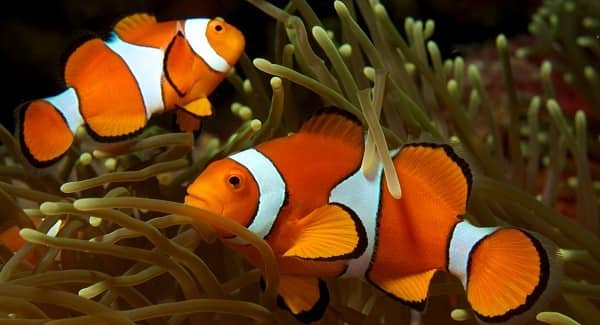
Common Clownfish / Ocellaris (Amphiprion ocellaris): ₹300 – ₹800 per fish. The classic orange-white-black “Nemo” clownfish — the most widely available and most affordable. Captive-bred specimens are readily found in most Indian cities with active marine aquarium markets.
Percula Clownfish (Amphiprion percula): ₹500 – ₹1,200. Visually similar to Ocellaris but with slightly different black border patterns on the white bands. Both species are commonly sold under the “Nemo” label, creating frequent confusion at retail level.
Tomato Clownfish (Amphiprion frenatus): ₹400 – ₹900. Deep red-orange body with a single white head stripe — a hardy, bold species well-suited to beginners.
Maroon Clownfish (Premnas biaculeatus): ₹600 – ₹1,500. The largest clownfish species with a deep maroon-red body and white stripes. More aggressive than Ocellaris — typically kept as a single specimen or bonded pair.
Picasso Clownfish (designer variant): ₹2,000 – ₹6,000. Captive-bred designer variants with irregular, artistic white patterning. Produced through selective breeding programs rather than occurring naturally.
Black Ocellaris / Black Snowflake (designer variants): ₹1,500 – ₹5,000. Increasingly popular designer morphs with black body replacement or extreme white patterning. Available from specialist marine fish breeders and importers.
Tank Setup and Equipment Costs
Setting up a proper marine aquarium for clownfish involves significantly higher initial investment than freshwater setups — this is the primary barrier for Indian hobbyists considering the marine side of the hobby. A basic but functional nano reef tank of 60 to 100 litres suitable for a pair of clownfish requires a quality protein skimmer (₹3,000 to ₹10,000), live rock (₹2,000 to ₹6,000), marine lighting suitable for reef conditions if anemones are planned (₹4,000 to ₹20,000), a reliable heater, and premium synthetic sea salt mixes (₹1,500 to ₹4,000 for initial setup). Total setup costs for a basic but properly equipped clownfish tank range from ₹15,000 to ₹50,000 depending on tank size and equipment quality.
Anemone and Clownfish — The Symbiosis Question
Many buyers purchase clownfish specifically wanting to recreate the anemone partnership familiar from nature documentaries and popular media. While captive-bred clownfish will often host in anemones in the aquarium, anemones are among the most demanding invertebrates to keep in captivity — they require stable, high-quality water parameters, strong and appropriate spectrum lighting, and consistent water flow. Bubble tip anemones (Entactemaria quadricolor) are the most forgiving species for Indian hobbyists and are available for ₹800 to ₹3,000 depending on size and colour variant. Attempting anemone keeping before achieving stable water chemistry for six months or more is a reliable way to kill both the anemone and the fish.
Monthly Ongoing Costs
Clownfish eat readily in captivity — frozen mysis shrimp, small pellet foods, and frozen brine shrimp all accepted without difficulty. Monthly food costs for a pair of clownfish are modest — ₹300 to ₹800. Sea salt replacement for water changes adds ₹500 to ₹1,500 monthly depending on tank size. Periodic water testing kits, additives for calcium and alkalinity if maintaining a reef, and electricity for lighting and filtration round out monthly costs to approximately ₹1,500 to ₹4,000 for a well-maintained nano reef setup.
Clownfish are among the most rewarding fish available in the Indian marine hobby — personable, active, territorially entertaining, and long-lived (up to 10–15 years in well-maintained aquariums). For hobbyists willing to invest in proper marine setup and commit to consistent water quality maintenance, a pair of clownfish in a well-designed nano reef tank is one of the most satisfying displays in the entire world of ornamental fishkeeping.