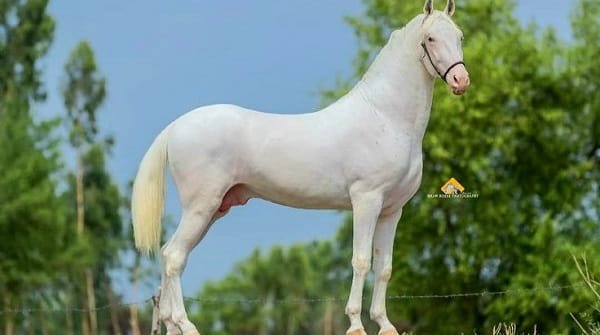
The Nukra horse is among the least internationally recognised but most historically significant horse breeds produced on the Indian subcontinent — a breed with deep roots in the Punjab region, a proud association with Sikh martial history, and physical characteristics that set it apart from both the more famous Marwari to its south and the imported breeds that have increasingly dominated India’s premium horse market. The name “Nukra” derives from a Persian word for silver, referencing the breed’s characteristic grey-to-white colouration that historically made these horses immediately identifiable among the cavalry formations of Punjab’s royal courts and warrior traditions. Today the Nukra occupies a position of genuine cultural heritage significance in Punjab, Haryana, and parts of Himachal Pradesh — cherished by traditional horse families, sought for religious and ceremonial occasions, and increasingly valued by enthusiasts who recognise its qualities before the breed becomes even rarer.
Breed Characteristics and Heritage
The Nukra is a medium-sized, well-proportioned horse — typically standing between 14.2 and 15.2 hands — with a refined head, clean legs without excessive feathering, a well-arched neck, and the deep chest that indicates genuine cardiovascular endurance. Its characteristic grey coat, which often lightens to near-white with age, is the breed’s most recognisable visual signature. Historically bred in the foothills and plains of Punjab using stock that incorporated Persian, Central Asian, and native subcontinent bloodlines, the Nukra developed the combination of elegance, stamina, and manageable temperament that made it the preferred horse of Punjab’s noble and warrior classes. The Sikh Misls and subsequent Sikh Empire maintained significant Nukra cavalry, cementing the breed’s association with Punjabi martial identity.
Current Status and Rarity
The Nukra is today genuinely rare — a breed under demographic pressure from crossbreeding, loss of traditional breeding families, and the displacement of regional horse culture by mechanisation. Pure Nukra horses with verified, unmixed lineages are considerably harder to find than Marwari horses and represent a more urgent conservation concern. Several breed preservation organisations and traditional horse families in districts around Ludhiana, Patiala, Ropar, and Gurdaspur continue to maintain pure Nukra lines, but the overall population of documented pure specimens is limited. This rarity directly influences pricing — not as an artificial market premium but as genuine reflection of scarcity.
Nukra Horse Price Ranges in India
| Category | Price Range (₹) | Notes |
| Basic Nukra (untrained, mixed / unclear lineage) | ₹80,000 – ₹2,50,000 | Entry level, limited pedigree documentation |
| Mid-range Nukra (trained, good conformation) | ₹2,50,000 – ₹6,00,000 | Sound movement, suitable for riding and ceremony |
| Premium Nukra (documented lineage, show quality) | ₹6,00,000 – ₹15,00,000 | Verified pure bloodlines, excellent grey colouration |
| Top-tier ceremonial / heritage Nukra | ₹15,00,000 – ₹35,00,000 | Exceptional pedigree, deep cultural significance |
| Elite breeding stallion (pure Nukra) | ₹30,00,000 – ₹80,00,000+ | Extremely rare; pure sires of documented lineage |
Factors That Determine Nukra Prices
Purity and documentation of bloodline is the dominant factor at the premium end of the market. Given the breed’s rarity, horses with verifiable, multi-generational pure Nukra lineage documented through traditional breeding records or breed society registration carry premiums that reflect genuine genetic scarcity. Colour quality — the depth and uniformity of the characteristic grey colouration, particularly in horses that remain a clean, bright grey rather than developing dappling or premature whitening — is closely evaluated by serious buyers. Conformation quality, particularly the refined head, clean legs, and naturally elevated movement characteristic of good Nukra stock, adds further premium. Training level and ceremonial suitability — horses accustomed to crowds, music, and procession environments — command higher prices for buyers seeking animals for religious events, wedding processions, and heritage festivals.
One-Time Setup and Monthly Maintenance Costs
| Expense | Cost Range (₹) | Notes |
| Stable construction / boarding | ₹40,000 – ₹3,00,000 | Own stable or monthly livery |
| Initial tack and equipment | ₹15,000 – ₹60,000 | Traditional Punjabi-style tack available |
| Farrier (every 6–8 weeks) | ₹1,200 – ₹3,000/visit | Regular shoeing essential |
| Monthly feed (fodder, grain, supplements) | ₹7,000 – ₹18,000 | Quality nutrition for active horses |
| Veterinary care (annual estimate) | ₹12,000 – ₹40,000 | Vaccinations, deworming, dental |
| Grooming and routine care | ₹2,500 – ₹7,000/month | Coat maintenance, daily care |
Where to Find Pure Nukra Horses
Sourcing a genuine pure Nukra requires more effort than purchasing a Marwari or a Thoroughbred cross — the breed does not have the same national market infrastructure. Traditional horse fairs in Punjab, including the historically significant horse markets associated with rural Punjab’s agricultural fair calendar, remain the most reliable locations to encounter genuine Nukra horses and the families that breed them. Personal introductions through established horse families in the Patiala, Ludhiana, and Ropar belt carry significant value — the most serious Nukra breeders are not advertising online but are known within traditional equestrian communities.
The Nukra represents something that no imported breed and no better-marketed native breed can replicate — a living piece of Punjab’s specific, deeply particular martial and cultural heritage, embodied in an animal of genuine elegance and historical significance. Buyers who invest in a pure, documented Nukra become not just horse owners but active participants in the preservation of a heritage that, without continued human commitment, faces genuine risk of dilution into irrelevance.