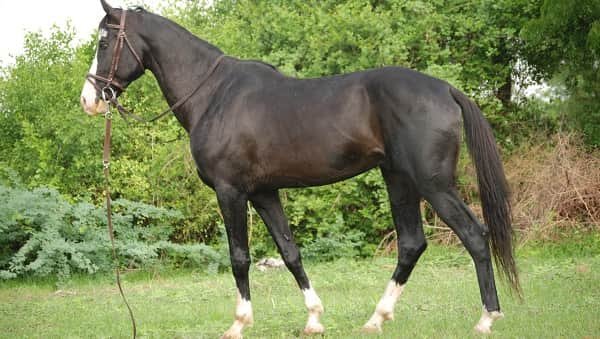
The Marwari horse is one of India’s greatest living heritage treasures — a breed of extraordinary antiquity, unmistakable appearance, and deep cultural significance that has carried warriors into battle, graced royal processions, and survived centuries of the subcontinent’s most demanding conditions. Native to the Marwar region of Rajasthan, the Marwari is instantly identifiable by its most distinctive feature: inward-curving ears that meet at their tips, forming an arch that no other horse breed in the world replicates. Combined with its high-set tail carriage, refined head, naturally elevated gaits, and remarkable stamina in harsh desert conditions, the Marwari represents a genetic heritage that Rajasthan’s royal families and cavalry commanders shaped over centuries of deliberate, purposeful breeding.
Why Marwari Horses Command Premium Prices
The Marwari’s price reflects a convergence of genuine rarity, cultural status, performance qualities, and the extraordinary costs involved in breeding and maintaining horses to high standards in India. Pure, well-documented Marwari bloodlines from respected breeding families in Rajasthan — particularly from around Jodhpur, Jaipur, and Bikaner — are finite in number and carefully guarded. The breed’s export was historically restricted by the Indian government, limiting international dilution of the gene pool and simultaneously maintaining domestic scarcity. Ceremonial demand — weddings, religious processions, heritage events — keeps high-quality animals continuously in demand among affluent buyers who understand the breed.
Factors That Determine Marwari Prices
Purity of bloodline and documented lineage is the most significant price driver. Horses from verified, well-recorded pedigrees tracing back through generations of quality Marwari breeding carry substantial premiums. Ear curvature and the quality of the characteristic inward curl is closely evaluated — perfectly formed ears meeting neatly at the tips are a mark of breed purity and add meaningful value. Coat colour influences price considerably — grey (locally called “safed”), chestnut, and particularly piebald (skewbald and tobiano patterning) horses are highly prized and command higher prices than bay or dun animals. Gait quality, particularly the natural ambling “revaal” gait characteristic of the breed, adds further premium for buyers seeking ceremonial or equestrian sport horses.
Marwari Horse Price Ranges in India
| Category | Price Range (₹) | Notes |
| Basic Marwari (untrained, mixed lineage) | ₹1,00,000 – ₹3,00,000 | Suitable for farm or basic riding work |
| Mid-range Marwari (trained, good conformation) | ₹3,00,000 – ₹8,00,000 | Well-trained, good ear curl, sound movement |
| Premium Marwari (documented lineage, show quality) | ₹8,00,000 – ₹20,00,000 | Verified pedigree, excellent conformation |
| Top-tier ceremonial / heritage Marwari | ₹20,00,000 – ₹50,00,000+ | Exceptional bloodlines, weddings and processions |
| Elite breeding stallion | ₹50,00,000 – ₹1,50,00,000+ | Champion lineage, premium stud demand |
One-Time Setup and Monthly Maintenance Costs
| Expense | Cost Range (₹) | Notes |
| Stable construction / rental | ₹50,000 – ₹5,00,000 | Own construction or livery boarding |
| Initial tack (saddle, bridle, equipment) | ₹20,000 – ₹1,00,000 | Quality varies significantly |
| Farrier (per visit, every 6–8 weeks) | ₹1,500 – ₹4,000 | Regular hoof care non-negotiable |
| Monthly feed (hay, grain, supplements) | ₹8,000 – ₹20,000 | Quality nutrition directly affects condition |
| Veterinary care (annual estimate) | ₹15,000 – ₹50,000 | Vaccinations, dental, emergencies |
| Grooming and routine care | ₹3,000 – ₹8,000/month | Daily grooming, bathing, coat maintenance |
The Marwari is a hardy breed by historical necessity — centuries of desert survival have produced an animal with genuine constitutional resilience. However, horses at the premium end of the market maintained for show, ceremonial, or breeding purposes receive care standards and nutritional programs that reflect their significant value. Daily grooming, regular farriery, consistent veterinary attention, quality fodder, and adequate exercise space are baseline requirements for any horse kept responsibly. The total annual cost of maintaining a quality Marwari horse in India — excluding the purchase price — realistically runs ₹2,00,000 to ₹5,00,000 for a horse kept to proper standards.
The Marwari is not simply a riding horse — it is a living connection to one of the most dramatic chapters of Indian equestrian history. Buyers who understand this heritage, invest in verified bloodlines, and commit to proper care become custodians of something genuinely irreplaceable.