The Persian cat is the undisputed queen of the domestic cat world — a breed of extraordinary visual beauty, serene temperament, and ancient heritage that has captivated human admirers for centuries. With its dramatically flat face, enormous round eyes, flowing luxurious coat, and an air of composed, unhurried dignity, the Persian has been the world’s most popular pedigreed cat breed for decades and remains at the top of that position in India’s growing pet cat market in 2026.
In India, the Persian cat has been a beloved companion in urban households since at least the mid-20th century, and its popularity has only grown with India’s expanding middle class, the culture of apartment living, and the recognition that cats — and Persian cats in particular — make exceptionally well-suited companions for the rhythms of busy urban Indian life. Unlike dogs, Persians do not need daily outdoor exercise, do not bark, and are content with the indoor environments that India’s apartment-dwelling majority inhabits.
If you are searching for the Persian cat price in India in 2026, this guide gives you the most accurate, comprehensive, and honest information available — covering every type of Persian from the budget-end flat-face to the premium doll-face import, the important health realities of brachycephalic cat anatomy, the significant grooming commitment this breed demands, and everything you need to make a responsible, informed decision about bringing one of the world’s most beautiful cats into your home.
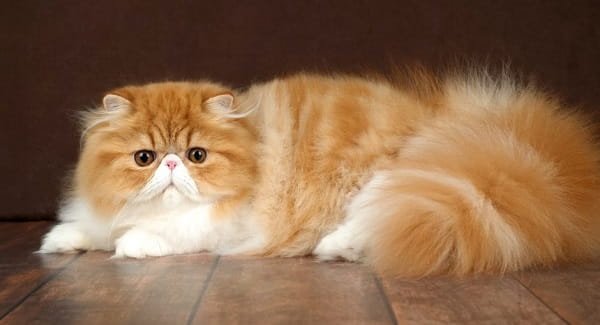
| Attribute | Details |
| Breed Name | Persian Cat (Shirazi Cat in some regions) |
| Origin | Persia (modern Iran) — imported to Europe in the 17th century |
| Size | Medium-Large: 3.5–7 kg, stocky and compact build |
| Lifespan | 12–17 years |
| Temperament | Calm, gentle, affectionate, quiet, adaptable, non-demanding |
| Coat | Long, thick, silky double coat — extraordinary variety of colours and patterns |
| Face Types | Traditional / Doll Face (longer muzzle) vs Peke-Face / Extreme (very flat) |
| Price Range (2026) | Rs. 5,000 – Rs. 1,50,000+ |
| Monthly Maintenance | Rs. 3,000 – Rs. 8,000 |
| Grooming Requirement | Daily brushing + professional grooming every 4–6 weeks — non-negotiable |
| Best For | Apartment dwellers, calm households, working professionals, seniors |
| Climate Note | Long coat requires management in Indian summers; AC recommended |
| Health Warning | Brachycephalic anatomy causes breathing, eye, and dental issues — more severe in flat-face type |
About the Persian Cat
The Persian cat’s recorded history begins in the 17th century when Pietro della Valle, an Italian nobleman and traveller, brought cats from the Khorasan province of Persia (modern Iran) to Europe in 1626. These long-haired cats from Persia and similar cats from Angora (modern Ankara, Turkey) captured immediate European fascination and became fashionable among the aristocracy within decades of their introduction. The first cat show where Persians were exhibited took place at London’s Crystal Palace in 1871, organised by Harrison Weir — and the Persian immediately dominated, establishing a dominance in cat fancy that has never been relinquished.
Through the late 19th and 20th centuries, selective breeding transformed the Persian from a moderately flat-faced, long-haired cat into the extreme-faced breed known today. Breeders progressively selected for rounder heads, flatter faces, shorter muzzles, and more compressed facial features — culminating in the “peke-face” or “extreme-face” Persian that has become the show standard in many countries but carries significant health consequences from its dramatically brachycephalic anatomy.
In India, the Persian cat is known in some regions as the “Shirazi cat” — a name derived from Shiraz, the Persian city — and this alternative name is frequently used in Indian cat markets alongside the Western “Persian” designation. Both names refer to the same breed. Indian breeders have been working with Persian cats since at least the 1970s, and by 2024–2025, the Persian consistently tops Indian cat market sales volumes according to pet industry data.
The most important distinction for Indian buyers in 2026 is the Traditional/Doll Face Persian versus the Extreme/Flat-Face Persian — a distinction that has profound health implications and should be understood thoroughly before any purchase decision.
Persian Cat Types in India — The Critical Distinction
Understanding the two primary Persian face types is the single most important knowledge a Persian cat buyer in India can have in 2026. This distinction affects the cat’s health, breathing, quality of life, and your veterinary costs over its entire lifespan.
The Traditional Persian (Doll Face / Classic Face) is the Persian cat as it existed for most of its history — a cat with a longer muzzle, a less compressed facial structure, larger nostril openings, and eyes that do not bulge excessively from the skull. The traditional Persian’s face still has the characteristic round, sweet expression but with enough muzzle to allow normal breathing, adequate tear drainage, and comfortable eating. This is the healthier of the two types and is increasingly what informed buyers are choosing in India as awareness of brachycephalic health issues grows.
The Extreme Persian (Peke-Face / Flat-Face / Ultra-Type) has the dramatically compressed facial structure that has become the show standard in many countries — a face that is almost perfectly flat, with a nose positioned between the eyes rather than below them, extremely compressed nostrils, eyes that bulge forward from the skull, and a dramatically shortened jaw. This extreme facial structure is associated with a constellation of health problems collectively called Brachycephalic Obstructive Airway Syndrome (BOAS), chronic eye discharge (epiphora) from blocked tear ducts, dental crowding causing pain and infection, and difficulty eating and swallowing. Indian veterinary emergency data from 2024–2025 consistently identifies extreme Persian cats among the most frequent brachycephalic emergency presentations during summer months.
In India’s market, extreme flat-face Persians are frequently marketed at higher prices on the basis of their more “fashionable” appearance. The informed recommendation from Indian veterinary professionals is consistently to choose the traditional or moderate-face Persian — better health, lower lifetime veterinary costs, and a longer, more comfortable life for the cat.
Persian Cat Price in India 2026 — City-Wise Breakdown
| City / Category | Traditional/Doll Face | Flat-Face / Extreme |
| Delhi / NCR | Rs. 8,000 – Rs. 35,000 | Rs. 15,000 – Rs. 65,000 |
| Mumbai | Rs. 9,000 – Rs. 38,000 | Rs. 18,000 – Rs. 70,000 |
| Bangalore | Rs. 7,000 – Rs. 32,000 | Rs. 14,000 – Rs. 60,000 |
| Hyderabad | Rs. 7,000 – Rs. 30,000 | Rs. 13,000 – Rs. 58,000 |
| Chennai | Rs. 6,000 – Rs. 28,000 | Rs. 12,000 – Rs. 55,000 |
| Kolkata | Rs. 6,000 – Rs. 26,000 | Rs. 11,000 – Rs. 52,000 |
| Chandigarh / Jaipur | Rs. 7,000 – Rs. 30,000 | Rs. 13,000 – Rs. 56,000 |
| Tier-2 / Tier-3 Cities | Rs. 4,000 – Rs. 18,000 | Rs. 8,000 – Rs. 35,000 |
| KCI / TICA Registered / Show Quality | Rs. 35,000 – Rs. 80,000 | Rs. 45,000 – Rs. 1,00,000+ |
| Imported (Iran / UK / USA / Europe) | Rs. 80,000 – Rs. 1,50,000+ | Rs. 1,00,000 – Rs. 1,50,000+ |
Note: Show-quality Persians with documented pedigrees registered with TICA (The International Cat Association) or CFA (Cat Fanciers’ Association) represent the highest quality tier. In India, the CAFI (Cat Association of Federation of India) and KCI (for cat breeds) provide local registration. Always request health certificates and vaccination records. The price premium for extreme flat-face Persians is not justified by health quality — the informed choice is the traditional/doll-face type.
Colour and Pattern Varieties — A Comprehensive Guide
The Persian cat comes in one of the widest colour and pattern ranges of any cat breed. Understanding the major colour categories helps buyers identify what they are purchasing and what premium pricing is justified.
Solid Persians are one uniform colour throughout — white (most popular in India), black, blue (grey), red (orange), cream, chocolate, and lilac (lavender-grey). White Persians are the most iconic and most popular in India, frequently commanding premiums of 20–40% over other solid colours. White Persians can have blue eyes, orange/copper eyes, or odd-eyes (one blue, one copper) — odd-eyed white Persians are the most premium and are associated with the highest prices.
Bicolour Persians have a white base with patches of another colour — the classic “Van” pattern (colour only on head and tail) is particularly striking. Bicolour is popular in India and available in multiple combinations.
Tabby Persians have the classic tabby striping in various patterns — classic tabby (swirled), mackerel (striped), and patched tabby. Silver tabby Persians with green or hazel eyes are particularly sought after in the Indian market.
Silver and Golden Persians (Chinchilla and Shaded) are among the most visually spectacular Persians — the Chinchilla Persian has a pure white or pale gold coat with black tipping on each hair, creating a sparkling, ethereal appearance. The Shaded Silver has more extensive tipping, creating a darker appearance. These are premium variants and are priced at the upper end of the Persian market.
Himalayan Persian (Colourpoint) has point colouration identical to the Siamese cat — darker colour on face, ears, paws, and tail with a lighter body. Developed by crossing Persian and Siamese cats. Himalayan Persians are popular in India and command moderate premiums for the striking colour contrast.
Smoke Persians appear solid-coloured at rest but reveal a white or pale undercoat when the fur moves — creating a dramatic, smoky effect that is one of the most visually impressive colour patterns in any cat breed.
| Colour/Pattern | Relative Price Position |
| White (blue-eyed or odd-eyed) | Premium — most popular in India |
| Chinchilla Silver | Premium — sparkling appearance |
| Golden Persian | Premium — warm golden tipping |
| Himalayan (Colourpoint) | Moderate premium |
| Bicolour Van | Moderate premium |
| Silver Tabby | Moderate premium |
| Black Solid | Standard — widely available |
| Blue (Grey) Solid | Standard |
| Red / Cream Solid | Standard to slight premium |
| Smoke | Moderate premium |
Temperament & Suitability
The Persian cat’s temperament is one of its most celebrated characteristics — and arguably the primary reason for its enduring popularity in busy Indian urban households. Persians are genuinely the most serene, undemanding, and adaptable of all major cat breeds. They do not require constant entertainment, do not dash frantically around apartments, do not wake their owners at 3 AM demanding attention, and do not vocalise with the frequency or intensity of breeds like Siamese or Maine Coons.
A Persian cat’s default state is composed, peaceful contentment. They enjoy comfortable resting spots, gentle stroking, quiet company, and the predictable rhythms of a settled household. They are not climbers or adventurers — they prefer floor-level comfort and soft surfaces to scaling bookshelves. They form genuine, affectionate bonds with their people while requiring considerably less active engagement than dogs or high-energy cat breeds.
For Indian working professionals who spend long hours outside the home, the Persian’s self-sufficiency is a genuine practical advantage. They do not become destructively anxious in the way that dogs or social cat breeds might when left alone during work hours. A Persian with a comfortable environment, clean litter, fresh food and water, and a warm sleeping spot is generally content during a working day — though daily dedicated interaction time remains important for their emotional wellbeing.
They are excellent with children who handle them gently and with other calm household pets. Their non-territorial, peaceful nature makes multi-cat households very manageable when the Persian is introduced thoughtfully. They are not suited to chaotic, noisy, unpredictable environments — they thrive in calm, orderly homes and can show stress in persistently disrupted settings.
One important temperament note for Indian buyers: Persians are indoor-only cats by every measure. Their long, easily-tangled coat, their brachycephalic vulnerability to external threats, and their non-confrontational temperament make them completely unsuitable for outdoor roaming or even supervised outdoor access in Indian cities. They are apartment cats by design and by temperament.
Factors That Affect the Price
Face Type: Extreme flat-face is marketed at higher prices despite carrying more health risks. Traditional/doll-face from quality breeders is the recommended choice.
Coat Colour and Pattern: White (especially odd-eyed), Chinchilla Silver, and Golden command the highest premiums. Common solids (black, blue) are most accessible.
Eye Colour: Blue eyes in white Persians are associated with deafness risk — request BAER hearing test for white Persian kittens. Odd-eyed (one blue, one copper) commands highest premium.
TICA / CFA / CAFI Registration: Documented pedigree from cat association-registered parents is the gold standard for quality verification.
Coat Quality: Full, flowing, properly textured coat in good condition — the visual expression of good breeding and care.
Import Source: Iranian-origin Persians (from Shiraz and Tehran breeding programs) and European or American imports represent the highest quality but also the highest costs.
Gender: Females (queens) are typically Rs. 3,000–Rs. 10,000 higher than males due to breeding potential.
Health & Lifespan
The Persian cat’s health profile is significantly shaped by its facial anatomy — the degree of brachycephalic compression determining the severity of health challenges. Every Indian Persian buyer must understand these conditions before purchase.
Brachycephalic Obstructive Airway Syndrome (BOAS) affects extreme flat-face Persians most severely. The compressed nasal passages (stenotic nares), elongated soft palate, and narrowed trachea create permanent breathing difficulty. This manifests as chronic snoring, open-mouth breathing during exertion, exercise intolerance, and respiratory distress in heat or excitement. Surgical correction (nares widening and soft palate resection) is available in India and can significantly improve quality of life for severely affected cats. Traditional/doll-face Persians have significantly milder or absent BOAS compared to extreme types.
Epiphora (chronic eye discharge/tear staining) affects both face types but is most severe in extreme Persians. The compressed facial structure blocks normal tear drainage, causing tears to overflow onto the face rather than draining through the nasolacrimal duct. This creates perpetual moisture around the eyes, staining the facial fur reddish-brown and creating conditions for bacterial and yeast skin infections in the facial folds. Daily eye-area cleaning is non-negotiable.
Polycystic Kidney Disease (PKD) is a serious hereditary condition affecting approximately 38–45% of Persian cats globally — one of the highest rates of any hereditary disease in any domestic animal breed. PKD causes progressive kidney cyst development leading to kidney failure. A DNA test exists — responsible breeders test all breeding cats. Always request PKD DNA test results (negative/clear for both parents) before purchasing any Persian kitten. This is the single most important health test for Persian buyers.
Dental disease results from jaw compression — teeth are crowded into inadequate space, causing periodontal disease and pain. Annual professional dental cleaning under anaesthesia and daily tooth brushing where the cat accepts it are important preventive measures.
Heat sensitivity — Persians are poorly adapted to India’s heat due to both their brachycephalic anatomy and their profuse coat. Air-conditioned living spaces are genuinely important welfare provisions for Persian cats in India, particularly during March–June.
Grooming — The Most Important Commitment
The Persian cat’s extraordinary coat is its most celebrated feature and its most demanding practical requirement. There is no compromise on this point: a Persian cat’s coat requires daily brushing and professional grooming every 4–6 weeks for its entire life. This is not optional — failure to maintain the coat results in severe matting that can be painful and welfare-compromising, ultimately requiring full body shaving under anaesthesia in extreme cases.
Daily home brushing with a wide-tooth metal comb followed by a slicker brush should take 10–15 minutes per day. This removes loose hair, prevents mat formation, and is an important bonding activity. Starting this routine from kittenhood (8 weeks) makes the cat comfortable with grooming as an adult. Products including professional detangling sprays designed for long-coated cats make the process significantly more effective and comfortable for the cat.
Professional grooming every 4–6 weeks is necessary for bathing (full coat bath and high-velocity dry), professional detangling, trimming of sanitary areas (critically important for hygiene), nail clipping, and ear cleaning. Professional Persian groomers in major Indian cities charge Rs. 1,500–Rs. 3,500 per session. This is a recurring monthly expense that must be budgeted honestly before purchase.
The lion cut — a grooming style where the body coat is clipped short while leaving the head, paw, and tail tip coat longer — is popular among Indian Persian owners as a practical summer management approach. It significantly reduces grooming maintenance during hot months, eliminates mat risk during monsoon season, and helps with heat management. The coat regrows fully over 3–4 months. Many Indian veterinary groomers recommend the lion cut for May–August as a welfare-positive adaptation to Indian climate.
Eye care must be daily — use a clean, soft, damp cloth or specially formulated cat eye wipes to gently clean the area around the eyes each morning, removing overnight discharge before it dries and causes staining or skin irritation. This is a non-negotiable daily task that prevents the chronic skin infections that affect many poorly-maintained Persians.
Monthly Maintenance Cost in India (2026 Estimate)
| Cost Category | Estimated Cost |
| Premium Cat Food (quality wet + dry) | Rs. 1,500 – Rs. 4,000/month |
| Professional Grooming | Rs. 1,500 – Rs. 3,500/session; every 4–6 weeks |
| Litter and Litter Box Maintenance | Rs. 500 – Rs. 1,500/month |
| Eye Care Supplies (wipes, cleaning solution) | Rs. 200 – Rs. 500/month |
| Veterinary Care (annual) | Rs. 5,000 – Rs. 15,000 |
| AC Electricity (important for health in summer) | Rs. 1,500 – Rs. 4,000/month additional during summer |
| Vaccinations & Preventives | Rs. 2,000 – Rs. 4,500 annually |
| Total Estimated Monthly Cost | Rs. 3,000 – Rs. 8,000 |
Setting Up for a Persian Cat in India — Essential Checklist
Before bringing a Persian kitten home, the following items are essential:
A wide-tooth metal grooming comb and a slicker brush are the two most important tools you will own as a Persian owner — invest in quality ones. A professional cat detangling spray reduces mat formation dramatically. A cat carrier for veterinary visits that the cat should be accustomed to from kittenhood. A clean litter box in a quiet, private location — Persians are fastidiously clean and will avoid a dirty box. High-quality wet food (ideally), premium dry food as supplement, and always fresh water (a cat fountain is strongly recommended as Persians, like all cats, benefit from increased water consumption). Cat-safe enzymatic dental gel for dental hygiene. Eye wipes for daily eye-area cleaning. Air conditioning or at minimum a cool room during March–September. A comfortable cat bed in a quiet area — Persians are not adventurers but they value their own safe, comfortable resting space.
Frequently Asked Questions (FAQs)
Q1. What is the Persian cat price in India in 2026?
A: Persian cat prices in India in 2026 range from Rs. 5,000 for budget-end traditional-face Persians from small breeders in tier-2/3 cities to Rs. 1,50,000+ for TICA or CFA-registered show-quality imports from international breeding programs. In metro cities, reputable breeders charge Rs. 8,000–Rs. 38,000 for traditional/doll-face Persians and Rs. 15,000–Rs. 70,000 for flat-face Persians. White Persians with odd eyes and Chinchilla Silver Persians command the highest colour premiums.
Q2. What is the difference between a doll-face and flat-face Persian in India?
A: The doll-face (traditional) Persian has a longer muzzle, open nostril passages, and a more natural facial structure — significantly healthier, better able to breathe, eat, and manage eye drainage. The flat-face (extreme/peke-face) Persian has a dramatically compressed facial structure — nearly flat nose positioned between the eyes, extremely narrow nostrils, and bulging eyes. The flat-face is often marketed at higher prices in India but carries significantly greater health challenges including breathing difficulties, chronic eye discharge, dental crowding, and heat intolerance. Indian veterinary professionals consistently recommend the traditional/doll-face type.
Q3. What is PKD and why does it matter for Persian buyers?
A: Polycystic Kidney Disease (PKD) is a hereditary condition affecting 38–45% of unscreened Persian cats — one of the highest hereditary disease rates of any domestic animal breed. It causes progressive development of cysts in the kidneys, leading to kidney failure typically between ages 7–12. A DNA test exists that identifies cats as Clear, Carrier, or Affected. Responsible breeders test all breeding cats and breed only Clear-to-Clear or Clear-to-Carrier pairings, ensuring no Affected kittens are produced. Always request PKD DNA test certificates for both parents before purchasing any Persian kitten — this is the single most important health document.
Q4. Can a Persian cat live in an Indian apartment without AC?
A: A Persian cat can survive without AC but cannot thrive comfortably during India’s peak summer months (April–June). Their long coat, brachycephalic anatomy (particularly in flat-face types), and low heat tolerance create genuine discomfort and health risk in sustained temperatures above 30°C without cooling. Signs of heat stress in Persian cats include open-mouth breathing, excessive panting, lethargy, drooling, and loss of appetite. At minimum, a dedicated cool room with a ceiling fan and shaded windows is needed; AC is strongly recommended for flat-face Persians.
Q5. How often does a Persian cat need professional grooming in India?
A: Every 4–6 weeks without exception. The Persian’s coat grows continuously and will mat severely without regular professional bathing and grooming. In India’s humid monsoon season, the risk of moisture-related mats and skin infections under the coat is highest — some Indian Persian owners increase professional grooming frequency to every 3–4 weeks during July–September. Home daily brushing (10–15 minutes minimum) between professional sessions is equally non-negotiable. The lion cut (body coat trimmed short) during April–August is a practical and welfare-positive approach for Indian conditions that many experienced Persian owners adopt as annual routine.
Q6. Which Persian colour is most popular in India and why?
A: White Persians — particularly those with blue eyes or the coveted odd-eyed (one blue, one copper) combination — are consistently the most popular and most searched Persian colour in India. The combination of the flowing white coat with striking eye colours creates a visual impact that is considered particularly beautiful by Indian buyers. White Persians with odd eyes command the highest premiums in India’s Persian market. Chinchilla Silver Persians (sparkling white coat with black tipping) are the second most popular premium category.
Q7. What is a Himalayan Persian and is it different from a regular Persian?
A: The Himalayan Persian (called “Himalayan” or “Colorpoint Persian”) has the pointed colour pattern of a Siamese cat — darker colour on face mask, ears, paws, and tail with a lighter body — combined with the Persian’s long coat and flat face. Himalayans were developed by crossing Persian and Siamese cats and are considered a colour variety of the Persian by CFA, or a separate breed by some other associations. They have the same grooming requirements and health considerations as standard Persians with the additional characteristic of point colouration. In India they are popular and available at moderate premium pricing.