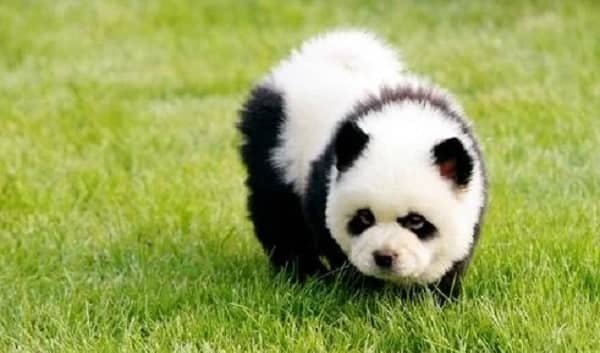
The term “panda dog” is not a breed name — it is a popular descriptive phrase used by Indian dog enthusiasts and buyers to describe dogs that have a panda bear-like appearance. This includes naturally panda-looking breeds (those with contrasting dark and light markings around the eyes reminiscent of a panda’s face mask) as well as the controversial practice of dyeing dogs to look like pandas — a phenomenon that began in China and has occasionally surfaced in India.
If you are searching for the panda dog price in India in 2026, this guide clarifies what “panda dog” actually refers to in the Indian market, covers the naturally panda-like breeds most commonly sold under this description, explains the significant ethical and health concerns around dyed “panda dogs,” and gives you honest pricing for each relevant breed.
| Attribute | Details |
| Term Definition | “Panda Dog” is not a breed — it describes dogs with panda-like appearance (natural or artificial) |
| Natural Panda-Look Breeds | Chow Chow (bear-like), Keeshond (spectacle markings), Japanese Spitz, Samoyed |
| Breed Most Marketed as “Panda Dog” in India | Chow Chow puppies (naturally bear/panda-like as puppies) |
| Artificially Dyed “Panda Dogs” | Dogs (usually Chow Chows) dyed black-and-white — NOT ethical; health risks to dogs |
| Price Range (2026) | Rs. 15,000 – Rs. 1,00,000 (breed-dependent) |
| Chow Chow Price (most common “panda dog”) | Rs. 30,000 – Rs. 1,00,000 |
| Japanese Spitz Price | Rs. 15,000 – Rs. 45,000 |
| Keeshond Price (rare in India) | Rs. 40,000 – Rs. 80,000 |
| Monthly Maintenance | Rs. 6,000 – Rs. 18,000 (breed-dependent) |
| Ethical Concern | Never purchase a dog that has been dyed to look like a panda — it harms the animal |
About the Panda-Look Dog Breeds (Chow Chow / Keeshond / Japanese Spitz)
The “panda dog” trend originated in China around 2014, when a small Chow Chow puppy named “Columbo” — dyed to resemble a giant panda — went viral on Chinese social media. The dog’s owner displayed him at various Chinese shopping malls, attracting enormous crowds and media attention. The trend subsequently spread to other Asian countries and eventually to India, where the term “panda dog” became widely searched on Google and social media.
In India, the most commonly sold breed under the “panda dog” description is the Chow Chow puppy. Chow Chow puppies at 6-10 weeks of age have a naturally bear-cub-like appearance — round, fluffy, with a short muzzle — that many buyers associate with the panda aesthetic. As Chow Chows mature, this puppy appearance changes significantly, which sometimes surprises buyers who purchased expecting the “panda look” to persist.
The Japanese Spitz and Keeshond are two other breeds with naturally panda-like or raccoon-like facial markings (the Keeshond is famous for its “spectacles” — shaded markings around the eyes) that are sometimes marketed to panda dog seekers in India. The Japanese Spitz, with its pure white fluffy coat and fox-like but small face, has also been marketed as a “Japanese panda dog” in some contexts.
Panda-Look Dog Breeds (Chow Chow / Keeshond / Japanese Spitz) Price in India 2026 — City-Wise Breakdown
The table below provides pricing for the breeds most commonly marketed as “panda dogs” in India as of early 2026. The Chow Chow is the most frequently sold under this description due to its naturally bear-like puppy appearance.
| City / Category | Min Price (INR) | Max Price (INR) |
| Chow Chow — Delhi / Mumbai | Rs. 40,000 | Rs. 1,00,000 |
| Chow Chow — Bangalore / Hyderabad | Rs. 35,000 | Rs. 85,000 |
| Chow Chow — Tier-2 Cities | Rs. 25,000 | Rs. 65,000 |
| Japanese Spitz — Metro Cities | Rs. 15,000 | Rs. 45,000 |
| Japanese Spitz — Tier-2 Cities | Rs. 10,000 | Rs. 25,000 |
| Keeshond — Metro Cities (rare) | Rs. 40,000 | Rs. 80,000 |
| Pomeranian (marketed as panda Pom) | Rs. 8,000 | Rs. 40,000 |
| Artificially Dyed “Panda Dog” — DO NOT BUY | – | – |
| KCI Chow Chow / Show Quality | Rs. 60,000 | Rs. 1,00,000+ |
IMPORTANT ETHICAL WARNING: Some sellers in India have offered “panda dogs” — dogs (usually Chow Chows, Poodles, or other breeds) that have been dyed with black and white colouring to mimic a panda’s appearance. This practice causes significant stress and potential toxicity to the animal. The dye chemicals can be absorbed through skin or ingested during grooming. Never purchase or encourage the practice of dyeing dogs for appearance. The Animal Welfare Board of India (AWBI) has issued guidelines against such practices.
Temperament & Suitability
If the Chow Chow is the breed of interest (most common “panda dog” in India), understand its temperament fully: dignified, independent, intensely loyal to its family, and deeply suspicious of strangers. Not a breed for first-time owners, not apartment-friendly without significant outdoor access, and very heat-sensitive in India’s climate. Full details on Chow Chow temperament apply.
The Japanese Spitz is a more accessible choice for those attracted to the white, fluffy, bear-like aesthetic. It is a smaller (6-10 kg), more adaptable breed that suits apartment living, is friendly and outgoing, easier to train than the Chow Chow, and is better suited to Indian climate than the thick-coated Chow Chow.
The Keeshond is a medium-sized Dutch breed with distinctive spectacle-like shading around the eyes that creates a raccoon/panda effect. It is cheerful, intelligent, and sociable — but very rare in India, meaning buyers interested in this breed will face significant sourcing challenges.
Important: Never buy a dog that has been chemically dyed to look like a panda. Dye chemicals can be toxic to dogs, cause skin reactions, and the stress of the dyeing process is harmful to the animal. The AWBI has guidelines against cosmetic procedures that cause unnecessary suffering to animals. Choose a naturally beautiful dog from a responsible breeder instead.
Factors That Affect the Price
Breed Choice: Chow Chow (expensive, heat-sensitive, experienced owner), Japanese Spitz (accessible, apartment-friendly), Keeshond (rare, excellent temperament)
Panda Appearance Duration: Chow Chow puppy panda look fades with age — the adult dog looks quite different from an 8-week puppy
Ethical Sourcing: Avoid any seller offering “dyed panda dogs” — this signals unethical practices and potential health compromise
Climate Suitability: Japanese Spitz > Chow Chow for Indian climate; Chow Chow needs heavy AC
KCI Registration: Available for all three breeds; Chow Chow KCI registration well-established in India
Total Ownership Cost: Chow Chow significantly more expensive to maintain than Japanese Spitz
Health & Lifespan
The Chow Chow has specific health concerns including hip dysplasia, entropion (eyelid rolling inward), and significant heat sensitivity due to its dense coat — critical concerns in India’s climate. The Japanese Spitz is a healthy, robust breed with fewer hereditary concerns — patellar luxation is the most documented issue. The Keeshond has hereditary conditions including hip dysplasia and Primary Hyperparathyroidism (PHPT) — DNA testing is available.
For all thick-coated breeds marketed as panda dogs, India’s humid climate creates skin infection risks under the dense coat if not properly maintained. Professional grooming every 6-8 weeks and thorough drying after bathing are essential. The Chow Chow’s facial skin folds also require regular cleaning to prevent dermatitis.
Monthly Maintenance Cost in India (2026 Estimate)
Chow Chow Monthly Cost: Rs. 8,000 – Rs. 18,000 (high food + grooming + AC costs)
Japanese Spitz Monthly Cost: Rs. 4,000 – Rs. 8,000 (more economical option)
Keeshond Monthly Cost: Rs. 5,000 – Rs. 10,000 (moderate)
Professional Grooming (all three breeds): Rs. 1,000 – Rs. 3,000/session; every 6–8 weeks
Veterinary Care: Rs. 6,000 – Rs. 20,000 annually (breed-dependent)
Total Estimated Monthly Cost: Rs. 4,000 – Rs. 18,000 (depending on breed chosen)
Conclusion
The “panda dog” is one of India’s most searched pet terms — reflecting a genuine and understandable desire for a dog with a uniquely bear-like, adorable appearance. In 2026, the best approach is to choose a breed that naturally offers the aesthetic you are drawn to — the Chow Chow for a large, magnificent bear-dog experience, or the Japanese Spitz for a more accessible, apartment-friendly white fluffy companion. Never support the artificial dyeing of dogs, and always prioritise the animal’s health and welfare over novelty appearance trends.
Frequently Asked Questions (FAQs)
Q1. What is a “panda dog” and how much does it cost in India in 2026?
A “panda dog” is not a specific breed — it is a popular descriptive term for dogs with panda-like appearance. The most commonly sold “panda dog” in India is the Chow Chow, whose puppy appearance is naturally bear/panda-like. Chow Chow prices range from Rs. 30,000 to Rs. 1,00,000 in India in 2026. The more affordable and apartment-suitable Japanese Spitz ranges from Rs. 15,000 to Rs. 45,000.
Q2. Are there real dogs that naturally look like pandas?
The closest naturally panda-resembling dogs include the Chow Chow (as a puppy, with its bear-cub appearance), the Keeshond (with distinctive eye spectacle markings), and the Japanese Spitz (white fluffy coat with a small, rounded face). No domestic dog breed is naturally patterned in the black-and-white panda pattern — that effect is only achieved through artificial dyeing, which is harmful and unethical.
Q3. Is it legal to dye a dog in India?
The dyeing of dogs for cosmetic purposes falls under the purview of the Prevention of Cruelty to Animals Act, 1960, and AWBI guidelines. While specific regulations on pet dyeing are not always explicitly codified, causing unnecessary pain or distress to an animal — which the dyeing process can do — is punishable under Indian law. The AWBI has issued guidance against such practices. Ethically and legally, purchasing or encouraging dyed dogs is not appropriate.
Q4. Will a Chow Chow puppy always look like a panda?
No — and this is an important expectation to manage. Chow Chow puppies at 8-12 weeks have a very round, fluffy, bear-like appearance. As they mature into adults over 6-18 months, they develop their characteristic lion mane, deeper facial structure, and more elongated body. The adult Chow Chow is magnificent but looks quite different from the “panda puppy” that initially attracted buyers. Research adult Chow Chow appearance thoroughly before purchasing a puppy.
Q5. Which “panda-look” breed is best suited to Indian apartments?
The Japanese Spitz is the best panda-look breed for Indian apartment living. It is smaller (6-10 kg), more adaptable to apartment environments, friendlier with strangers, easier to train, less heat-sensitive than the Chow Chow, and significantly more affordable both in purchase price and monthly maintenance. Its white fluffy coat and round face give it a genuinely panda-adjacent aesthetic.