The African Grey Parrot is widely regarded as the most intelligent parrot species on Earth — a bird whose cognitive abilities, emotional depth, and extraordinary language comprehension have made it the subject of decades of scientific research and the most coveted companion bird among serious avian enthusiasts worldwide. Dr. Irene Pepperberg’s legendary research with an African Grey named Alex demonstrated that these birds can understand concepts of colour, shape, number, and abstract reasoning at levels comparable to a five-year-old human child — a scientific finding that permanently elevated the African Grey’s reputation beyond mere mimicry into genuine cognitive partnership. In India, the African Grey Parrot has developed a devoted following among bird enthusiasts who seek not merely a beautiful pet but an intellectually engaging companion capable of meaningful two-way communication. However, owning an African Grey in India involves navigating legal requirements, significant financial investment, and a long-term care commitment of extraordinary depth. This comprehensive guide covers African Grey Parrot prices in India, the species variants available, factors determining cost, setup and maintenance expenses, and everything a prospective owner must understand before making this life-changing decision.
Legal Status of African Grey Parrots in India
Understanding the legal framework is the absolute prerequisite before any price discussion. The Wildlife Protection Act of 1972 prohibits ownership of native Indian bird species — but African Grey Parrots are native to Central and West Africa, not India, making them legally ownable in India provided they are captive-bred and legally imported with proper documentation. The critical requirement is CITES (Convention on International Trade in Endangered Species) certification — the African Grey Parrot (Psittacus erithacus) is listed under CITES Appendix I, the highest protection level, meaning any commercial trade in wild-caught birds is completely prohibited internationally. Only captive-bred African Greys with verified breeding documentation, valid import permits, and CITES Appendix I captive-bred certification can be legally owned in India. Purchasing an undocumented African Grey — however cheaply offered — exposes the buyer to serious criminal liability under both Indian wildlife law and international treaty obligations. Always demand and verify complete documentation before any transaction, and purchase exclusively from breeders who can demonstrate their birds’ captive-bred lineage through verifiable records.
Factors That Determine African Grey Parrot Prices in India
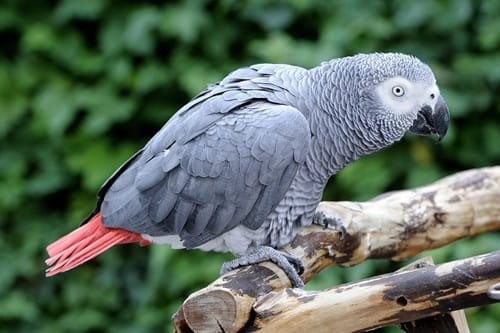
Species Variant Two subspecies of African Grey exist — the Congo African Grey (larger, lighter grey, bright red tail) and the Timneh African Grey (smaller, darker charcoal grey, maroon tail). Congo African Greys are more widely available and generally command higher prices due to their larger size and more vivid appearance, while Timneh African Greys are valued by experienced keepers for their reportedly earlier and more confident speech development and calmer temperament.
Age and Hand-Taming Status Hand-raised, hand-fed chicks weaned from birth on human contact command the highest prices — these birds are already socialised to human interaction, significantly easier to train, and far less likely to develop the fear-based behaviours that parent-raised birds frequently exhibit. Weaned chicks between 3–6 months of age represent the optimal purchase age and the highest price point. Older untamed birds are sometimes available at lower prices but require extensive, patient rehabilitation work.
Talking Ability and Training Level African Greys that already demonstrate vocabulary — even at a young age — command premium prices because their talking potential has been partially validated. A bird that already says several words at six months of age provides evidence of the exceptional talking quality that is the primary motivation for most African Grey purchases.
Documentation Completeness Fully documented birds with complete CITES certification, breeder microchip records, import permits, and veterinary health certificates command significant premiums over undocumented birds. This premium is legitimate — it represents genuine legal security and ethical sourcing assurance.
Breeder Reputation and Location Established avian breeders in Mumbai, Delhi, Hyderabad, and Bengaluru with verifiable track records of healthy, well-socialised African Grey production charge more than informal sellers — and the premium is consistently justified by bird health, temperament, and documentation quality.
African Grey Parrot Species and Price Ranges in India
The table below provides a comprehensive overview of African Grey Parrot variants available in India, their price ranges, and key characteristics.
| Variant | Price Range (₹) | Size | Temperament | Talking Ability | Availability in India |
| Timneh African Grey (Chick) | ₹60,000 – ₹1,00,000 | Medium (28 cm) | Calm, Confident | Excellent | Limited |
| Congo African Grey (Chick) | ₹80,000 – ₹1,50,000 | Large (33 cm) | Sensitive, Intelligent | Outstanding | Moderate |
| Congo African Grey (Juvenile) | ₹70,000 – ₹1,20,000 | Large (33 cm) | Variable | Very Good | Moderate |
| Congo African Grey (Adult, Tame) | ₹60,000 – ₹1,00,000 | Large (33 cm) | Established | Very Good | Limited |
| Congo African Grey (Adult, Untamed) | ₹30,000 – ₹60,000 | Large (33 cm) | Fearful, Challenging | Varies | Occasional |
| Proven Breeding Pair (Congo) | ₹2,50,000 – ₹5,00,000 | Large (33 cm) | Bonded Pair | N/A for breeding | Very Limited |
| Hand-Talking Trained Adult | ₹1,50,000 – ₹3,00,000 | Large (33 cm) | Social, Communicative | Outstanding | Very Limited |
Congo African Grey (Psittacus erithacus erithacus) The Congo African Grey is the most widely recognised variant — its distinctive light grey plumage graduating to pale grey on the face, contrasted with a vivid scarlet tail, creates an appearance of refined elegance rather than tropical flamboyance. Congo African Greys are renowned for developing vocabularies of 200–1,000 words with comprehension — not mere repetition — of word meaning in context. Price range for hand-raised chicks: ₹80,000 to ₹1,50,000. The variation within this range reflects age, documentation completeness, and early behavioural indicators of talking potential.
Timneh African Grey (Psittacus erithacus timneh) The Timneh African Grey — now classified by some taxonomists as a separate species — is smaller, darker, and less visually dramatic than the Congo but is highly valued among experienced keepers for specific reasons. Timnehs reportedly begin talking earlier in their development, tend toward calmer and more stable personalities with less tendency toward the neurotic behaviours that poorly socialised Congo Greys sometimes develop, and are often considered better suited for busy household environments. Price range: ₹60,000 to ₹1,00,000 — slightly below Congo pricing, though experienced keepers frequently consider them equally or more valuable.
One-Time Setup Costs
Before bringing an African Grey home, significant one-time investments in housing, enrichment, and veterinary baseline assessment are essential. African Greys are sensitive, intelligent birds — inadequate housing and enrichment directly cause the feather-destructive behaviours and psychological problems that make their welfare so challenging.
| Item | Cost Range (₹) | Notes |
| Stainless Steel Cage (Large) | ₹20,000 – ₹60,000 | Minimum 90x60x120 cm recommended |
| Play Stand and Gym | ₹5,000 – ₹15,000 | Essential for out-of-cage time |
| Outdoor Aviary (Optional) | ₹25,000 – ₹1,00,000 | Highly beneficial for well-being |
| Initial Veterinary Health Check | ₹2,000 – ₹6,000 | Full avian health screening |
| Microchip Registration | ₹1,000 – ₹2,500 | Important for legal identification |
| Initial Enrichment Toy Set | ₹2,500 – ₹6,000 | Foraging, puzzle, and chew toys |
| Food and Water Dishes (SS) | ₹1,000 – ₹2,500 | Stainless steel, multiple sets |
| Natural Wood Perches | ₹1,500 – ₹4,000 | Various diameters for foot health |
| Full Spectrum Lighting | ₹3,000 – ₹8,000 | UVB lighting essential for D3 synthesis |
| Carrier Cage | ₹2,500 – ₹6,000 | For vet visits and travel |
| Total One-Time Setup | ₹63,500 – ₹2,10,000 | Excluding bird purchase price |
African Greys require high-quality stainless steel or powder-coated cages — their sensitive respiratory systems are vulnerable to zinc and lead toxicity from cheap wire coatings. The minimum recommended cage size for a single Congo African Grey is 90cm x 60cm x 120cm — larger is always better. Full-spectrum UVB lighting is particularly important for indoor African Greys whose limited sun exposure creates vitamin D3 synthesis deficiency if not supplemented through appropriate lighting.
Monthly and Annual Ongoing Expenses
African Greys are long-lived birds — typically 40–60 years in captivity — whose ongoing care costs represent a lifetime financial commitment. The table below outlines realistic monthly and annual maintenance costs for a healthy, well-cared-for African Grey in India.
| Expense Category | Monthly Cost (₹) | Annual Cost (₹) | Notes |
| Diet and Fresh Food | ₹2,500 – ₹6,000 | ₹30,000 – ₹72,000 | Pellets, fruits, vegetables, nuts |
| Enrichment Toys | ₹1,500 – ₹4,000 | ₹18,000 – ₹48,000 | Replaced frequently as destroyed |
| Veterinary Care | ₹800 – ₹2,500 | ₹10,000 – ₹30,000 | Annual wellness exams plus emergencies |
| Calcium and Vitamin Supplements | ₹500 – ₹1,200 | ₹6,000 – ₹14,400 | Critical for African Grey health |
| Cage Cleaning Supplies | ₹300 – ₹800 | ₹3,600 – ₹9,600 | Safe, bird-friendly disinfectants |
| Grooming (Beak, Nails, Wings) | ₹300 – ₹600 | ₹3,600 – ₹7,200 | Professional avian groomer |
| Full Spectrum Bulb Replacement | ₹200 – ₹500 | ₹2,400 – ₹6,000 | UVB bulbs require annual replacement |
| Total Estimated Monthly | ₹6,100 – ₹15,600 | ₹73,600 – ₹1,87,200 | Varies with care quality and city |
Diet African Greys have specific nutritional requirements — they are particularly susceptible to hypocalcaemia (calcium deficiency) and vitamin A deficiency, both of which cause serious health problems. A balanced diet includes high-quality formulated pellets as the base (approximately 60–70% of diet), supplemented with fresh leafy greens, orange and red vegetables for vitamin A, limited seeds, and calcium-rich foods including cooked legumes and dairy-free calcium sources. Monthly food costs typically range from ₹2,500 to ₹6,000 depending on diet quality and city.
Veterinary Care African Greys are notorious for hiding illness — a bird showing obvious symptoms is frequently already seriously ill. Regular annual health checks including blood panels, choanal cultures, and weight monitoring are essential preventive care rather than optional luxuries. Finding a qualified avian veterinarian in India with specific experience in African Grey health — including their specific susceptibility to psittacine beak and feather disease, aspergillosis, and calcium metabolism disorders — is a critical step before purchase, not after a problem develops.
Important Considerations Before Buying an African Grey in India
Emotional Sensitivity African Greys are among the most emotionally sensitive companion birds known — they form deep, intense bonds with their primary caregivers and are profoundly affected by household changes, routine disruptions, rehoming, and emotional tension in their environment. This sensitivity creates extraordinary companionship when conditions are stable but equally extraordinary psychological distress — manifested as feather destructive behaviour, screaming, and self-harm — when they are not. African Grey ownership is genuinely not suitable for households with significant lifestyle instability.
Longevity — A 50-Year Commitment African Greys typically live 40–60 years in captivity — some documented individuals have exceeded 70 years. A person purchasing an African Grey at age 25 may still be responsible for the same bird at age 75. This longevity requires formal planning — wills and care arrangements for the bird — that few pet owners consider but that responsible African Grey ownership demands.
Noise Level African Greys are considerably quieter than macaws — they are not typically described as screaming birds under good conditions. However, a bored, stressed, or under-stimulated African Grey can develop repetitive screaming, alarm calling, and contact calling behaviours that are genuinely disruptive. The noise level is manageable with proper care but not negligible.
Intelligence and Stimulation Requirements An African Grey’s intelligence — its greatest appeal — is simultaneously its greatest care challenge. A highly intelligent bird in an unstimulating environment becomes a psychologically damaged bird. Owners must provide foraging opportunities, puzzle toys, training sessions, and genuine social interaction daily — passive television watching does not substitute for active mental engagement.
Where to Buy African Grey Parrots in India
Reputable captive breeders with verifiable CITES documentation and transparent breeding records are the only recommended source. Mumbai, Delhi, Hyderabad, Pune, and Bengaluru have established exotic bird breeder communities — verified through avian enthusiast forums, bird club contacts, and avian veterinarian recommendations. Exotic bird expos periodically held in major Indian cities provide opportunities to evaluate multiple breeders simultaneously and compare bird health and documentation standards. Never purchase from street markets, informal online listings offering prices significantly below market range, or any seller unwilling to provide complete CITES documentation and allow a pre-purchase veterinary inspection.
Conclusion
The African Grey Parrot represents the most intellectually rewarding exotic pet available in India — a bird whose cognitive depth, emotional sensitivity, and language ability create a companion relationship unlike any other in the animal kingdom. The financial investment — ranging from ₹60,000 for Timneh chicks to ₹3,00,000 for trained talking adults — is significant but reflects genuine value in a bird that may share your life for five or six decades. The ongoing annual care commitment of ₹73,600 to ₹1,87,200 requires honest budget assessment alongside the space, time, and emotional availability that African Grey wellbeing demands. Those who approach African Grey ownership with full understanding of its requirements and full commitment to meeting them will discover in this extraordinary bird one of the deepest, most intellectually stimulating, and most emotionally meaningful companion relationships available to any animal lover.