The Burmese cat is one of the most people-oriented, affectionate, and companionable cat breeds in existence — a medium-sized, short-coated cat of remarkable solidity and weight relative to its appearance, whose personality combines the Siamese’s social intensity with a warmer, more approachable temperament that makes it one of the most frequently recommended cat breeds for households seeking a genuinely devoted feline companion. Known in American cat fancy circles as “the dog of the cat world,” the Burmese follows its owner through the home, seeks lap time enthusiastically, and maintains a kittenish playfulness well into old age that makes it one of the most continuously entertaining cats you can keep.
In India’s growing premium cat market of 2026, the Burmese is gaining recognition — rare enough to be considered a premium acquisition but available through a growing number of Indian breeders, offering exceptional temperament value at a price point that is accessible compared to many other rare breeds. This guide covers accurate 2026 pricing, the fascinating Wong Mau origin story, the important European versus American type distinction, health information, and complete buying guidance.
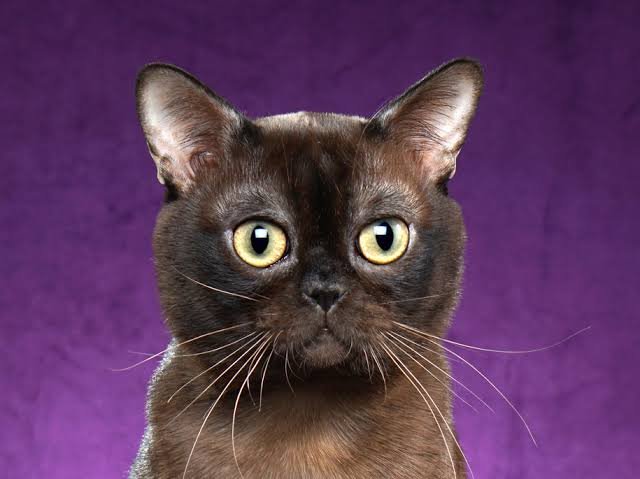
| Attribute | Details |
| Breed Name | Burmese Cat |
| Origin | Burma (Myanmar) / USA — founded by a single cat named Wong Mau, 1930 |
| Size | Medium: 3.5–6 kg — feels heavier than it appears (“brick wrapped in silk”) |
| Lifespan | 16–18 years — exceptional longevity |
| Temperament | Extremely affectionate, dog-like, social, playful, vocal, people-dependent |
| Coat | Short, fine, satin-like — extremely low maintenance; sable (brown) most classic |
| Two Types | American Burmese (rounder head) and European Burmese (more angular) |
| Price Range (2026) | Rs. 20,000 – Rs. 85,000 |
| TICA / CFA Show Quality | Rs. 55,000 – Rs. 85,000+ |
| Monthly Maintenance | Rs. 3,000 – Rs. 7,500 |
| Best For | People-oriented households, families, working professionals who are home regularly |
| Climate Suitability | Excellent — short satin coat perfectly suited to India |
| Famous Description | “A brick wrapped in silk” — heavier than expected for their size |
About the Burmese Cat
The Burmese cat’s modern history traces to a single individual — a small, walnut-brown female cat named Wong Mau brought from Burma (now Myanmar) to the United States in 1930 by Dr. Joseph Thompson, a Navy psychiatrist who recognised in her a cat of unusual appearance and exceptional temperament. Wong Mau was initially thought to be a Siamese variant, but her coat was solidly dark brown rather than colourpointed — a characteristic that suggested she was actually a hybrid between a Siamese and a darker local Burmese cat.
Dr. Thompson began a careful breeding program crossing Wong Mau with a Seal Point Siamese and subsequently back-crossing the offspring — with genetics professor Clyde Keeler and breeder Virginia Cobb collaborating on what became one of the earliest scientifically documented cat breeding experiments. The resulting study, published in 1943, described the genetics of the Burmese coat colour and established the foundation for the modern Burmese breed. The sepia brown colour — initially called “sable” — is caused by a gene that modifies the standard Siamese colour restriction, creating a warm brown colour throughout the coat rather than restricted to the points.
The breed subsequently developed in two distinct directions. The American Burmese was selected for an extremely round head, full cheeks, and compact body — creating a distinctly rounded, almost cobby cat that is dramatically different from the original Wong Mau type. The European Burmese maintained a more moderate, elegant head shape closer to the original cat’s appearance — a wedge-shaped head, larger ears, and more graceful body proportions. Both are registered breeds, and both are available in India.
Burmese Cat Price in India 2026 — City-Wise Breakdown
| City / Category | Min Price (INR) | Max Price (INR) |
| Delhi / NCR | Rs. 22,000 | Rs. 75,000 |
| Mumbai | Rs. 25,000 | Rs. 80,000 |
| Bangalore | Rs. 20,000 | Rs. 70,000 |
| Hyderabad | Rs. 18,000 | Rs. 65,000 |
| Chennai | Rs. 16,000 | Rs. 60,000 |
| Kolkata | Rs. 16,000 | Rs. 58,000 |
| Chandigarh / Jaipur | Rs. 18,000 | Rs. 65,000 |
| Tier-2 / Tier-3 Cities | Rs. 12,000 | Rs. 40,000 |
| TICA / CFA Registered Show Quality | Rs. 55,000 | Rs. 85,000+ |
| Imported — UK / USA / Australia | Rs. 75,000 | Rs. 1,20,000+ |
| European Burmese (more available in India) | Rs. 20,000 | Rs. 80,000 |
Colour Varieties
The original Burmese colour is sable — a warm, rich brown that is the breed’s most iconic expression. American Burmese are accepted in four colours by CFA: sable, champagne (warm beige), blue (grey), and platinum (pale grey). European Burmese are accepted in a wider range by TICA including sable, blue, chocolate, lilac, red, cream, and tortoiseshell variants. In India, sable remains overwhelmingly the most popular and available colour. Blue Burmese are the second most common. Lilac and chocolate are rarer and command premiums.
Temperament and Suitability
The Burmese cat’s temperament is its most extraordinary quality — and the primary reason for the breed’s devoted global following. These cats are extraordinarily people-dependent, following their owners through the home with the persistence of a puppy, seeking lap time enthusiastically, sleeping against their person whenever possible, and becoming genuinely distressed by extended isolation. The phrase “dog of the cat world” is not merely marketing — it accurately describes a cat whose social needs and devotion to its people genuinely exceed what most cat breeds express.
They maintain a kitten-like playfulness into old age that makes daily interaction consistently entertaining — their enthusiasm for interactive toys, puzzle feeders, and creative games remains genuine throughout their 16–18 year lifespan. They are vocal — more so than British Shorthairs or Persians, less so than Siamese — expressing themselves with a distinctive medium-pitched voice that communicates contentment, desire for attention, and occasional opinion on household events.
For Indian working professionals who spend significant time at home, the Burmese is an outstanding choice. For households where cats will be consistently alone for 10+ hours daily, a companion cat is genuinely important for Burmese welfare.
Health and Lifespan
The Burmese is a long-lived breed regularly reaching 16–18 years. The most serious hereditary concern is Hypokalemic Polymyopathy — a muscle weakness condition caused by low blood potassium that affects Burmese at higher rates than most breeds. A DNA test exists and responsible breeders test all breeding cats. Burmese Head Defect is a cranial malformation documented specifically in American Burmese from certain bloodlines — responsible breeders screen against affected lines. Diabetes Mellitus occurs at elevated rates in the breed — weight management and appropriate diet are important preventive measures.
The short, satin coat is extraordinarily low-maintenance in India’s climate — weekly brushing is sufficient and professional grooming monthly is primarily for bathing. The breed handles Indian heat very well.
Monthly Maintenance Cost in India
| Cost Category | Estimated Cost |
| Premium Cat Food | Rs. 1,800 – Rs. 4,000/month |
| Grooming (short satin coat — minimal) | Rs. 400 – Rs. 1,000/session; monthly professional |
| Litter and Litter Box | Rs. 500 – Rs. 1,200/month |
| Veterinary Care (annual) | Rs. 5,000 – Rs. 13,000 |
| Vaccinations & Preventives | Rs. 1,500 – Rs. 3,500 annually |
| Total Estimated Monthly Cost | Rs. 3,000 – Rs. 7,500 |
Frequently Asked Questions (FAQs)
Q1. What is the Burmese cat price in India in 2026?
Burmese cat prices from reputable breeders in India in 2026 range from Rs. 16,000 to Rs. 80,000 depending on city, colour, and type. TICA or CFA-registered show-quality Burmese start at Rs. 55,000. UK, USA, or Australian imports reach Rs. 75,000–Rs. 1,20,000+ including import costs. European Burmese are more commonly available in India than American type.
Q2. What is Wong Mau and why is she important?
Wong Mau was a single walnut-brown female cat brought from Burma to San Francisco in 1930 by Dr. Joseph Thompson — the founding individual from whom all modern Burmese cats descend. Her distinctive dark brown coat and exceptional temperament inspired one of the earliest scientifically documented cat breeding programs in history, published in 1943. Every Burmese cat in the world today traces its ancestry directly to Wong Mau through documented pedigree.
Q3. What is the difference between American and European Burmese?
American Burmese have been selected for extremely round heads, very full cheeks, and compact cobby bodies — creating a dramatically rounded appearance. European Burmese maintain more moderate, elegant proportions closer to Wong Mau’s original type — a wedge-shaped head, larger ears, and more graceful body structure. Both are genuine Burmese with identical temperament and health profiles. American type is more extreme in head conformation; European type is more naturally proportioned. In India, European type is more commonly available.
Q4. Why is the Burmese called “a brick wrapped in silk”?
Burmese cats are consistently described as feeling significantly heavier than they appear — their dense, compact musculature and solid bone structure creates a cat that surprises first-time handlers with its weight relative to its medium size. The “silk” refers to the extraordinarily fine, glossy satin coat that feels like polished fabric against the skin. Together, the description perfectly captures the tactile experience of holding a Burmese.
Q5. Are Burmese cats good for apartment living in India?
Yes — with the important provision of regular human presence. The Burmese’s short, practical coat, moderate exercise needs, and strongly indoor temperament make it an excellent apartment cat. Their social needs mean they should not be left consistently alone for extended periods — a companion cat or a household where someone is regularly present is important for Burmese welfare. For Indian working professionals who work from home or have flexible schedules, the Burmese is an outstanding choice.