India is a country where extraordinary travel experiences are available at every budget level — and the assumption that memorable journeys require expensive tickets, premium hotels, and organised tours is one of the most limiting travel myths Indian travellers carry. Some of India’s most spectacular destinations are its least expensive — the pilgrimage circuit that created affordable infrastructure for centuries before budget tourism arrived, the hill stations where guesthouse culture offers genuine accommodation at modest rates, and the coastal towns where seafood and simplicity combine into holidays that cost a fraction of international equivalents.
1. Hampi, Karnataka
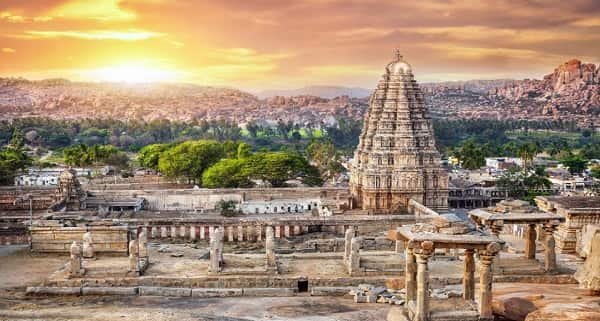
The ruined empire of the Vijayanagara kingdom spread across a landscape of surreal granite boulders and paddy fields. Hampi’s accommodation runs from ₹400 guesthouses to mid-range options, and its attractions — the Virupaksha Temple, the stone chariot of Vittala Temple, the queen’s bath, and the boulder-strewn landscape itself — require no entry fee beyond modest archaeological survey charges. A three-day Hampi trip including comfortable accommodation, local meals, and bicycle or moped rental costs ₹3,000 to ₹5,000 per person.
2. Rishikesh, Uttarakhand
The yoga capital of the world and the adventure sports hub of North India sits in the Himalayas at Uttarakhand’s doorway. Budget ashram accommodation provides clean, austere rooms from ₹300 to ₹800 per night. The Ganga’s ghats, the hiking trails, the Beatles Ashram, and the suspension bridges require minimal or no entry fees. White water rafting on the Ganga — one of India’s best adventure experiences — costs ₹600 to ₹1,200 per person. Rishikesh may offer the best value-per-experience ratio of any Indian destination.
3. Varanasi, Uttar Pradesh
India’s holiest city and one of the world’s oldest continuously inhabited urban settlements. Varanasi’s budget guesthouses along the ghats offer river views from ₹500 to ₹1,500 per night. The city’s primary experiences — the dawn boat ride on the Ganga, the Ganga Aarti at Dashashwamedh Ghat, the old city lanes, and the temple circuits — are either free or minimally charged. Varanasi’s street food — kachori, jalebi, malaiyo in winter and thandai in summer — provides extraordinary eating at ₹20 to ₹100 per item.
4. McLeod Ganj, Himachal Pradesh
The Tibetan government-in-exile’s home in the Himalayan foothills — a town that combines Tibetan culture, mountain hiking, and a warm backpacker community atmosphere. Budget guesthouses and monastery-adjacent accommodation runs ₹500 to ₹1,200. The Dalai Lama’s temple, the Tibetan Museum, and the mountain trails to Triund are accessible at minimal cost. The Tibetan food — thukpa, tingmo, and butter tea — is both delicious and extremely affordable.
5. Jaisalmer, Rajasthan
The Golden City rising from the Thar Desert — Jaisalmer’s fort is a living settlement, its havelis are architectural marvels, and the desert camping experience under a genuinely dark sky full of stars is one of India’s most spectacular affordable adventures. Budget accommodation within the fort starts at ₹600. Desert camping with camel safari and dinner runs ₹1,200 to ₹2,500 per person. Jaisalmer remains one of Rajasthan’s most atmospheric and most value-for-money destinations.
6. Varkala, Kerala
Kerala’s cliff-top beach town where red laterite cliffs drop to clean, uncrowded beaches and the Arabian Sea stretches uninterrupted to the horizon. Varkala is significantly less developed and less expensive than Kovalam — budget guesthouses on the cliff run ₹600 to ₹1,200 per night. Ayurvedic massage, fresh seafood, coconut water directly from trees, and sunsets over the sea define a Varkala stay that costs a fraction of international beach equivalents.
7. Spiti Valley, Himachal Pradesh
For the adventure traveller willing to accept the remoteness — the high-altitude cold desert of Spiti Valley offers monastery stays, ancient Buddhist art, lunar landscapes, and an experience of extreme geographical beauty that has no Indian equivalent. Budget homestays in Kaza, Kibber, and Langza run ₹400 to ₹800 per night including meals — making Spiti one of India’s most affordable genuine wilderness experiences once you’ve managed the challenging access journey.
8. Puducherry, Tamil Nadu
The former French colony on India’s southeastern coast — Puducherry’s French Quarter with its colonial architecture, café culture, and promenade beach offers a distinctly un-Indian atmosphere within an entirely Indian setting. Budget guesthouses in the Tamil Quarter start at ₹600. The beach, the French Quarter walking, Auroville’s remarkable architecture and community, and Puducherry’s excellent café food all create a destination that rewards a two to three-day visit at minimal cost.
9. Orchha, Madhya Pradesh
Madhya Pradesh’s most undervisited architectural treasure — a medieval fortified town with palace complexes, cenotaphs on the Betwa River, and extraordinary Bundela-era temples in a completely uncommercialized setting. Orchha sees a fraction of Khajuraho’s visitors despite comparable historical significance. Budget accommodation runs ₹500 to ₹900. The palace complex entry is modest. The evening aarti at Ram Raja Temple is free and one of central India’s most atmospheric ritual experiences.
10. Chopta, Uttarakhand
The base for Tungnath — the world’s highest Shiva temple accessible by a 3.5 km trek through some of the most beautiful rhododendron forests in the Himalayas. Chopta’s accommodation is minimal and inexpensive — tents and basic guesthouses from ₹300 to ₹600. The trekking experience, the Tungnath temple itself, and the possible extension to Chandrashila Peak for panoramic Himalayan views create one of India’s best value-for-money trekking experiences.
Frequently Asked Questions (FAQs)
Q1. What is the ideal budget per day for comfortable independent travel in India?
A: A daily budget of ₹1,500 to ₹2,500 per person provides comfortable independent travel across most Indian destinations — covering guesthouse accommodation with private bathroom, three local meals, transport within the destination, and entry fees. In cities and premium hill stations, ₹2,500 to ₹3,500 provides the same comfort level. Beach destinations during peak season may require ₹3,000 to ₹4,000. These figures represent independent travel rather than organised tour packages, which typically cost more per comparable day.
Q2. Which of these destinations are best avoided during summer months?
A: Jaisalmer and Varanasi experience extreme summer heat — temperatures regularly exceeding 45°C in May and June — making them uncomfortable despite their year-round attraction. Hampi in April and May is similarly challenging. Rishikesh, McLeod Ganj, Chopta, and Spiti Valley are excellent summer destinations when most Indian plains are oppressively hot. Puducherry and Varkala are tolerable in summer but most enjoyable October through February.
Q3. Which of these destinations is most accessible for a first solo trip in India?
A: Rishikesh is consistently recommended as India’s best first solo destination — particularly for young travellers. It has an established backpacker infrastructure, excellent safety reputation, clear walking distances between attractions, yoga and activity options for every interest level, and a genuinely welcoming community atmosphere built around decades of international visitor experience. Puducherry is the best first solo destination for travellers who prefer a calmer, more café-and-architecture-oriented experience.
Q4. Are these destinations family-friendly or better suited to solo and couple travel?
A: Most of these destinations work across travel configurations with the right expectations. Varanasi, Puducherry, Hampi, and Varkala are excellent for families with children who can handle moderate walking and cultural engagement. Spiti Valley and Chopta’s remoteness makes them better suited to physically capable travellers without very young children. Rishikesh and Jaisalmer accommodate families with specific activity planning — adventure activities have age restrictions, but the cultural and scenic elements are family-inclusive.
Q5. How much in advance should I book accommodation for these destinations during peak season?
A: For October through February peak season at popular destinations like Jaisalmer, Rishikesh, and Varkala — two to four weeks advance booking for budget accommodation is advisable for weekend trips and essential for holiday period travel. Hampi and Orchha, being less commercially developed, have more availability. Spiti Valley’s limited accommodation makes six to eight weeks advance booking essential for the July-September season when the road is passable. Off-season travel at all destinations eliminates booking pressure entirely and reduces costs by 30% to 50%.