India is one of the world’s great road trip countries — a fact that its own travellers are only beginning to fully appreciate. The combination of extraordinary geographical diversity, dramatically improved highway infrastructure, and the proliferation of comfortable self-drive rental options has made road travel the most rewarding way to experience the subcontinent’s full range of landscapes, cuisines, and cultures. A flight compresses the journey into an arrival. A road trip makes the journey the destination.
The routes below are chosen for the quality of the drive itself — the road surface, the scenery visible from the window, the towns worth stopping in, and the variety of experience compressed into the distance.
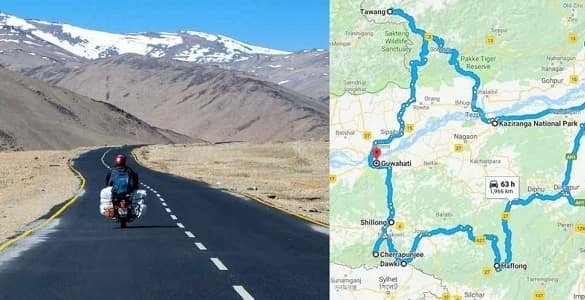
The Manali to Leh Highway, Himachal Pradesh to Ladakh
India’s most legendary road trip — 479 kilometres of mountain driving across five high-altitude passes, through landscapes that shift from Himalayan pine forests to high-altitude desert in a single day’s drive. The Rohtang Pass at 3,978 metres opens the journey into the Lahaul Valley. The Baralacha La at 4,890 metres delivers the driver into Sarchu’s plateau campsite territory. The Tanglang La at 5,359 metres — one of the world’s highest motorable passes — announces the final descent into Leh.
The journey requires two full driving days with an overnight at Jispa or Sarchu to acclimatise to altitude. The landscapes are genuinely unlike anything else on earth — the Moray plains, the Keylong Valley, the Zing Zing Bar’s surreal colour-banded mountains — and the driving demands complete attention on roads that reward respect with extraordinary experience.
Best Season: June to September. Road opens approximately late May to early June depending on snowmelt.
Coastal Karnataka and Goa — NH-66 Coastal Highway
The stretch of NH-66 between Mangalore and Goa runs through the Western Ghats’ coastal edge — a drive through fishing villages, spice plantation access roads, dramatic river crossings, coconut grove tunnels, and the specific quality of light that the Konkan coast produces in the late afternoon. The drive from Udupi to Gokarna through Murdeshwar and Kumta covers approximately 250 kilometres of the most scenically varied coastal driving in India.
Stop at Udupi’s Krishna Temple for breakfast and authentic coastal Karnataka cuisine. Murdeshwar for the Shiva statue’s dramatic ocean setting. Gokarna’s beaches for the night. Continue to Goa the following morning through Karwar’s wide beaches and the winding Ghat roads that announce the Goan border.
Best Season: October to February. Avoid monsoon when coastal roads flood.
Rajasthan Heritage Circuit — Delhi to Jaipur to Jodhpur to Jaisalmer
The 800-kilometre circuit from Delhi through Rajasthan’s three great cities is one of India’s most culturally rich road trips — a drive through the Thar Desert’s edge where every town produces extraordinary food, extraordinary architecture, and the specific warmth of Rajasthani hospitality. The Delhi-Jaipur Expressway makes the first leg effortless. The Ajmer Dargah detour adds spiritual depth. Jodhpur’s blue city and Mehrangarh Fort reward a full day. Jaisalmer’s golden fort and desert camping close the circuit before the return.
The entire circuit covers approximately 1,600 kilometres return — ideal as a seven to ten day road trip.
Best Season: October to March.
Coorg to Ooty Through the Nilgiri Biosphere
The mountain drive from Coorg through the Bandipur and Mudumalai tiger reserves to Ooty traverses the Western Ghats’ most biodiverse and most visually stunning section. Coffee plantations give way to wildlife corridor forests where elephant, deer, and occasional big cats cross the road at dawn and dusk. The forest road through Bandipur requires driving before 9 PM — the night driving restriction exists for wildlife protection and encourages overnight stays that reward the driver who is up early enough for the morning wildlife activity window.
The Ooty Ghat Road’s hairpin bends have been improved but remain demanding — the quality of the drive matches the quality of the destination’s tea estate atmosphere.
Best Season: September to February.
Northeast India — Guwahati to Tawang Through Arunachal Pradesh
India’s most underdriven great road trip — the journey from Guwahati through Tezpur and Bomdila to Tawang crosses the Eastern Himalayas through landscapes of extraordinary biodiversity and cultural richness. The Sela Pass at 4,170 metres is frequently snowbound even in April. The road descends into the Kameng River gorge with waterfalls crashing directly onto the highway. Tawang’s monastery rewards every difficult kilometre.
This route requires an Inner Line Permit for Arunachal Pradesh and a minimum of three to four driving days.
Best Season: April to October.
Frequently Asked Questions (FAQs)
Q1. What type of vehicle is best for Indian road trips, particularly mountain routes?
A: For Himalayan routes — Manali-Leh, Tawang — a high-ground-clearance SUV or 4WD vehicle is essential. The Scorpio, Fortuner, Thar, and Jimny are commonly used and parts are available across most mountain towns. For coastal and plains routes, a standard sedan or hatchback is entirely adequate. All-terrain tyres are recommended for any unpaved mountain road driving. Always carry a spare tyre, basic tools, and a tow rope regardless of route.
Q2. Is self-driving or hiring a driver better for these road trips?
A: Self-driving provides complete flexibility and the full immersive experience of the drive itself. Hiring a local driver is safer for challenging mountain routes where local road knowledge is genuinely valuable — Manali-Leh and the Tawang route specifically benefit from drivers who know which sections require maximum caution at which times. Many travellers self-drive on routes they know and hire for first-time challenging mountain drives.
Q3. How much should I budget per day for a comfortable Indian road trip?
A: A comfortable Indian road trip budget of ₹3,000 to ₹5,000 per person per day covers mid-range accommodation, meals, fuel for a mid-size vehicle shared between two travellers, and entry fees. Remote routes like Manali-Leh where accommodation options are limited often run lower daily costs than popular tourist circuits where accommodation prices rise with demand.
Q4. What are the essential items to carry on any Indian road trip?
A: Physical maps as backup for areas with poor cell coverage, a portable phone charger, basic first aid kit, cash in small denominations for toll plazas and remote villages, warm layers for any mountain route regardless of season, a reusable water bottle and emergency snacks for stretches with no food access, and all vehicle documents including driving licence, registration, insurance, and pollution certificate.
Q5. Which road trip route is best for first-time Indian road trippers?
A: The Rajasthan Heritage Circuit is the ideal first road trip — excellent highway infrastructure, well-developed tourism accommodation at every stop, reliable mobile connectivity throughout, and spectacular destinations that reward the journey without requiring technical driving skill. The Coastal Karnataka-Goa route is the best coastal option for first-timers — straightforward navigation, beautiful scenery, and excellent seafood at every stop.