The Khao Manee is one of the world’s most ancient and most spiritually significant cat breeds — a pure white, short-coated Thai cat whose name translates directly as “White Gem” or “White Jewel” in Thai, a name that perfectly captures both its appearance and its cultural status in Thailand. For centuries, the Khao Manee was kept exclusively by Thai royalty and was considered a sacred animal believed to bring good luck, prosperity, and long life to its owner. Ordinary Thai citizens could not own one — they were gifts between kings and offerings to the most honoured guests of the royal court.
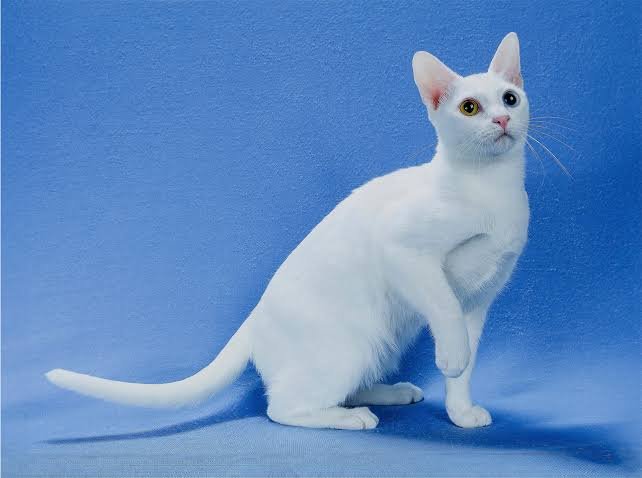
In India’s growing premium cat market of 2026, the Khao Manee is one of the rarest, most historically fascinating, and most visually striking breeds available — a cat whose pure white coat, distinctively round face, and most famously its eyes — which may be blue, gold, or the coveted odd-eyed combination of one blue and one gold — create an appearance of otherworldly beauty that has earned it the alternative name “Diamond Eye Cat.” If you are searching for the Khao Manee cat price in India in 2026, this guide provides you with accurate pricing, the complete royal history, the genetics of the diamond eye, health information, and everything needed to make a responsible purchase decision.
Article Overview — At a Glance
| Attribute | Details |
| Breed Name | Khao Manee (White Gem / Diamond Eye Cat) |
| Origin | Thailand — kept exclusively by Thai royalty for centuries |
| Size | Medium: 2.5–5 kg |
| Lifespan | 10–12 years |
| Temperament | Affectionate, playful, intelligent, sociable, energetic, people-oriented |
| Coat | Short, smooth, pure white — no other colour accepted |
| Eye Colour | Blue, gold, or odd-eyed (one blue, one gold) — all accepted |
| Diamond Eye | The odd-eyed combination — most prized variety |
| Price Range (2026) | Rs. 40,000 – Rs. 1,50,000+ |
| TICA Recognition | Full recognition — growing global awareness |
| Monthly Maintenance | Rs. 3,500 – Rs. 8,500 |
| Best For | Active households, experienced cat owners, those seeking rare heritage breeds |
| Health Priority | BAER deafness testing — essential for white cats |
| Climate Suitability | Good — short white coat manageable in India with sun protection |
About the Khao Manee
The Khao Manee appears in the “Tamra Maew” — the ancient Thai Cat Book Poems manuscript from the Ayutthaya Kingdom period (1351–1767 AD) that also documented the Siamese and other Thai breeds. These manuscripts, housed in Thailand’s National Library and the British Museum, describe the Khao Manee as a cat of exceptional good fortune — specifically listing it among the most auspicious cats for kings and noblemen to keep. The manuscripts describe the odd-eyed Khao Manee as particularly powerful in its luck-bringing properties, associating different eye colours with different types of fortune.
The breed was kept within the Thai royal palace for centuries — the Grand Palace in Bangkok maintained Khao Manee cats as sacred palace animals alongside the revered Siamese. King Chulalongkorn (Rama V, reigned 1868–1910), whose reign represents the height of Thai cultural and political sophistication in the modern era, was documented as a devoted Khao Manee enthusiast who gifted the cats to visiting foreign dignitaries as marks of exceptional honour. The cats were not exported from Thailand for centuries, maintaining an exclusivity that has contributed to their rarity globally.
The breed began its international journey in the early 2000s when dedicated Thai breeders and international cat fancy organisations worked to export breeding pairs and establish populations outside Thailand. TICA accepted the Khao Manee for registration in 2009 and for championship competition subsequently. By 2024–2025, established breeding programs exist in the USA, UK, and several European countries, though the breed remains significantly rarer than most mainstream pedigreed breeds globally.
In India, the Khao Manee is exceptionally rare — with its proximity to Thailand and the cultural connections between India and Southeast Asia creating natural interest, but with very limited domestic breeding and most quality individuals requiring import. A small but growing community of Indian cat enthusiasts has been working to establish the breed from 2022 onward.
Khao Manee Price in India 2026 — City-Wise Breakdown
| City / Category | Min Price (INR) | Max Price (INR) |
| Delhi / NCR | Rs. 45,000 | Rs. 1,20,000 |
| Mumbai | Rs. 48,000 | Rs. 1,30,000 |
| Bangalore | Rs. 40,000 | Rs. 1,10,000 |
| Hyderabad | Rs. 38,000 | Rs. 1,00,000 |
| Chennai | Rs. 35,000 | Rs. 95,000 |
| Kolkata | Rs. 32,000 | Rs. 90,000 |
| Tier-2 / Tier-3 Cities | Rs. 25,000 | Rs. 70,000 |
| TICA Registered / Show Quality | Rs. 80,000 | Rs. 1,50,000+ |
| Imported — Thailand / USA / Europe | Rs. 1,00,000 | Rs. 1,80,000+ |
| Odd-Eyed / Diamond Eye (most premium) | Rs. 70,000 | Rs. 1,50,000+ |
Note: The odd-eyed Khao Manee — one blue eye and one gold eye — commands the highest premiums in India, reflecting both its visual impact and its traditional association with the greatest degree of good fortune in Thai cultural belief. Always request TICA registration papers and BAER hearing test results for any white Khao Manee. White cats with blue eyes carry elevated deafness risk — BAER testing identifies hearing status definitively.
The Diamond Eye — Genetics and Significance
The “Diamond Eye” designation refers specifically to the odd-eyed Khao Manee — a cat with one blue eye and one gold (amber) eye. This heterochromia occurs through the same mechanism as in Turkish Angoras and other white cats — unequal melanin distribution during embryonic development creates different eye colours in each eye.
In Thai cultural belief documented in the Tamra Maew manuscripts, different eye colours carry different meanings. Gold eyes represent prosperity and wealth. Blue eyes represent clarity and spiritual purity. The odd-eyed combination — one gold and one blue — was considered the most powerful auspicious combination, representing the union of material and spiritual fortune. Thai royal families specifically sought odd-eyed Khao Manee kittens for these beliefs.
An important genetic note: white coat colour in cats is associated with elevated deafness risk, particularly when combined with blue eyes. The same pigmentation gene that produces white coat and blue eyes affects cochlear melanocytes essential for hearing development. BAER (Brainstem Auditory Evoked Response) testing definitively identifies hearing status. Odd-eyed Khao Manee typically have normal hearing in the gold-eye side and may have unilateral deafness on the blue-eye side — which does not prevent normal, full lives but should be documented before purchase.
Temperament and Suitability
The Khao Manee’s temperament is significantly more active and playful than the Persian or British Shorthair — reflecting its working palace cat heritage where it needed to be alert, engaged, and responsive to royal household activity. These cats are genuinely energetic, curious, and people-oriented — following their owners through the home, demanding participation in household activities, and displaying a confident, social engagement with visitors that reflects centuries of exposure to human court life.
They are vocal communicators — not at the Siamese’s relentless level but clearly expressive with a distinctive voice they use to initiate interaction. Their intelligence is notable — they learn routines quickly, respond consistently to their names, and engage enthusiastically with interactive toys and puzzle feeders. They form close bonds with their human family while maintaining enough curiosity and confidence to handle social situations well.
For Indian apartment living, the Khao Manee is an excellent choice provided the household has regular human presence — these cats do not do well with extended isolation and benefit significantly from a companion cat. Their short coat handles India’s climate very well with minimal maintenance beyond sun protection considerations for outdoor exposure.
Health and Lifespan
The Khao Manee has a 10–12 year average lifespan — somewhat shorter than some other breeds, possibly reflecting its relatively small and genetically limited founding population outside Thailand. BAER deafness testing is the most important breed-specific health consideration. The breed appears to have relatively low rates of the hereditary cardiac conditions that affect many other breeds, though responsible breeders still provide annual cardiac assessments for breeding cats.
Sun protection is important for white-coated cats in India — the absence of UV-filtering pigmentation in the white coat leaves the skin vulnerable to sunburn with extended direct sunlight exposure. Cat-safe sunscreen or sun-filtering window film provides appropriate protection for cats that enjoy window perching.
Monthly Maintenance Cost in India (2026 Estimate)
| Cost Category | Estimated Cost |
| Premium Cat Food | Rs. 1,800 – Rs. 4,000/month |
| Grooming (short white coat — regular wiping) | Rs. 500 – Rs. 1,200/session; monthly professional |
| Litter and Litter Box | Rs. 500 – Rs. 1,200/month |
| Veterinary Care (annual) | Rs. 5,000 – Rs. 14,000 |
| Vaccinations & Preventives | Rs. 2,000 – Rs. 4,500 annually |
| Sun Protection Products | Rs. 200 – Rs. 500/month |
| Total Estimated Monthly Cost | Rs. 3,500 – Rs. 8,500 |
Frequently Asked Questions (FAQs)
Q1. What is the Khao Manee cat price in India in 2026?
Khao Manee prices from reputable sources in India in 2026 range from Rs. 32,000 to Rs. 1,30,000 depending on city, eye colour, and documentation. Odd-eyed Diamond Eye individuals command premiums of Rs. 70,000–Rs. 1,50,000+. TICA-registered show-quality cats start at Rs. 80,000. Thai, American, or European imports reach Rs. 1,00,000–Rs. 1,80,000+ including import costs.
Q2. Why is the Khao Manee considered lucky?
The Khao Manee’s status as a luck-bringing cat is documented in the ancient Thai Tamra Maew manuscript — among the oldest cat breed records in the world. Thai royal tradition held that Khao Manee cats brought good fortune, prosperity, and long life to their owners. Different eye colours were associated with different types of fortune — gold for material prosperity, blue for spiritual clarity, odd-eyed for both combined. This tradition has been maintained across centuries of Thai royal culture.
Q3. What is the Diamond Eye Khao Manee?
Diamond Eye refers to the odd-eyed Khao Manee — one blue eye and one gold eye. This heterochromia is caused by unequal melanin distribution during embryonic development. It is the most prized and most premium Khao Manee variety both in traditional Thai culture (associated with maximum good fortune) and in the modern cat fancy market. BAER hearing testing is recommended for all odd-eyed white cats.
Q4. Is the Khao Manee related to the Siamese?
Both the Khao Manee and the Siamese are Thai breeds documented in the same Tamra Maew manuscripts — they share ancient Thai heritage but are distinct breeds. The Siamese has the colourpoint colouration and distinctive vocalisation. The Khao Manee is pure white with no pointing. Both were kept in the Thai royal palace, but as separate and distinct varieties. They do not share recent genetic ancestry in documented breeding records.
Q5. How do I find a genuine Khao Manee in India?
Contact the TICA breeder directory for registered Khao Manee breeders internationally. The Khao Manee Cat Club (a dedicated international breed organisation) maintains a registry of breeders willing to export to India. Professional pet import agents in Delhi and Mumbai who specialise in rare breeds can assist with sourcing and import logistics. Given the breed’s rarity, a waiting time of 6–18 months from a reputable breeder is realistic.
Conclusion
The Khao Manee — White Gem of Thailand’s royal courts, Diamond Eye of the Tamra Maew manuscripts, bearer of centuries of accumulated royal good fortune — is one of the most genuinely extraordinary cat breeds available to Indian buyers in 2026. Its pure white coat, potentially odd-eyed gaze of startling beauty, active and affectionate temperament, and deep cultural roots in Southeast Asian royal tradition make it a uniquely compelling choice for the serious rare breed enthusiast. For those willing to invest the patience and research required to source this ancient treasure, the Khao Manee delivers beauty, cultural depth, and genuine companionship in equal and generous measure.